


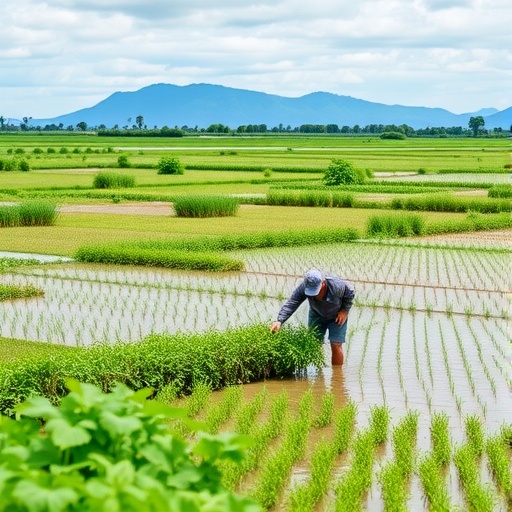
In the face of pressing environmental challenges, African nations are increasingly turning to green growth initiatives. These efforts aim to balance economic development with ecological sustainability. A recent study led by researchers including E.J. Bomdzele and S.O. Okunade has shed light on the effectiveness of these initiatives, particularly regarding their impact on agricultural productivity and fisheries. Published in Communications Earth & Environment, the study’s findings reveal a nuanced relationship between green initiatives and various sectors of the economy, with agricultural productivity benefiting significantly while fisheries remain largely unaffected.
The research highlights how African green growth initiatives, which incorporate sustainable practices into economic policies, have demonstrated a measurable positive influence on agricultural outputs. This is crucial for a continent where agriculture employs a substantial portion of the population and is a key driver of economic growth. According to the findings, these initiatives encourage the adoption of environmentally friendly practices, leading to improved crop yields and enhanced food security. The integration of sustainable techniques acutely resonates with the global shift towards environmentally responsible agriculture, making the continent a focal point in the discourse on sustainability.
While agricultural productivity shows promising improvements, the same cannot be said for the fisheries sector. The study indicates that the interventions aimed at promoting green growth have not translated into enhanced fish stocks or improved fishing operations. This revelation raises important questions about the methodologies and practices employed within the fisheries industry. It is evident that while land-based agriculture has benefited from sustainable practices, the fisheries sector may require more specialized strategies addressing its unique challenges, such as overfishing and habitat degradation.
The implications of these findings are significant. They highlight a critical disconnect that warrants further investigation and targeted intervention. The growth of agricultural sectors through green initiatives is laudable, but the stagnation in fisheries underscores the need for holistic approaches that encompass all dimensions of food production. Policymakers must recognize that the sustainability of agricultural practices cannot come at the expense of other vital sectors such as fisheries. A unified strategy is necessary to ensure that growth is truly inclusive and equitable.
Moreover, the results suggest a potential reevaluation of how different sectors are supported within the framework of green initiatives. The research compels stakeholders to consider sector-specific strategies that take into account the complexities of each industry. For fisheries, this could mean enhancing regulations, increasing investments in aquaculture, and promoting community-based management practices that address both environmental and economic sustainability.
Furthermore, technological innovation plays a pivotal role in achieving the goals set forth by green growth initiatives. The application of advanced technologies, from precision farming to smart fishing practices, can help optimize resource use and minimize environmental impacts. The research indicates that agricultural advancements may be more accessible due to existing infrastructure and investments, whereas fisheries may lag behind due to less emphasis on technological advancement in resource management.
The findings also have broader implications for climate resilience strategies across the continent. As African countries face the challenges posed by climate change—such as extreme weather events, changing rainfall patterns, and rising sea levels—integrating sustainable practices across all sectors becomes imperative. The agricultural successes should act as a blueprint for enhancing resilience in fisheries and other industries. By exchanging knowledge and best practices between sectors, countries can build adaptive capacities that are comprehensive and sustainable.
The study invites a renewed dialogue among stakeholders, including governments, non-governmental organizations, and the private sector. Collaborative efforts can foster a more integrated approach to green growth that encompasses agriculture, fisheries, and beyond. As nations strive for economic advancement while addressing environmental concerns, a multi-sectoral strategy could unlock new opportunities for growth and sustainability.
In conclusion, the research presents a compelling narrative about the transformative potential of green growth initiatives in Africa. While agricultural productivity emerges as a clear beneficiary, fisheries illustrate the complexities of implementation. This duality emphasizes the importance of tailored strategies that address the unique needs and challenges of different sectors. Ultimately, achieving a sustainable future for Africa will require concerted efforts across all industries, ensuring that no sector is left behind in the quest for environmental and economic resilience.
As discussions around sustainable development continue to evolve, this study serves as a reminder that while progress is being made, ongoing adaptation and commitment to inclusive practices are vital. The path forward involves learning from successes and setbacks alike, fostering an environment in which both agriculture and fisheries can thrive in harmony with Africa’s rich natural resources.
Bomdzele, E.J., Okunade, S.O., Assoua, J.E. et al. African green growth initiatives have a positive impact on agricultural productivity but not on fisheries.
Commun Earth Environ 7, 134 (2026). https://doi.org/10.1038/s43247-025-03148-6
Cite Scienmag News
Alan Morgan. (February 12, 2026). Green Growth Boosts Agriculture, Not Fisheries Productivity. Scienmag. https://scienmag.com/green-growth-boosts-agriculture-not-fisheries-productivity/
Alan Morgan. "Green Growth Boosts Agriculture, Not Fisheries Productivity." Scienmag, 12 February 2026, https://scienmag.com/green-growth-boosts-agriculture-not-fisheries-productivity/. Accessed 3 September 2026.
Alan Morgan. "Green Growth Boosts Agriculture, Not Fisheries Productivity." Scienmag. February 12, 2026. https://scienmag.com/green-growth-boosts-agriculture-not-fisheries-productivity/


