


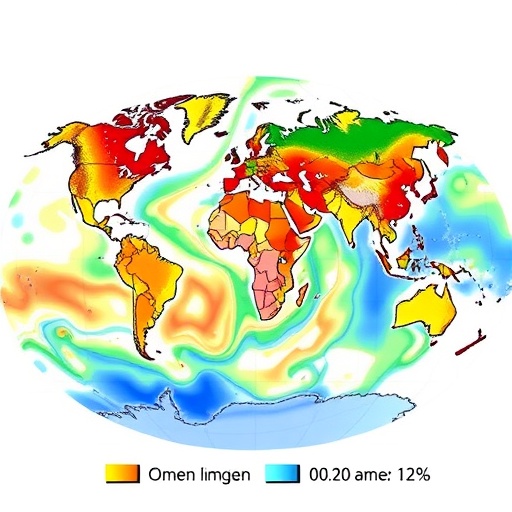
A groundbreaking study led by the International Institute for Applied Systems Analysis (IIASA) offers a compelling critique and a visionary roadmap for embedding equity and justice into global climate mitigation scenarios. These scenarios, which serve as critical blueprints for international climate policy, dictate who shoulders emission reduction responsibilities, how financial burdens are distributed, and ultimately who reaps the benefits of climate action. However, existing models have repeatedly faced criticism for their inadequate treatment of fairness and justice, often sidelining the lived realities of underrepresented regions and marginalized communities. This new research synthesizes these critiques and proposes transformative changes to ensure that future climate pathways are not only scientifically robust but also socially legitimate and politically feasible.
Climate mitigation scenarios are far from neutral technical exercises; they are inherently normative frameworks reflecting assumptions about responsibility, development priorities, and human well-being. The IIASA-led essay, published in PLOS Climate, delves into this crucial intersection of science and ethics by analyzing how current models address—or fail to address—the complexities of equity and justice. The authors highlight that these models influence policymakers’ perceptions of what climate action entails and who bears its costs and benefits, affecting public trust and the political sustainability of climate commitments. By offering a comprehensive diagnosis of structural, methodological, and epistemological limitations, the study illuminates the path toward integrating justice into the core of climate mitigation modeling.
One of the critical insights from the study is the identification of three primary categories of limitations in prevailing climate scenarios. Structural limitations pertain to the lack of diversity among model developers and a narrow range of perspectives incorporated into scenario design. Methodological challenges arise from an entrenched focus on cost efficiency, which often neglects the distributional consequences of mitigation policies. Finally, epistemological limitations reflect the difficulties in translating abstract concepts of justice into metrics that inform policy at regional and national scales. This tripartite framework not only advances theoretical understanding but also offers practical leverage points for reforming model construction and application.
Addressing these limitations demands a multifaceted strategy, grounded in both incremental and systemic shifts. The study advocates embedding explicit mechanisms of effort sharing and climate finance into modeling frameworks to make equity considerations more transparent and operational. This involves developing methodologies that account for historical responsibility, current capacities, and developmental needs without compromising the clarity and usability of model outputs. At the same time, safeguarding decent living standards for all populations is emphasized, ensuring that mitigation pathways do not exacerbate existing inequalities or undermine human well-being as societies transition to low-carbon futures.
The authors further stress the importance of broadening the range of solutions considered within scenarios. Traditionally, climate models have privileged supply-side interventions such as renewable energy deployment and technological innovations. This study argues for expanding demand-side options, recognizing the critical role of behavioral change and lifestyle shifts in reducing emissions equitably. Incorporating these dimensions not only enriches the realism and flexibility of scenarios but also aligns them more closely with social justice objectives by empowering diverse actors and communities.
Participation is another cornerstone of the proposed agenda. The research calls for inclusive scenario design processes that engage stakeholders from underrepresented regions and marginalized groups. By democratizing who contributes to modeling efforts, the field can better capture pluralistic values and concerns, enhancing the legitimacy and credibility of climate pathways. This approach also encourages co-production of knowledge, fostering transparency and pluralism to complement the technical sophistication of models with rich contextual insights.
Importantly, the roadmap laid out in this study balances ambition with practicality. Some recommended changes can be implemented promptly within existing modeling infrastructures, enabling immediate improvements in how equity is represented. Others require long-term institutional reform, including diversifying research teams, fostering interdisciplinary collaboration, and revising funding priorities to incentivize socially informed climate science. This gradated approach recognizes the trade-offs and complexities inherent in transforming a deeply technical domain that nevertheless has profound societal implications.
A nuanced perspective on the role of models themselves is central to the study’s contribution. While quantitative models are indispensable for exploring emissions trajectories and policy impacts, the authors caution against viewing them as panaceas for resolving political disputes over justice. Instead, models should serve as transparent platforms that facilitate deliberative negotiation and moral judgment. This reorientation affirms the necessity of combining technical advances with ethical reflection and democratic engagement to cultivate climate solutions that are both effective and equitable.
The policy implications of these findings are vast. For governments and international bodies, adopting equity-focused modeling practices could lead to more accurate estimates of climate finance requirements and more equitable allocation of mitigation efforts. It could also underpin stronger international cooperation by making the distribution of responsibilities more transparent and justifiable. In essence, integrating justice into modeling elevates the social relevance of climate scenarios, positioning them as vital tools for fostering trust, minimizing conflict, and galvanizing diverse constituencies behind ambitious climate action.
Beyond policymaking, the study underscores the importance of public perception and legitimacy. Technically feasible climate pathways that disregard fairness risk losing political traction and exacerbating social divisions. By contrast, equity-integrated scenarios have the potential to strengthen societal consensus and unlock broader support for climate policies. This could prove decisive at a historical moment when global cooperation on climate change is both urgently needed and increasingly contested.
The authors conclude with a powerful reminder that climate mitigation scenarios map visions of the future, encapsulating choices about who benefits and who bears the cost. Embedding greater attention to equity and justice ensures these visions are robust and socially grounded. Ultimately, such advancements can reshape the trajectory of climate science and policy, forging pathways toward a sustainable and just future that resonates across communities, nations, and generations.
Through this inclusive and justice-oriented framework, the IIASA-led study confronts head-on one of the most pressing challenges in climate science: how to balance technical rigor with social legitimacy. The proposed agenda invites the scientific community, policymakers, and society at large to rethink the foundations of climate mitigation modeling, fostering innovation that embraces complexity, embraces pluralism, and champions fairness.
As the climate crisis accelerates and the window for effective action narrows, this research not only critiques the status quo but also illuminates a hopeful pathway forward. With equity as a guiding principle, climate mitigation scenarios can evolve from abstract depictions to catalytic tools that inspire fairer, more feasible, and politically credible climate futures worldwide.
News Publication Date:
February 11, 2026
Web References:
https://journals.plos.org/climate/article?id=10.1371/journal.pclm.0000763
References:
Pachauri, S., Brutschin, E., Gidden, M., Hasegawa, T., Hejazi, M., Jiang, K., Kikstra, J.S., Krey, V., et al. (2026). Advancing representations of equity and justice in climate mitigation futures. PLOS Climate. DOI: 10.1371/journal.pclm.0000763
Cite Scienmag News
Sloane Callahan. (February 11, 2026). Restoring Confidence in Global Climate Mitigation Models. Scienmag. https://scienmag.com/restoring-confidence-in-global-climate-mitigation-models/
Sloane Callahan. "Restoring Confidence in Global Climate Mitigation Models." Scienmag, 11 February 2026, https://scienmag.com/restoring-confidence-in-global-climate-mitigation-models/. Accessed 3 September 2026.
Sloane Callahan. "Restoring Confidence in Global Climate Mitigation Models." Scienmag. February 11, 2026. https://scienmag.com/restoring-confidence-in-global-climate-mitigation-models/


