


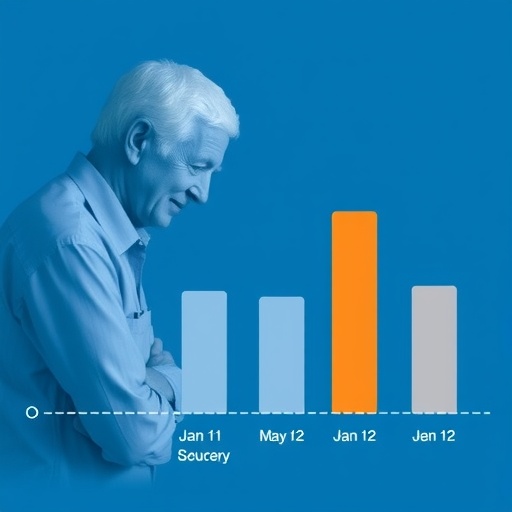
In 2016, Poland implemented a groundbreaking nationwide policy designed to alleviate the financial burden of prescription medications for its senior population. The initiative eliminated all out-of-pocket expenses for prescription drugs prescribed by healthcare professionals to individuals aged 75 and over. This bold move was aimed at ensuring broader access to essential medications and decreasing the economic strain on elderly patients who often face chronic health conditions requiring long-term pharmacological treatment.
A recently published study in the esteemed journal Health Economics provides an in-depth analysis of the policy’s impact, revealing significant reductions in medication-related financial burdens. This research utilized a rigorous methodology, capitalizing on a natural policy discontinuity, to precisely estimate the causal effects of removing user fees on medication expenditures and broader household economic behaviors. The findings underscore a 23% reduction in average out-of-pocket spending on prescription drugs among the elderly, coupled with an impressive 62% decline in catastrophic drug expenses, defined as medication costs exceeding a substantial fraction of household income.
These results highlight the policy’s success in offering substantial financial protection during critical health events, which can otherwise lead to profound economic hardship. By removing direct charges for prescriptions, the program effectively mitigates one of the most significant barriers to medication adherence—cost. Consequently, older adults are less likely to forgo or underuse necessary treatments due to financial concerns, potentially improving health outcomes over time.
However, the distribution of these financial benefits has not been uniform across the population. The study indicates that households with higher incomes and those residing in urban areas tend to gain more from the policy. This disparity suggests that while the policy lifts the financial load for many, it may inadvertently widen pre-existing inequalities in healthcare access and financial security among older adults. Rural and lower-income individuals continue to face challenges, perhaps due to differences in healthcare infrastructure, availability of pharmacies, or other socio-economic factors influencing medication use.
Beyond financial implications, researchers also observed intriguing behavioral changes triggered by the policy. With reduced direct medication expenses and enhanced financial security against health-related costs, some older adults exhibited increased spending on non-essential and potentially harmful goods, including unhealthy foods, alcohol, and tobacco products. This phenomenon aligns with economic theories of moral hazard, where the mitigation of one risk can alter behaviors in ways that offset some intended benefits. Essentially, when individuals feel more insulated from health expenditures, their consumption choices might shift, with complex implications for overall well-being.
Krzysztof Zaremba, PhD, the study’s corresponding author from the Instituto Tecnológico Autónomo de México (ITAM), emphasizes the dual nature of these findings. He notes that while the program alleviates considerable financial stress for many seniors—a critically important public health objective—the accompanying changes in consumption patterns highlight the nuanced effects of health policy interventions. Such behavioral responses necessitate careful consideration in policy design to maximize benefits while minimizing unintended adverse effects.
The policy’s implications extend beyond Poland, offering valuable lessons for countries grappling with aging populations and escalating healthcare costs. Free prescription drug programs can serve as a powerful tool to reduce economic barriers to medication adherence, which is crucial for managing chronic diseases prevalent among older adults. However, policymakers must also account for heterogeneous effects and potential behavioral shifts to design equitable and effective strategies.
From a methodological perspective, this study makes an important contribution by leveraging a policy discontinuity design. This technique enables a clean identification of causal effects by comparing groups just above and below the age threshold of 75, effectively controlling for confounding factors that often complicate policy evaluations. Such robust analytical approaches are vital for deriving policy-relevant insights that transcend simple associations.
The reduction in catastrophic drug expenditures is especially noteworthy, as these costs can precipitate financial ruin for vulnerable households. By sharply cutting these extreme expenses, the program not only shields individuals from immediate economic distress but may also reduce downstream consequences such as medical debt, bankruptcy, or deferred care. This protection promotes a level of financial stability that is essential for healthy aging.
Nevertheless, the unequal distribution of gains calls for targeted interventions aimed at enhancing access among disadvantaged populations. Urban-rural disparities and income stratification reflect systemic challenges that standalone drug subsidies cannot fully address. Complementary measures, including geographic improvements in healthcare delivery and tailored socioeconomic support, may be essential to closing these gaps.
Moreover, the observed increases in expenditure on unhealthy consumables raise critical questions about the broader health impacts of the policy. If reductions in medication costs lead to riskier behavior, long-term health outcomes could potentially be compromised, undermining some benefits of improved drug affordability. A comprehensive assessment of these trade-offs requires further longitudinal studies that integrate clinical outcomes with economic data.
This complex interplay between economic protection and behavioral adaptation underscores the importance of integrating behavioral economics insights into health policy frameworks. Understanding how individuals respond to financial incentives or risk reduction is crucial for designing interventions that optimize population health while avoiding unintended detrimental effects.
In sum, Poland’s elimination of out-of-pocket prescription drug costs for seniors presents a compelling case study in advancing health equity and financial protection through policy innovation. The research published in Health Economics offers robust evidence of the program’s capacity to reduce medication spending and financial shocks, alongside illuminating important equity and behavioral nuances. As populations age globally and healthcare systems seek sustainable solutions, these findings offer valuable guidance on balancing financial relief with holistic health considerations.
News Publication Date: 11-Feb-2026
Web References:
Cite Scienmag News
Courtney Benton. (February 11, 2026). The Impact of Universal Free Prescription Drug Coverage on Older Adults’ Finances and Behavior. Scienmag. https://scienmag.com/the-impact-of-universal-free-prescription-drug-coverage-on-older-adults-finances-and-behavior/
Courtney Benton. "The Impact of Universal Free Prescription Drug Coverage on Older Adults’ Finances and Behavior." Scienmag, 11 February 2026, https://scienmag.com/the-impact-of-universal-free-prescription-drug-coverage-on-older-adults-finances-and-behavior/. Accessed 3 September 2026.
Courtney Benton. "The Impact of Universal Free Prescription Drug Coverage on Older Adults’ Finances and Behavior." Scienmag. February 11, 2026. https://scienmag.com/the-impact-of-universal-free-prescription-drug-coverage-on-older-adults-finances-and-behavior/


