


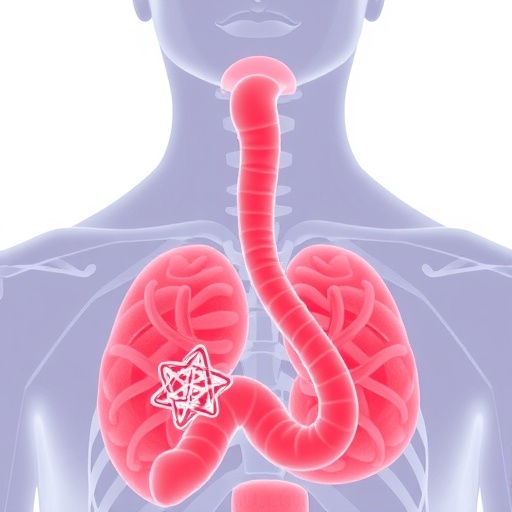
In a landmark study poised to reshape our understanding of esophageal diseases, researchers at Case Western Reserve University have uncovered critical genetic mechanisms that predispose individuals to Barrett’s esophagus, a precursor to esophageal adenocarcinoma. This form of cancer is notorious for its aggressive nature and rapidly increasing incidence rates, making early detection and prevention paramount. The team’s groundbreaking findings illuminate the complex interplay between inherited genetic defects and environmental factors, especially exposure to stomach bile acid, revealing new avenues for targeted interventions.
Barrett’s esophagus, a condition characterized by the transformation of the esophageal lining into specialized intestinal-type cells, affects approximately 5% of the U.S. population according to data from the National Institute of Diabetes and Digestive and Kidney Diseases. Despite its prevalence, the molecular underpinnings of this condition have remained elusive, hindering efforts to anticipate and prevent progression to esophageal adenocarcinoma. The recent investigation bridges this critical knowledge gap by identifying the VSIG10L gene as a pivotal regulator of esophageal epithelial integrity.
The comprehensive study employed an integrative approach, combing through genetic sequencing data from 684 individuals across 302 families, all exhibiting a history of Barrett’s esophagus or esophageal cancer. This familial cohort provided a rich landscape to discern hereditary mutations contributing to disease susceptibility. Notably, a subset of participants harbored deleterious variants in the VSIG10L gene, implicating it as a crucial factor in maintaining the structural and functional homeostasis of the esophageal lining.
VSIG10L, as characterized by the researchers, functions similarly to a quality control agent within esophageal epithelial cells. When mutations compromise its efficacy, the maturation of these cells falters, weakening the mucosal barrier that guards against the corrosive effects of gastric bile acids. This compromised barrier facilitates tissue damage and cellular transformations quintessential to the development of Barrett’s esophagus. Lead investigator Kishore Guda, an associate professor in pathology and oncology, emphasizes the gene’s role in preserving the esophageal epithelium against injurious stimuli.
Further confirming the gene’s significance, genetically engineered mouse models bearing human-equivalent VSIG10L mutations exhibited disorganized and fragile esophageal linings. When these modified mice were chronically exposed to bile acid, they developed Barrett’s-like pathological features, effectively mirroring human disease progression at both structural and molecular levels. This model represents the first translational platform ensuring that familial genetic predisposition is faithfully recapitulated in vivo, offering an invaluable tool for experimental therapeutics and mechanistic studies.
The identification of VSIG10L mutations as a driver of Barrett’s esophagus underlines the transformative potential of genomics in clinical diagnostics. Family members from affected lineages can now be genetically screened to stratify risk, enabling proactive monitoring and personalized interventions before malignant transformation ensues. This proactive paradigm has the potential to revolutionize patient outcomes by intercepting esophageal adenocarcinoma at its earliest, most treatable stages.
Case Western Reserve University’s sustained leadership in gastrointestinal oncology research predates this discovery, having previously unveiled genetic contributors to colorectal and gastroesophageal cancers. Their consistent dedication to uncovering the genetic architecture of these malignancies has established a foundation for breakthroughs like the present study, which not only improves understanding but also expands the translational applicability of these findings.
Kishore Guda highlights that solving the molecular puzzle of Barrett’s esophagus transcends this specific disease, offering broader insights into epithelial tissue biology and cancer susceptibility. Since VSIG10L expression and functionality have implications in varied tissues and disease frameworks, this discovery may spark investigations into its role beyond the esophagus, potentially impacting fields ranging from regenerative medicine to oncology at large.
From a methodological perspective, this research exemplifies the power of interdisciplinary science, blending clinical genetics, experimental pathology, and advanced animal modeling. By sequencing large familial cohorts and deploying genetic engineering techniques, the study achieved a robust causal linkage between inherited mutations and pathological outcomes, a benchmark for future efforts aimed at unraveling complex disease genetics.
The clinical implications are profound. Physicians can now contemplate integrating genetic screening for VSIG10L mutations into routine evaluation for patients with familial predisposition, particularly those exhibiting chronic gastroesophageal reflux disease symptoms. Early identification of high-risk individuals could lead to tailored surveillance programs or novel preventative therapeutics designed to reinforce the esophageal lining’s integrity, thereby halting the progression to cancer.
Moreover, this research reinforces the paradigm that cancer prevention hinges not solely on environmental modification but also on deciphering and managing genetic contributors. Understanding how genetic factors like VSIG10L mutations interact with injurious bile acids offers a comprehensive picture that guides the development of multi-faceted treatment strategies targeting both molecular vulnerabilities and external risk factors.
The study, published in the prestigious journal Nature Communications, marks a pivotal moment in the field of molecular gastroenterology. It sets the stage for further exploration into how restoring VSIG10L function or compensating for its loss might optimize esophageal barrier resilience. Such advancements could eventually translate into pharmacological agents or gene therapies aimed at patients genetically predisposed to Barrett’s esophagus and its malignant sequelae.
In sum, this research from Case Western Reserve University delivers a remarkable leap forward, spotlighting VSIG10L as a linchpin in esophageal homeostasis and hereditary risk for a deadly cancer. Its implications ripple through the realms of molecular biology, genetics, and clinical medicine — heralding a new era in precision gastroenterology where genetic insights drive prevention, diagnostics, and potentially curative interventions against esophageal adenocarcinoma.
Cite Scienmag News
Nathaniel Bowman. (February 10, 2026). Scientists Identify Genetic Connection to Barrett’s Esophagus, Paving the Way for Advances in Esophageal Cancer Treatment. Scienmag. https://scienmag.com/scientists-identify-genetic-connection-to-barretts-esophagus-paving-the-way-for-advances-in-esophageal-cancer-treatment/
Nathaniel Bowman. "Scientists Identify Genetic Connection to Barrett’s Esophagus, Paving the Way for Advances in Esophageal Cancer Treatment." Scienmag, 10 February 2026, https://scienmag.com/scientists-identify-genetic-connection-to-barretts-esophagus-paving-the-way-for-advances-in-esophageal-cancer-treatment/. Accessed 4 September 2026.
Nathaniel Bowman. "Scientists Identify Genetic Connection to Barrett’s Esophagus, Paving the Way for Advances in Esophageal Cancer Treatment." Scienmag. February 10, 2026. https://scienmag.com/scientists-identify-genetic-connection-to-barretts-esophagus-paving-the-way-for-advances-in-esophageal-cancer-treatment/


