


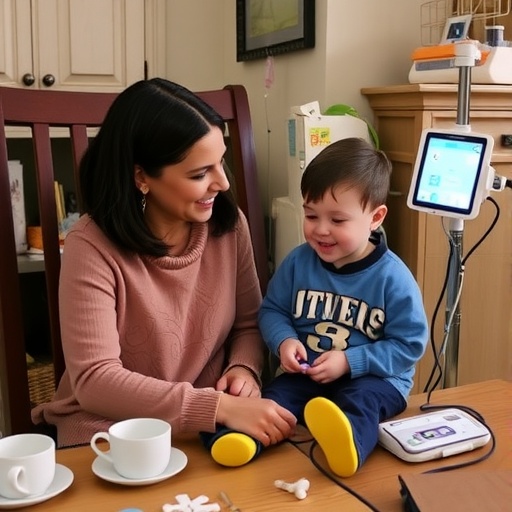
In recent years, the reliance on medical devices to manage children with complex health needs at home has grown substantially. However, a groundbreaking study from the Stanley Manne Children’s Research Institute at Ann & Robert H. Lurie Children’s Hospital of Chicago reveals that the current systems supporting the provision and use of these devices are fraught with inefficiencies and safety risks. This research, published in the esteemed journal Pediatrics, sheds light on the lived experiences of parents as they navigate these challenges and offers crucial insights into the urgent need for innovation in pediatric medical device design.
Parents of children with medical complexity often depend on an array of sophisticated medical devices to deliver essential care in the home environment. These equipment pieces include pulse oximeters, suction machines, and feeding pumps, all indispensable for maintaining the child’s health and quality of life. Yet, the study articulates a systemic failure in communication and education, leaving families under-informed about the availability and optimal use of these medical products. The lack of clear dialogue between healthcare providers, suppliers, and families creates a barrier to obtaining necessary devices and compromises the safety of children.
The investigation deployed semi-structured interviews with 17 caregiving parents, supplemented by an optional submission of photographs illustrating the in-home setup of medical devices. This qualitative approach elicited detailed accounts of the practical and emotional burdens placed on families. The photos, 97 in total, submitted by eight participants, highlighted not only the diversity of devices but also the physical and logistical challenges of integrating these technologies into everyday life. These visual and narrative evidences combine to offer an unprecedented window into home medical care for children with complex needs.
One of the most striking revelations of the study pertains to the design flaws embedded in many commonly used pediatric devices. Device malfunctions, user interface complexities, and safety hazards were recurrent themes in parental testimonies. For instance, pulse oximeters often exhibited inconsistent readings or required frequent recalibration, suction machines faced reliability issues, and feeding pumps posed risks related to programming errors and alarms. These technical shortcomings do not merely inconvenience families; they directly elevate the risk of emergency hospital visits and can degrade the overall quality of life for the child and their caretakers.
The study also illuminates a critical coping mechanism — parents frequently resort to improvised “workarounds” to bridge the gap between device limitations and their child’s needs. These homemade adjustments, which may include modifications to equipment storage, transportation, or even operational hacks, underscore the unmet needs that current devices fail to address. While these adaptations demonstrate parental resilience and ingenuity, they also spotlight the precarious safety net on which these families depend, often without formal guidance or support.
Structural barriers extend beyond device design. Insurance policies, convoluted approval processes, and delays from suppliers further constrain access to high-quality, efficacious medical devices. Parents frequently described arduous bureaucratic hurdles that obstruct timely procurement, forcing them to juggle clinical demands with administrative complexities. These systemic inefficiencies emphasize the urgent need for streamlined processes that acknowledge the time-sensitive nature of medical device access for pediatric patients.
Central to the research findings is the paramount importance of user experience during product development. Parents voiced clear preferences for devices that are durable, intuitive, dependable, and especially safe and child-friendly. This feedback challenges manufacturers to expand their design priorities beyond clinical functionality to incorporate practical usability and emotional considerations. Intuitive interfaces that reduce caregiver error, portable systems that facilitate mobility, and robust safety features tailored to pediatric physiology emerge as critical factors for innovation.
The research team advocates for a paradigm shift in pediatric device innovation — incorporating parent and family advisory boards into the design and testing phases. Such real-world stakeholder engagement ensures that design choices resonate with the lived experiences of families managing medical complexity at home. By embedding end-user feedback directly into the engineering workflow, manufacturers stand to develop safer, more effective, and user-centered medical devices that improve health outcomes and alleviate caregiver burden.
Dr. Carolyn Foster, director of the Health@Home Initiative at the Manne Research Institute and senior author of the study, underscores the vital role of integrating parent voices into the medical device development ecosystem. Her vision posits that stronger collaboration between academic researchers, clinicians, industry, and families can surmount existing gaps, transforming pediatric care technology. Dr. Foster’s leadership bridges clinical medicine and engineering innovation, focusing on solutions that enhance safety and usability in the home setting.
This seminal study represents a collaborative effort between the Foster Health Lab, Health@Home Initiative, and the Innovate2Impact program within the Manne Research Institute. Together, these initiatives strive to translate empirical research into actionable improvements in pediatric health technologies. Their mission aligns with the broader goals of Ann & Robert H. Lurie Children’s Hospital of Chicago as a leading pediatric institution dedicated to research-driven clinical excellence.
Lurie Children’s commitment to pioneering pediatric medicine is reflected in its unique role as the only independent, research-guided children’s hospital in Illinois and one of fewer than 35 nation-wide holding such distinction. The hospital’s partnership with Northwestern University Feinberg School of Medicine enriches its research environment, ensuring that innovations funnel seamlessly into clinical practice. This multidisciplinary approach is critical for addressing the multifaceted challenges uncovered by this study.
Overall, the study spotlights a significant gap in the healthcare technology ecosystem: the insufficient alignment of medical device design with the nuanced demands of home-based pediatric care. The findings not only call for technical refinement but also systemic transformation to support families caring for medically complex children. By fostering integrative collaboration and amplifying parental insight throughout the device lifecycle, the future of pediatric home care devices promises enhanced safety, efficacy, and quality of life.
As pediatric healthcare continues evolving towards personalized, home-based models, this research provides a clarion call for manufacturers and healthcare systems alike. Investing in innovative product development that centers on real-world usability and addresses structural access barriers is crucial. The study’s implications extend far beyond devices, embodying a broader narrative of equity, safety, and empowerment for children with complex conditions and their caregivers.
In conclusion, the intricate interplay of medical device design, healthcare policy, and family experience demands urgent attention. The voices of parents, often the frontline managers of intricate and life-sustaining technology, must be integral to future innovation strategies. Through collaborative effort and user-driven design, the pediatric medical device field can undertake transformative progress, ensuring that children with medical complexity receive reliable and safe care within the heart of their homes.
News Publication Date: Not specified in the original content
Web References:
References:
- Published in Pediatrics journal
Cite Scienmag News
Ophelia Keating. (February 10, 2026). Parents of Medically Complex Children Face Significant Challenges with At-Home Medical Devices. Scienmag. https://scienmag.com/parents-of-medically-complex-children-face-significant-challenges-with-at-home-medical-devices/
Ophelia Keating. "Parents of Medically Complex Children Face Significant Challenges with At-Home Medical Devices." Scienmag, 10 February 2026, https://scienmag.com/parents-of-medically-complex-children-face-significant-challenges-with-at-home-medical-devices/. Accessed 3 September 2026.
Ophelia Keating. "Parents of Medically Complex Children Face Significant Challenges with At-Home Medical Devices." Scienmag. February 10, 2026. https://scienmag.com/parents-of-medically-complex-children-face-significant-challenges-with-at-home-medical-devices/


