


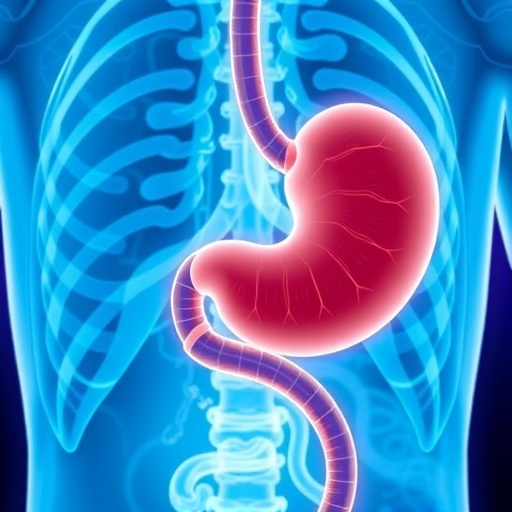
A groundbreaking study from the Mayo Clinic has unveiled critical insights into the sequencing of treatments for early-stage pancreatic cancer, challenging longstanding beliefs about optimal therapeutic approaches. Conducted across more than 1,400 patients at Mayo Clinic’s campuses in Minnesota, Arizona, and Florida, the research reveals that administering chemotherapy prior to surgical intervention significantly improves survival outcomes in patients whose tumors abut the superior mesenteric vein, a key vascular structure adjacent to the pancreas. These compelling findings spotlight the potential need for redefining surgical candidacy and treatment strategies in pancreatic ductal adenocarcinoma.
For decades, the prevailing strategy for early-stage pancreatic cancer has favored immediate surgical resection, premised on the assumption that rapid tumor removal offers the best chance of cure. However, this Mayo Clinic study indicates that such a conventional approach may inadvertently diminish survival prospects when tumors involve critical venous structures. Specifically, the research demonstrates that patients with tumor contact with the superior mesenteric vein experience worse survival rates when surgery is performed first. Conversely, those receiving neoadjuvant chemotherapy—treatment administered before surgery—show survival rates akin to patients whose tumors do not touch the vein.
The concept of neoadjuvant chemotherapy has grown in clinical prominence as a strategy to improve operability and target micrometastatic disease. By delivering systemic therapy upfront, this approach aims to downstage tumors, facilitate complete resection, and eradicate occult metastatic cancer cells that evade detection through conventional imaging. The Mayo Clinic data robustly support this methodology, suggesting that neoadjuvant chemotherapy represents a vital alteration in the traditional treatment sequence, particularly for tumors in close proximity to vascular landmarks critical for surgical planning.
One of the most profound implications of this work lies in its challenge to current clinical practice guidelines. The National Comprehensive Cancer Network (NCCN) classifies pancreatic tumors based on radiographic contact with major blood vessels; tumors with less than 180 degrees of vein involvement are traditionally labeled as “upfront resectable.” Current recommendations advocate immediate surgery for this category, without preoperative chemotherapy. Yet, the Mayo Clinic study advocates a paradigm shift, proposing that any venous involvement—including less than 180 degrees abutment—should categorize tumors as “borderline resectable,” thereby necessitating neoadjuvant chemotherapy prior to surgery.
Such a reclassification could revolutionize clinical workflows and decision-making processes in pancreatic oncology. By recognizing the nuanced impact of even minor venous involvement on patient outcomes, physicians could personalize therapeutic regimens more effectively, reducing the risk of incomplete resections and postoperative disease recurrence. This shift would also align with emerging evidence highlighting the aggressive biology of pancreatic cancer and its propensity for early dissemination, even in ostensibly localized disease.
Intriguingly, the Mayo Clinic has adopted this refined approach in practice for several years, favoring chemotherapy-first protocols regardless of initial staging. According to Dr. Zhi Ven Fong, a co-senior study author and surgical oncologist at the Arizona campus, “Our findings suggest that chemotherapy first, even in cases thought to be more straightforward, provides patients with the best opportunity for long-term survival.” This clinical philosophy underscores the importance of systemic therapy in addressing both the primary tumor and potential microscopic spread.
Complementing Dr. Fong’s perspective, Dr. Mark Truty, a surgical oncologist at the Minnesota campus and fellow co-senior author, emphasizes that “the timing of surgery relative to chemotherapy is critically important for patient outcomes.” This reflects a growing consensus within the oncology community that optimal sequencing—not merely the choice of treatment modalities—defines the therapeutic success in pancreatic ductal adenocarcinoma.
Pancreatic cancer remains one of the deadliest malignancies, with limited advancements in survival despite extensive research efforts. Its aggressive nature, coupled with diagnostic challenges and early metastatic potential, complicates treatment strategies. The Mayo Clinic’s findings inject cautious optimism by highlighting a modifiable factor—treatment timing—that can have profound survival implications. Neoadjuvant chemotherapy not only shrinks tumors, increasing the likelihood of margin-negative resections, but also allows clinicians to evaluate tumor biology and patient response before undertaking major surgery.
This approach also offers pragmatic benefits. Patients who experience disease progression during neoadjuvant chemotherapy may be spared morbid surgery with low expected benefit, while responders can proceed to resection with improved prognostic outlooks. Such stratification aligns treatment intensity with individual disease behavior, an important step toward precision oncology.
Beyond survival metrics, these findings catalyze a reassessment of how pancreatic tumors are classified radiographically and pathologically. Incorporating venous involvement into tumor staging has direct implications for clinical trials, patient counseling, and the broader framework of pancreatic cancer management. The research team anticipates their evidence will provoke rigorous discussion among clinicians and guideline committees, promoting iterative refinements that better align treatment recommendations with real-world outcomes.
The study’s publication in the Journal of the National Comprehensive Cancer Network, a respected peer-reviewed oncology journal, lends further credibility and visibility to these transformative ideas. With pancreatic cancer treatment evolving rapidly, this research marks a pivotal moment, encouraging the oncology community to rethink fundamental assumptions and optimize therapeutic strategies through nuanced understanding of tumor biology and anatomy.
As the Mayo Clinic continues to pioneer this chemotherapy-first approach, their data will undoubtedly influence future national and international guidelines. Their commitment to integrating innovative clinical research with compassionate patient care serves as a model for advancing cancer treatment paradigms worldwide.
In sum, this research underscores the critical importance of neoadjuvant chemotherapy in optimizing outcomes for early-stage pancreatic ductal adenocarcinoma, especially in cases involving venous structures previously deemed straightforward. By advocating for updated classification criteria and altered treatment sequencing, the study paves the way for improved survival in a disease that has long defied medical progress.
News Publication Date: 9-Feb-2026
Web References:
- Mayo Clinic Pancreatic Cancer Information: https://www.mayoclinic.org/diseases-conditions/pancreatic-cancer/symptoms-causes/syc-20355421
- Mayo Clinic Chemotherapy Overview: https://www.mayoclinic.org/tests-procedures/chemotherapy/about/pac-20385033
- JNCCN Article: https://jnccn.org/view/journals/jnccn/24/2/article-p27.xml
References: Journal of the National Comprehensive Cancer Network (JNCCN). “Redefining Upfront Resectable Pancreatic Ductal Adenocarcinoma: Should Vein Abutment Matter?” February 2026.
Cite Scienmag News
Nathaniel Bowman. (February 10, 2026). Mayo Clinic Study Reveals Pre-Surgical Chemotherapy Boosts Survival Rates in Early-Stage Pancreatic Cancer. Scienmag. https://scienmag.com/mayo-clinic-study-reveals-pre-surgical-chemotherapy-boosts-survival-rates-in-early-stage-pancreatic-cancer/
Nathaniel Bowman. "Mayo Clinic Study Reveals Pre-Surgical Chemotherapy Boosts Survival Rates in Early-Stage Pancreatic Cancer." Scienmag, 10 February 2026, https://scienmag.com/mayo-clinic-study-reveals-pre-surgical-chemotherapy-boosts-survival-rates-in-early-stage-pancreatic-cancer/. Accessed 3 September 2026.
Nathaniel Bowman. "Mayo Clinic Study Reveals Pre-Surgical Chemotherapy Boosts Survival Rates in Early-Stage Pancreatic Cancer." Scienmag. February 10, 2026. https://scienmag.com/mayo-clinic-study-reveals-pre-surgical-chemotherapy-boosts-survival-rates-in-early-stage-pancreatic-cancer/


