


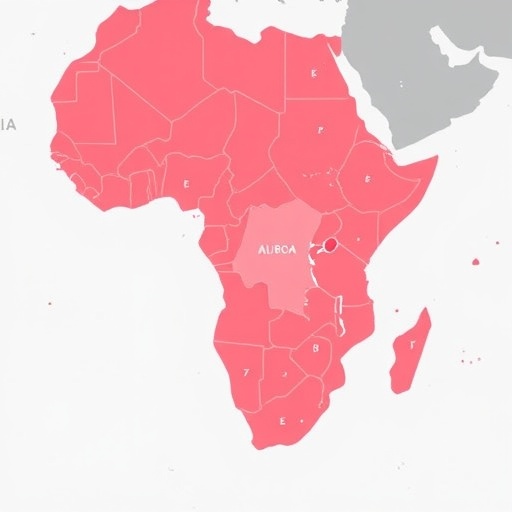
In a groundbreaking study set to revolutionize the understanding of infectious disease transmission across the African continent, scientists have deployed multicountry genomic analysis to unravel the complex patterns underlying cholera’s regional spread. The research, published in Nature Communications, offers unprecedented insights into how cholera, a potentially deadly diarrheal disease caused by the bacterium Vibrio cholerae, traverses national boundaries and entrenches itself in vulnerable populations. By harnessing cutting-edge genomic sequencing techniques across a diverse array of African countries, the team has created a detailed map of cholera’s genomic evolution and transmission dynamics that challenges prior assumptions and underscores the critical need for region-wide surveillance and coordinated intervention strategies.
Cholera remains a major public health burden in sub-Saharan Africa, where periodic outbreaks cause significant morbidity and mortality, often exacerbated by inadequate sanitation infrastructure and limited access to clean water. Historically, epidemiologists have relied on clinical case reports and environmental sampling to understand cholera prevalence, but these approaches have fallen short in capturing the finer scale movements of the pathogen due to the paucity of molecular data and cross-border cooperation. This new study leverages state-of-the-art genomic sequencing technologies, enabling researchers to read the complete DNA blueprints of Vibrio cholerae strains collected from patients in multiple African nations. Such genomic fingerprints provide a powerful tool to trace cholera’s route through communities and across geographical boundaries, revealing patterns invisible to traditional epidemiological methods.
The collaborative network of scientists involved in this research collected hundreds of bacterial isolates from cholera hotspots in East, West, and Central Africa, representing a range of outbreak scenarios spanning several years. Using whole-genome sequencing, they were able to identify genetic variations that delineated distinct cholera lineages circulating across regions. The data illuminated the extent to which cholera outbreaks were not isolated national incidents but interconnected events facilitated by human mobility and environmental factors. This genetic evidence showed that strains from distant outbreaks were genetically similar, indicating repeated introductions and persistent circulation of the cholera pathogen within regional hubs, rather than random emergences.
One of the most striking revelations from the study is the identification of recurrent cross-border transmission corridors. The genomic datasets pinpointed corridors of cholera spread along major trade routes and migratory paths, often corresponding with socioeconomically vulnerable populations lacking consistent access to healthcare services. This discovery highlights how commerce, travel, and displacement work synergistically to fuel the persistence of cholera in Africa. The genomic data also suggest that once cholera gains a foothold in a region, environmental reservoirs—such as contaminated water sources—serve as endemic zones that continuously seed outbreaks. This dual dynamic of human-driven movement and environmental persistence demands a holistic strategy for cholera control.
Further deep genomic investigation revealed subtle but functionally significant mutations within the Vibrio cholerae genome that might influence the bacterium’s virulence, antibiotic resistance, and environmental resilience. Some mutations suggest adaptation to differing ecological niches, implying that cholera strains evolve in response to local environmental pressures. This adaptive evolution complicates efforts to control cholera solely through antibiotics or sanitation improvements, as bacterial populations may rapidly shift to evade these interventions. It also necessitates continuous genomic surveillance to monitor the emergence of new, potentially more virulent or resistant cholera strains.
The implications of this multicountry genomic analysis extend beyond academic interest, as the findings illuminate critical gaps in current cholera monitoring and response frameworks in Africa. The data advocate for enhanced regional collaboration among public health authorities to share genomic information and align response measures. Real-time genomic data-sharing platforms could enable rapid identification of transnational outbreaks, allowing for coordinated resource deployment and focused vaccination campaigns in high-risk corridors. Moreover, the balkanized approach of addressing cholera within national borders must give way to a concerted regional strategy to disrupt transmission chains effectively.
Perhaps unexpectedly, the genomic data also revealed temporal patterns in cholera spread linked to seasonal climatic events like rains and flooding, which exacerbate water contamination risks. By integrating genomic findings with environmental and epidemiological datasets, researchers could predict when and where outbreaks are most likely to amplify. This predictive capacity has transformative potential for early warning systems and preemptive public health interventions, shifting reactive strategies into proactive disease prevention.
Underpinning these findings is the use of transmitted genomic epidemiology, a powerful methodology that combines pathogen genetic data with mathematical modeling to reconstruct the evolutionary history and dispersal routes of infectious agents. This approach enabled the researchers to generate detailed phylogenetic trees showing how cholera strains from different African regions are related and how they diverged over time. These genomic reconstructions provide a kind of molecular “travel diary” for Vibrio cholerae, shedding light on the evolutionary pressures shaping its geographic distribution and outbreak potential.
The study also emphasized the importance of local capacity-building in genomic technologies across Africa. Many of the contributing teams featured researchers and institutions based in endemic countries, supported by international collaborations. Expanding such capacity ensures sustainable, autonomous genomic surveillance that is responsive to local cholera threats. It also empowers local scientists to participate fully in global efforts to understand and mitigate infectious diseases, breaking down barriers of inequality in scientific research.
Another salient aspect of the research relates to vaccine strategy. Genomic insights into circulating cholera strains can inform the design and deployment of oral cholera vaccines (OCVs). Knowing which cholera variants dominate in different regions and their evolutionary trajectories can improve strain matching and predict potential vaccine escape mutations. This fine-tuning of vaccination programs could drastically enhance their effectiveness and longevity, contributing to the World Health Organization’s goal of cholera elimination by 2030.
The report urges policymakers and global health agencies to incorporate genomic data into their cholera surveillance networks systematically. Doing so will facilitate quick detection of emerging strains with epidemic potential, enable timely responses, and track the impact of control measures over time. The seamless integration of genomic data with traditional epidemiology and environmental monitoring can build a comprehensive surveillance ecosystem that is nimble and predictive rather than solely reactive.
In conclusion, the multicountry genomic analysis presented in this landmark study marks a pivotal advance in understanding cholera’s epidemiology in Africa. By revealing the intricate web of regional spread, evolutionary dynamics, and environmental interactions, it sets a new standard for infectious disease research and public health practice. This research exemplifies how genomics transcends disciplinary and national boundaries to tackle age-old health challenges with innovative science, offering hope for more effective interventions against one of Africa’s most persistent threats.
The insights gained from this genomic approach will indubitably fuel future research, policy reform, and public health investments. As cholera continues to imperil millions, particularly in contexts of socioeconomic vulnerability and climate change, applying these molecular epidemiology tools can turn the tide in favor of prevention and control. This study powerfully demonstrates that understanding the enemy at the genomic level is critical to outsmarting it on the battleground of global health.
Cite Scienmag News
Juliet Wilcox. (February 9, 2026). Genomic Study Reveals Regional Cholera Spread in Africa. Scienmag. https://scienmag.com/genomic-study-reveals-regional-cholera-spread-in-africa/
Juliet Wilcox. "Genomic Study Reveals Regional Cholera Spread in Africa." Scienmag, 9 February 2026, https://scienmag.com/genomic-study-reveals-regional-cholera-spread-in-africa/. Accessed 5 September 2026.
Juliet Wilcox. "Genomic Study Reveals Regional Cholera Spread in Africa." Scienmag. February 9, 2026. https://scienmag.com/genomic-study-reveals-regional-cholera-spread-in-africa/


