


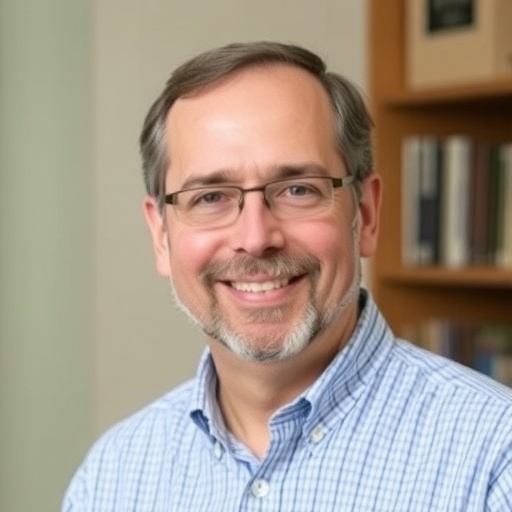
The University of California, Davis School of Medicine has announced the appointment of Dr. David J. Segal as the new chair of the Department of Biochemistry and Molecular Medicine. A distinguished scientist with over two decades of experience, Segal has established himself as a national leader in the fields of genome engineering and molecular therapeutics. His appointment marks a significant milestone for UC Davis, as the institution looks to advance its research portfolio and clinical applications in genetic and neurological diseases.
Dr. Segal’s research career is marked by groundbreaking contributions to gene-editing technologies, including Zinc Finger Nucleases (ZFNs), Transcription Activator-Like Effector Nucleases (TALENs), and CRISPR/Cas9-based platforms. These technologies represent a revolutionary toolkit enabling precise and efficient editing of genetic information within living cells, opening unprecedented possibilities for correcting mutations that underlie a myriad of human diseases. His pioneering work has helped to lay the foundation for translating genome editing from a conceptual framework into powerful clinical applications.
Joining the UC Davis faculty in 2005, Segal has been instrumental in redefining what is possible in treating disorders once considered untreatable. His laboratory is particularly focused on neurological and genetic diseases, where his expertise in molecular engineering is creating new therapeutic strategies to target dysfunctional genes. For instance, by developing tools that can reactivate silenced genes or correct gene dosage abnormalities, Dr. Segal’s research addresses fundamental molecular mechanisms that could potentially reverse debilitating disease phenotypes.
Among the rare genetic disorders targeted by Segal’s lab are Angelman syndrome, SYNGAP1 deficiency, ADNP syndrome, neurofibromatosis type 1, and other neurodevelopmental and neurodegenerative conditions. These diseases, while rare individually, collectively affect a larger population than more common conditions such as cancer or AIDS and yet suffer from a critical lack of effective treatments. This stark reality drives Segal’s commitment to not only advancing basic science but also fostering therapeutic innovations that can be broadly accessible to patients in need.
The impact of Segal’s work extends beyond the lab bench into deep collaborations with patient communities. In particular, his interactions with families affected by Angelman syndrome have provided a poignant perspective on the human dimension of rare diseases. This interface between scientific innovation and patient advocacy informs his approach and magnifies the importance of translating molecular research into real-world therapies that reflect patients’ hopes and urgent needs.
Dean Susan Murin of the UC Davis School of Medicine praised Dr. Segal’s appointment, citing his visionary leadership, innovative research program development, and unwavering dedication to mentoring the next generation of scientists. Murin also expressed gratitude for the interim leadership of Dr. Luis Fernando Santana, whose stewardship of the department has been instrumental during the transition period since 2021.
Throughout his career, Segal has authored or co-authored over 120 peer-reviewed publications, and he holds 25 patents, reflecting his substantial contributions to scientific knowledge and technology development. His work has been supported by numerous prestigious grants from the National Institutes of Health (NIH), the California Institute for Regenerative Medicine (CIRM), as well as awards from various foundations and nonprofit organizations focusing on genetic and neurological disorders.
In addition to his roles within the UC Davis School of Medicine, Dr. Segal serves as an investigator with the NIH Somatic Cell Genome Editing Consortium, a major collaborative effort aimed at accelerating somatic genome editing in therapeutic applications. He also holds the position of field chief editor for Frontiers in Genome Editing, a peer-reviewed journal that highlights cutting-edge advancements in the field and fosters discourse around novel gene-editing methodologies.
Dr. Segal’s educational background includes a Bachelor of Science in biology with honors from Cornell University and a Ph.D. in biochemistry from the University of Utah. He conducted postdoctoral research in molecular biology at the Scripps Research Institute in La Jolla, California before embarking on his academic career. Prior to his appointment at UC Davis, he served as an assistant professor in the Department of Pharmacology and Toxicology at the University of Arizona, Tucson.
Within UC Davis, Segal has held several leadership roles that have strengthened interdisciplinary research and graduate education, including co-chairing the Integrative Genetics and Genomics graduate program and serving as associate director of the UC Davis Genome Center. His vision as chair will undoubtedly continue to propel the department to national and international prominence in biomedical research and education.
Segal’s appointment comes at a time when molecular therapeutics and genome editing are rapidly advancing toward clinical reality, promising transformative treatments for diseases previously deemed “incurable.” His work exemplifies the convergence of innovative molecular engineering, patient-centered research, and institutional leadership poised to shape the future of medicine.
With his groundbreaking research and visionary leadership, Dr. David J. Segal is set to lead the UC Davis Department of Biochemistry and Molecular Medicine into a new era of scientific discovery and therapeutic innovation, advancing the frontiers of genome editing to develop novel, accessible treatments for severe genetic and neurological disorders.
References: Not explicitly listed but available via linked scientific publications and Google Scholar: https://scholar.google.com/citations?user=s1cRNHIAAAAJ&hl=en&oi=ao
Cite Scienmag News
Juliet Wilcox. (February 6, 2026). David J. Segal Named Chair of UC Davis Department of Biochemistry and Molecular Medicine. Scienmag. https://scienmag.com/david-j-segal-named-chair-of-uc-davis-department-of-biochemistry-and-molecular-medicine/
Juliet Wilcox. "David J. Segal Named Chair of UC Davis Department of Biochemistry and Molecular Medicine." Scienmag, 6 February 2026, https://scienmag.com/david-j-segal-named-chair-of-uc-davis-department-of-biochemistry-and-molecular-medicine/. Accessed 4 September 2026.
Juliet Wilcox. "David J. Segal Named Chair of UC Davis Department of Biochemistry and Molecular Medicine." Scienmag. February 6, 2026. https://scienmag.com/david-j-segal-named-chair-of-uc-davis-department-of-biochemistry-and-molecular-medicine/


