


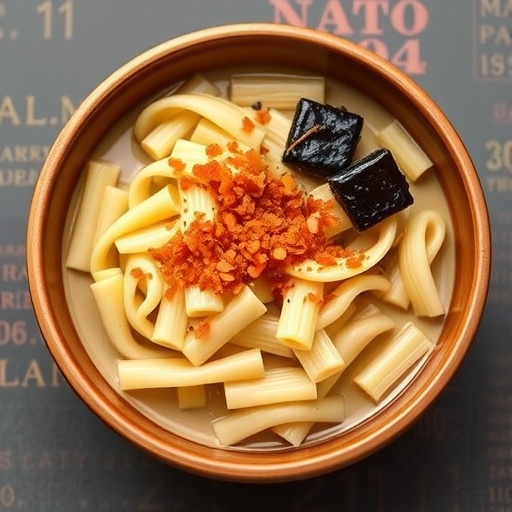
In a groundbreaking study led by Professor Hideshi Ihara at Osaka Metropolitan University, researchers delved into the complex chemistry of natto, a traditional Japanese dish made from fermented soybeans. This study specifically focused on the production of supersulfide molecules during fermentation, which have garnered attention in both medical and nutritional fields for their potential health benefits. Supersulfides are vital metabolites in plants affecting cellular metabolism, and understanding their dynamics could offer insight into disease prevention and health improvements.
The fermentation process utilized the bacterium Bacillus subtilis var. natto, known for its role in transforming soybeans into natto. The study aimed to identify how the content of supersulfides changes during fermentation, which had previously been inadequately explored, leaving a gap in the scientific understanding of this important food product. The team’s work involved meticulous comparisons between dried soybeans sourced from various suppliers and commercial natto brands, uncovering substantial differences in supersulfide levels.
In characterizing the supersulfide content, the researchers did not find significant variations across the soybean samples. However, the natto samples exhibited notably higher levels of these crucial metabolites, indicating that fermentation significantly enhances the concentration of supersulfides. This resonated with earlier findings suggesting that certain food-processing techniques could elevate the nutritional profile of soybeans, but the specific mechanisms were elusive until this study.
The adventurous scientific journey initiated with the detailed observation of supersulfides as they manifested during fermentation. Homemade natto preparations—crafted from two distinct dried soybean varieties—provided the experimental basis for the research. As fermentation progressed, results vividly illustrated a striking increase in soybean-derived supersulfides. This indicated a transformative effect where natto bacteria converted existing sulfur compounds into supersulfide molecules.
A pivotal discovery was that soybeans subjected to heat treatment before fermentation showed a pronounced increase in supersulfide levels. This finding highlights not just the role of the bacteria but also the preparatory steps that can amplify the beneficial properties of soybeans. The implications of this discovery extend beyond the kitchen, suggesting avenues for developing more effective health-enhancing foods through controlled fermentation processes.
Professor Ihara emphasized the significance of their findings, declaring it a widely acknowledged first in demonstrating how microbial fermentation can significantly alter the metabolic landscape of plant compounds. This research opens up new paradigms for understanding how traditional foods can promote health benefits, potentially mitigating risks for diseases such as cardiovascular issues. With the increasing popularity of fermented food products worldwide, the study’s implications are particularly timely in a global context increasingly oriented towards health-conscious dietary choices.
Public interest in fermented foods has surged in recent years, driven by research linking these products to various health benefits, including improved gut health and enhanced immunity. This study’s exploration of natto aligns well with that trend, suggesting that consumers seeking healthful eating habits might find rich rewards in incorporating fermented soybeans into their diets.
While natto is cherished in Japanese cuisine, its global acknowledgement has been uneven. The research team hopes that shedding light on the health-supporting compounds formed during natto fermentation will encourage wider enthusiasm for this nutritious food. Given that fermentation is core to many culinary traditions, the principles uncovered could synergistically benefit numerous cultures valued for their rich histories of food preservation and health.
Furthermore, the study provides a robust foundation for future research into not only natto but also other fermented products. Understanding the deeper biochemical processes at play can inspire the development of various innovations across nutraceuticals, functional foods, and ingredient manipulation strategies in the food industry. The potential for applying these findings to enhance the health profile of numerous other foods cannot be overstated.
This research, published in the journal Nitric Oxide, represents a significant advance in the field of food science, with repercussions in nutritional research and food technology. As academic institutions and food producers alike assess the impacts of these findings, the short and long-term health implications could redefine how consumers view fermented foods and their role in a balanced diet. This study not only uncovers critical details about supersulfides but also sets the stage for a wave of future investigations into the interactions between fermentation, metabolism, and health.
As the interest in health-enhancing foods grows, the study presents an opportunity for health educators and nutritionists to inform the public about the benefits of fermented products like natto. Engaging consumers through educational initiatives about the advantages of incorporating such foods could promote better dietary practices. This research is a compelling reminder that deeply-rooted culinary traditions, such as those found in Japanese culture, can have profound implications when re-evaluated through the lens of modern science and health.
In conclusion, the research conducted by Professor Ihara’s team not only enriches our understanding of natto and its fermentation process but also propels the conversation about nutritional science into the future. As the dialogue around healthful eating evolves, studies like this will serve as crucial benchmarks guiding individuals toward making informed dietary choices.
Keywords
Supersulfides, natto, fermentation, Bacillus subtilis, health benefits, soybean, nutrition, food science, cellular metabolism, cardiovascular disease, fermented foods.
Cite Scienmag News
Daisy Hatcher. (February 5, 2026). Natto: Unveiling the Surprising Science Behind this Unconventional Superfood. Scienmag. https://scienmag.com/natto-unveiling-the-surprising-science-behind-this-unconventional-superfood/
Daisy Hatcher. "Natto: Unveiling the Surprising Science Behind this Unconventional Superfood." Scienmag, 5 February 2026, https://scienmag.com/natto-unveiling-the-surprising-science-behind-this-unconventional-superfood/. Accessed 3 September 2026.
Daisy Hatcher. "Natto: Unveiling the Surprising Science Behind this Unconventional Superfood." Scienmag. February 5, 2026. https://scienmag.com/natto-unveiling-the-surprising-science-behind-this-unconventional-superfood/


