


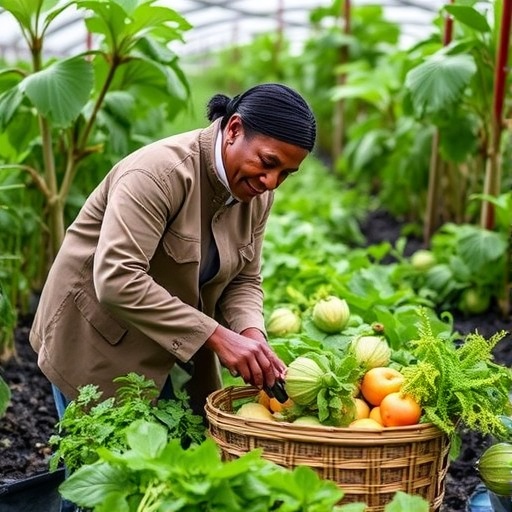
In the relentless pursuit of sustainability within global food systems, a critical element has remained conspicuously underexplored: culture. Recent research led by Nicolette Einbinder, published in npj Sustainable Agriculture, underscores the profound influence of cultural frameworks in shaping food sustainability paradigms. Far beyond agronomic practices or environmental policies, culture profoundly molds the behaviors, preferences, and decisions that ultimately determine the success or failure of sustainable food initiatives worldwide.
Cultural factors operate at the intersection of tradition, identity, and food consumption patterns. These elements dictate not only what is eaten but also how food is produced, shared, and valued. For instance, local culinary customs intrinsically guide agricultural biodiversity by preserving specific crop varieties linked to cultural heritage. When these cultural dimensions are overlooked, sustainability policies often falter, unable to reconcile scientific recommendations with deeply ingrained societal habits and values.
Einbinder’s study systematically explores how integrating cultural considerations into sustainable food systems can generate more resilient and adaptive models. The work calls attention to the need for interdisciplinary approaches, blending social sciences with agricultural technology to deepen insights into human-nature relationships. This approach advocates moving beyond reductive frameworks that prioritize efficiency alone, recognizing culture as a dynamic and pivotal element in food sustainability discourse.
Central to the research is the concept of food sovereignty, which emphasizes communities’ rights to control their food systems according to cultural preferences and ecological contexts. By embedding cultural knowledge within sustainability strategies, communities can tailor interventions that honor ancestry while innovating for ecological resilience. This synthesis fosters stewardship practices that are culturally meaningful and scientifically robust, enabling sustainable transitions that resonate at grassroots levels.
The study also highlights case examples from indigenous populations, whose food systems exemplify the integration of culture and ecology. Indigenous communities often manage agroecosystems with sophisticated knowledge passed down through generations, reflecting adaptive strategies finely tuned to local environments. Recognizing and supporting these culturally embedded practices can contribute substantially to global sustainability goals by promoting biodiversity, soil health, and ecosystem balance.
Moreover, Einbinder advances the discussion by addressing the role of food narratives and storytelling in shaping public perceptions and policy agendas. Cultural narratives influence consumer acceptance of sustainable innovations, affecting market demand and regulatory support. By aligning sustainability communication strategies with culturally resonant themes, policymakers and advocates can foster wider acceptance and behavioral change.
A key technical insight from the research involves the use of ethnographic methods combined with advanced data analytics. This hybrid methodology allows for nuanced understanding of cultural food practices while quantifying their ecological impacts. Through this, the study bridges qualitative cultural insights with quantitative sustainability metrics, offering a comprehensive toolset for integrated food system assessment.
Einbinder’s work also critiques mainstream sustainability metrics that often rely heavily on biophysical indicators, such as carbon footprint or water usage, overlooking social and cultural factors. The study proposes multidimensional frameworks that incorporate cultural sustainability indicators, highlighting aspects like food heritage preservation, equitable access, and cultural well-being. This reconceptualization pushes the boundaries of what sustainability measurement entails.
The research underscores the variability of cultural influences across regions, emphasizing that one-size-fits-all sustainability policies ignore critical local nuances. Instead, it advocates for place-based approaches supporting culturally grounded innovations. Such tailored strategies acknowledge the diversity of food cultures worldwide, fostering inclusivity and enhancing the relevance of sustainability interventions.
Einbinder also discusses the implications for education and capacity building within sustainable agriculture. Embedding cultural literacy into training programs for farmers, policymakers, and scientists can foster empathy and contextual awareness. Cultivating such interdisciplinary competencies enhances collaboration and effectiveness in designing sustainable food systems responsive to human and ecological diversity.
Importantly, the study explores the challenges in mainstreaming culture within institutional frameworks. Structural barriers, such as rigid regulatory environments and funding biases favoring technological solutions, can inhibit cultural integration. Overcoming these obstacles requires intentional policy shifts and stakeholder engagement mechanisms recognizing cultural agency as a pillar of sustainable development.
In the face of accelerating global change, including climate disruptions and urbanization, the cultural dimension offers potential pathways for resilience. Cultural adaptability enables communities to reconfigure food systems in culturally congruent ways, sustaining both livelihoods and ecosystem functions. Einbinder argues that leveraging culture as a catalyst for transformative change is essential to meet 21st-century sustainability challenges.
The research also touches on consumer culture and its impact on sustainability. Modern globalized diets often displace traditional food cultures, promoting homogenization and increased ecological footprints. Reinvigorating and valorizing local food cultures can counteract these trends, supporting diverse, sustainable foodscapes that also bolster cultural identity and social cohesion.
Einbinder’s study calls for more inclusive research agendas that elevate underrepresented cultural voices in sustainability science. This includes participatory approaches engaging marginalized groups, ensuring their knowledge and experiences inform policy discourse. Such inclusion enhances equity and legitimacy in sustainable food governance processes.
In conclusion, culture emerges not as a peripheral aspect but as a central and transformative element in sustainable food systems. Incorporating cultural dimensions enriches sustainability science and practice, offering holistic pathways towards food systems that are ecologically sound, socially just, and culturally vibrant. Einbinder’s work challenges scholars, practitioners, and policymakers to embrace culture as the missing link that can unlock the full potential of sustainable agriculture worldwide.
Cite Scienmag News
Alan Morgan. (February 3, 2026). Culture: The Key to Sustainable Food Systems. Scienmag. https://scienmag.com/culture-the-key-to-sustainable-food-systems/
Alan Morgan. "Culture: The Key to Sustainable Food Systems." Scienmag, 3 February 2026, https://scienmag.com/culture-the-key-to-sustainable-food-systems/. Accessed 3 September 2026.
Alan Morgan. "Culture: The Key to Sustainable Food Systems." Scienmag. February 3, 2026. https://scienmag.com/culture-the-key-to-sustainable-food-systems/


