


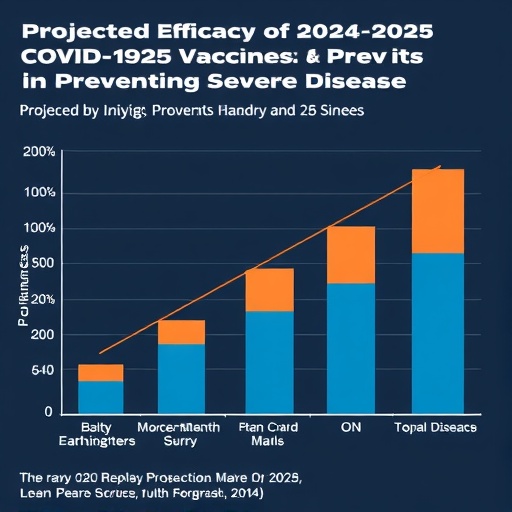
In a groundbreaking multicenter case-control study published recently in JAMA Network Open, researchers have unveiled critical insights into the effectiveness of the 2024-2025 COVID-19 vaccines. This comprehensive analysis delves into how these vaccines shield individuals from hospitalization and severe outcomes related to COVID-19, particularly in the face of evolving viral variants like the JN.1 lineage and its descendants. The study’s findings underscore the ongoing importance of vigilant monitoring of vaccine performance, specifically through the lens of SARS-CoV-2’s genetic evolution including spike protein mutations. Such dynamic monitoring is indispensable for optimizing vaccine composition and shaping future immunization strategies.
The study was meticulously designed across multiple clinical sites, employing a robust case-control methodology to evaluate vaccine effectiveness with high statistical confidence. By comparing hospitalized patients with confirmed COVID-19 diagnoses to control populations, the research team quantified how vaccination modulates the risk of severe disease and the necessity for hospitalization. What emerges is a nuanced confirmation that while vaccines remain a powerful tool in the public health arsenal, their efficacy is intricately tied to the ever-shifting viral landscape. Variants harbor mutations particularly in the spike glycoprotein warrant continuous scrutiny, as these molecular changes can influence vaccine-induced immunity.
SARS-CoV-2 variants categorized under the JN.1 lineage have drawn special attention in this investigation. These descendants carry multiple mutations in the spike protein, a critical component targeted by most COVID-19 vaccines to elicit protective immune responses. The study revealed that 2024-2025 vaccine formulations retain significant protective efficacy even against these variant strains, which is encouraging from both clinical and epidemiological perspectives. However, the results also highlight subtle variations in vaccine effectiveness contingent upon the specific mutations present, emphasizing how viral genetic shifts can impact the protective landscape.
A key technical dimension of the study lay in stratifying participants not only by vaccination status but also by the specific SARS-CoV-2 lineage they were infected with. This detailed stratification enabled the researchers to dissect vaccine effectiveness at a granular level, linking clinical outcomes with precise viral genotypes. Such an approach pushes forward the methodology for vaccine evaluation by integrating molecular epidemiology and clinical medicine, aligning genetic surveillance with patient outcomes. This level of integration is poised to inform the next generation of vaccine development tailored to circulating variants.
Alongside lineage stratification, the research incorporated advanced statistical estimation techniques to adjust for potential confounders and improve the robustness of effectiveness estimates. Inferential statistics were employed to dissect the nuanced relationships between vaccination, variant type, and clinical severity, ensuring that reported findings reflect true vaccine performance rather than sampling bias. These methodological rigor aspects elevate the study beyond descriptive statistics to actionable epidemiological intelligence that can directly inform public health policy.
The authors emphasize the fluid nature of SARS-CoV-2 evolution and the imperative for continuous vaccine effectiveness monitoring. Given that spike protein mutations can diminish neutralizing antibody recognition, the scientific community must maintain heightened vigilance. This study advocates for a dynamic vaccine recommendation framework that adapts to emergent variant profiles. The integration of genetic surveillance data with real-world vaccine performance metrics emerges as a cornerstone for guiding booster formulations and distribution strategies.
Moreover, the research contributes to the broader understanding of how molecular genetics shapes infectious disease epidemiology. The interplay between viral mutations and host immune responses is complex, and this study’s findings add a pivotal layer to the ongoing dialogue about preventing severe COVID-19 outcomes. It reinforces that while vaccination remains the most effective intervention, no vaccine is impervious to viral evolution. Continuous refinement, informed by cutting-edge genomic analysis, is vital to sustaining population-level immunity.
This comprehensive real-world evaluation from multiple healthcare centers also echoes the critical role of hospitals and clinical infrastructures in pandemic response. The ability to rapidly identify variant-specific infections through molecular diagnostics and to correlate these with vaccination status and patient outcomes reflects a sophisticated healthcare ecosystem. Such capacities are invaluable during times when viral epidemiology shifts rapidly and new variants with unpredictable behavior emerge.
From a preventive medicine and public health perspective, the study’s findings validate ongoing efforts to promote vaccination and booster campaigns, particularly among vulnerable populations at higher risk of hospitalization. The data support that even in the era of variant diversification, vaccination significantly reduces the burden on healthcare systems by preventing severe disease. Consequently, health authorities are urged to continue leveraging vaccination as a frontline defense while simultaneously investing in variant tracking and vaccine reformulation frameworks.
In the broader scientific community, this study represents a model for integrating applied mathematics and inferential statistics with clinical research. The use of controlled trials and observational epidemiology anchored by sophisticated statistical methods paves the way for more precise and responsive vaccine effectiveness assessments. As SARS-CoV-2 continues to mutate, such methodological innovations are essential for maintaining scientific rigor in evaluating and optimizing pandemic countermeasures.
Underscoring the public health significance, the research team, led by corresponding author Dr. Kevin C. Ma, PhD, highlights that the insights generated extend beyond academic interest to practical guidance for stakeholders. These range from vaccine manufacturers and policymakers to frontline clinicians and epidemiologists, all of whom must balance evolving science with urgent deployment decisions. The study thus embodies a translational research approach that knits together molecular biology, clinical data, and population health impact.
JAMA Network Open’s decision to publish this open-access study ensures that the data is freely available to researchers and the public worldwide, fostering transparency and rapid dissemination. In times when misinformation about vaccine efficacy circulates widely, such accessible peer-reviewed evidence is critical to maintaining public trust and informed decision-making. The study’s findings reaffirm the fundamental role vaccines play in mitigating COVID-19 severity despite the ongoing viral adaptive landscape.
In summary, this pivotal study offers a scientifically rigorous and timely overview of the 2024-2025 COVID-19 vaccine performance against hospitalizations and severe clinical manifestations, especially in the context of emergent SARS-CoV-2 lineages with multiple spike protein mutations. By leveraging multicenter data and sophisticated statistical analysis, it provides robust evidence supporting continued vaccination efforts while highlighting the necessity for relentless surveillance of viral genetic diversity. This dual approach — combining vaccine innovation with vigilant monitoring — stands as the cornerstone of sustained pandemic mitigation moving forward.
News Publication Date: [Not provided in the content]
Web References: [Not provided in the content]
References: doi:10.1001/jamanetworkopen.2025.57415
Cite Scienmag News
Kristina Jarvis. (February 3, 2026). Projected Efficacy of 2024-2025 COVID-19 Vaccines in Preventing Severe Disease. Scienmag. https://scienmag.com/projected-efficacy-of-2024-2025-covid-19-vaccines-in-preventing-severe-disease/
Kristina Jarvis. "Projected Efficacy of 2024-2025 COVID-19 Vaccines in Preventing Severe Disease." Scienmag, 3 February 2026, https://scienmag.com/projected-efficacy-of-2024-2025-covid-19-vaccines-in-preventing-severe-disease/. Accessed 4 September 2026.
Kristina Jarvis. "Projected Efficacy of 2024-2025 COVID-19 Vaccines in Preventing Severe Disease." Scienmag. February 3, 2026. https://scienmag.com/projected-efficacy-of-2024-2025-covid-19-vaccines-in-preventing-severe-disease/


