


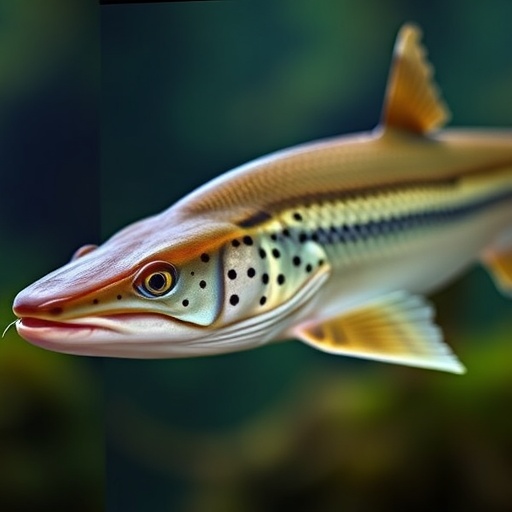
In a groundbreaking study published in Biology of Sex Differences, researchers have delved into the intricate world of gonadal development in Siberian sturgeon (Acipenser baikalensis). This remarkable species, known for its historical significance and ecological importance, has come under the scientific lens as new findings shed light on the sex-specific transcriptome intricacies that govern early developmental stages. Utilizing cutting-edge genomic technology and analytical techniques, the research team, comprising experts like Lasalle Gerla, Benech-Correa, and Klopp, has opened the door to understanding how genetic factors influence sexual differentiation in this fascinating fish.
The Siberian sturgeon is a living testament to millions of years of evolutionary adaptations in freshwater environments. However, as environmental challenges intensify, it becomes increasingly crucial to understand its biological processes. The researchers aimed to explore the gonadal transcriptome during early development, highlighting the differences between male and female sturgeons. They meticulously examined gene expression patterns, providing essential data that could pave the way for targeted conservation efforts and breed management strategies.
A significant aspect of this study is its focus on the early developmental stages of the sturgeon, stages that are critical for determining sexual differentiation. The researchers collected gonadal tissues from embryos and larvae, analyzing them using advanced transcriptomic techniques. By employing RNA sequencing methods, they were able to capture the dynamic gene expression profiles unique to each sex. This high-resolution analysis not only enhances our understanding of sexual dimorphism but also suggests a complex interplay of genetic mechanisms behind sex determination.
One of the paramount findings of the study revealed distinct patterns of gene expression linked to sex differentiation in Siberian sturgeon. The researchers identified specific genes that are upregulated in males or females during critical periods of gonadal development. This information holds transformative potential for aquaculture and conservation programs, suggesting that understanding gene function and regulation could help in developing strategies for breeding programs aimed at increasing population resilience.
Moreover, the research emphasizes the importance of environmental factors in influencing gonadal development. There’s a growing body of evidence indicating that external stimuli, such as temperature and chemical exposure, can significantly affect gene expression within the gonads. The results of this study provide a baseline for such investigations, fostering greater awareness about how anthropogenic changes can disrupt developmental processes in aquatic ecosystems.
As breeding programs for sturgeon often face challenges due to their complex reproductive behaviors and long maturation times, the insights gained from this research can streamline efforts to improve hatchery practices. By integrating knowledge of sex-specific gene expression, aquaculturists may optimize conditions conducive to producing balanced sex ratios, crucial for sustaining sturgeon populations in both wild and controlled environments.
The analysis of the gonadal transcriptome further revealed additional layers of complexity, including the identification of non-coding RNAs and their potential regulatory roles in sexual differentiation. While traditionally understudied, these elements are gaining recognition for their integral functions in gene regulatory networks. Understanding these non-coding regions can thus offer an enriched perspective on how sturgeon evolve and adapt reproductive strategies over time.
What sets this research apart is the interdisciplinary approach taken by the team, merging genomic insights with ecological and evolutionary considerations. By situating their findings within the broader context of sturgeon conservation, they have highlighted the urgency of integrating molecular biology with ecology to tackle pressing conservation issues. This holistic perspective not only enhances our understanding of Siberian sturgeon but also reinforces the importance of preserving genetic diversity within ecosystems.
Furthermore, this study opens up exciting avenues for further investigations into sex determination mechanisms across other sturgeon species and related taxa. The comparative approach will be instrumental in elucidating evolutionary dynamics and adaptive responses within this group of ancient fishes, which have survived numerous mass extinction events throughout Earth’s history.
As global attention turns towards sustainable practices and biodiversity conservation, findings such as these will become increasingly instrumental. The scientific community will need to collaborate across disciplines to apply this knowledge effectively, translating laboratory discoveries into pragmatic conservation actions for at-risk species. The interaction between genetic research and environmental stewardship could be the key to sustaining our planet’s biological heritage.
In conclusion, the implications of this research are profound, extending far beyond the laboratory. It emphasizes the interconnectedness of genetic science with real-world conservation efforts, highlighting the potential for informed breeding programs to aid in species recovery. Furthermore, as we confront ongoing environmental challenges, the insights gained from the sex-specific gonadal transcriptome of Siberian sturgeon can inform broader strategies aimed at preserving biodiversity in aquatic ecosystems.
Ultimately, this monumental study paves the way for future research endeavors and sets a foundation for improving our understanding of aquatic organisms’ reproductive biology. It fosters hope that through molecular insights and practical applications, we can cultivate a sustainable future for Siberian sturgeon and other endangered species, ensuring their presence in our ecosystems for generations to come.
Such research not only educates about the specific needs of Siberian sturgeon but also serves as a reminder of our responsibility to protect vulnerable species. The intersection of science, technology, and conservation efforts will define our ability to mitigate human impact and restore ecological balance, proving that understanding the complexities of our natural world is more vital now than ever before.
In embarking on these scientific journeys, we honor not only the subjects of our studies but also the intricate web of life they represent. The stories of these ancient mariners are still being written, and it is our collaborative duty to ensure they continue to flourish against all odds.
Cite Scienmag News
Juliet Wilcox. (February 2, 2026). Exploring Siberian Sturgeon’s Early Sex-Specific Gonadal Transcriptome. Scienmag. https://scienmag.com/exploring-siberian-sturgeons-early-sex-specific-gonadal-transcriptome/
Juliet Wilcox. "Exploring Siberian Sturgeon’s Early Sex-Specific Gonadal Transcriptome." Scienmag, 2 February 2026, https://scienmag.com/exploring-siberian-sturgeons-early-sex-specific-gonadal-transcriptome/. Accessed 9 September 2026.
Juliet Wilcox. "Exploring Siberian Sturgeon’s Early Sex-Specific Gonadal Transcriptome." Scienmag. February 2, 2026. https://scienmag.com/exploring-siberian-sturgeons-early-sex-specific-gonadal-transcriptome/


