


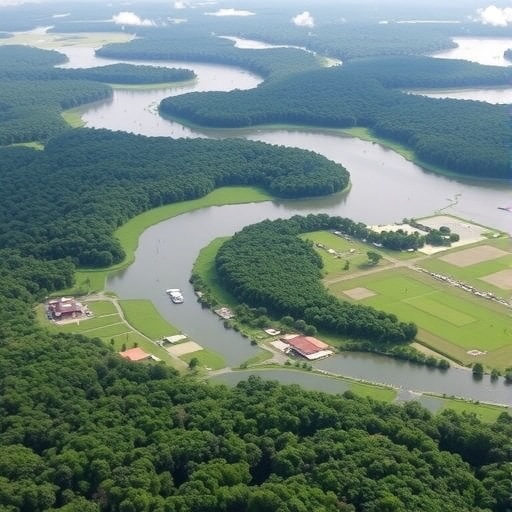
In an unprecedented call to action, a collective of Brazilian scientists advocates for a radical reimagining of health systems in the Amazon, emphasizing the need to address the intertwined challenges of climate change, extreme weather phenomena, and pervasive food insecurity. Published in the esteemed British Medical Journal, this multidisciplinary study underscores that existing models built on conventional paradigms are insufficient in confronting the unique and dynamic realities faced by Amazonian communities.
The Amazon, a biome long subjected to extractive economic activities underpinned by outdated public policies, has borne the brunt of environmental degradation that directly compromises both physical and mental health among indigenous and traditional populations. The region’s complex socio-ecological fabric cannot be effectively safeguarded by health frameworks disconnected from local knowledge systems and the fluctuating natural landscape aggravated by climate perturbations.
A focal point of the analysis highlights the deep-seated inadequacy within the Brazilian public health infrastructure, known as the Sistema Único de Saúde (SUS), to respond adeptly to climate-induced health risks. The urgency to reformulate this system is catalyzed by the increasing frequency of heatwaves, floods, and storms—phenomena that are becoming more intense and recurrent, rendering vulnerable communities susceptible to emerging diseases and exacerbated nutritional deficiencies.
One of the pivotal recommendations is the integration of traditional ecological knowledge with contemporary scientific understanding and political governance. Indigenous epistemologies, particularly in the realm of community-based health surveillance, are posited as essential mechanisms to detect and mitigate health hazards in real-time. This hybrid approach, which harmonizes ancestral wisdom and biomedical methodologies, is especially crucial in territories where conventional healthcare delivery is impeded by geographic isolation, including reliance on riverine transport that is subject to abrupt climatic disruptions.
Citing recent drought events that isolated entire communities by drying up critical waterways, the researchers illustrate the precariousness of healthcare access in the Amazon’s fluid territories. Floods and droughts do not merely constrain movement but precipitate a cascade of health crises including outbreaks of infectious diseases, water contamination, and acute food shortages—factors that collectively amplify public health vulnerabilities.
Moreover, the study foregrounds the importance of preserving dietary traditions rooted in local biodiversity. It critiques the rising influx of ultra-processed foods, highlighting how these dietary shifts undermine immune resilience and contribute to chronic illnesses. Midwives, who employ a blend of Western medical practices and indigenous care traditions, are exemplified as frontline agents fostering culturally competent healthcare adapted to the Amazonian context.
The research collective advocating this paradigm shift encompasses experts from prominent Brazilian institutions such as the University of São Paulo’s School of Public Health, the Federal University of Amazonas, and FIOCRUZ Amazônia, signifying a robust collaborative effort essential for nuanced and actionable solutions. Their approach promotes what they term an “organic adaptation model”—a framework that acknowledges rivers and forests not merely as backdrops but as active, interactive participants in sustaining health and ecological balance.
Conceptually, they employ the notion of “fluid territories,” a term popularized by FIOCRUZ Amazônia, to capture the mutable and interdependent relationship between human communities and their environmental matrices. This concept challenges rigid, static mapping of health infrastructure and advocates for flexible, responsive systems that can adapt to environmental fluctuations and foster resilience against climate shocks.
The researchers also critically evaluate the current trajectory of Brazil’s development model, warning of stark consequences if climate commitments remain unmet. They emphasize the irreplaceable value of socio-biodiversity in mitigating social suffering and stress that disregard for this will deepen inequalities and accelerate health crises catalyzed by environmental degradation.
Central to their argument is an expanded conceptualization of health, particularly as perceived by indigenous groups that view physical well-being as inseparable from spiritual and environmental harmony. Diseases such as malaria and COVID-19, in this holistic perspective, are manifestations of broader systemic imbalances—ecosystem disruptions, cultural dislocation, and violations of sacred territories—which necessitate innovative, culturally sensitive health responses.
The history of the Amazon is marked by policies that have marginalized indigenous and traditional rights, leading to the destruction of biodiversity and cultural landscapes. These policies have had devastating repercussions on mental health and community cohesion, underscoring the necessity for health reforms that operate with full recognition of these human and ecological dimensions.
This research dossier extends beyond the primary article, encompassing additional investigations that delve into the role of indigenous women leaders during the pandemic, alternative governance structures relevant to climate change mitigation, and Brazil’s intricate position as COP30 host amidst ongoing environmental policy contradictions. The overarching aim is to advance a decolonial narrative that prioritizes the complexities and specificities of Global South contexts, challenging the dominance of Northern scientific agendas.
In conclusion, this groundbreaking work calls for an urgent transformation of Amazonian health systems, leveraging interdisciplinary innovations and indigenous wisdom to build resilience. Strengthening these health infrastructures is not simply a regional imperative but a global necessity tied to the broader challenge of climate justice and sustainable development.
News Publication Date: 6-Nov-2025.
Web References:
https://bmj.com/content/391/bmj.r1925
Cite Scienmag News
Sloane Callahan. (February 1, 2026). Experts Call for Overhauling Amazon Health Systems Amid Climate Change Challenges. Scienmag. https://scienmag.com/experts-call-for-overhauling-amazon-health-systems-amid-climate-change-challenges/
Sloane Callahan. "Experts Call for Overhauling Amazon Health Systems Amid Climate Change Challenges." Scienmag, 1 February 2026, https://scienmag.com/experts-call-for-overhauling-amazon-health-systems-amid-climate-change-challenges/. Accessed 4 September 2026.
Sloane Callahan. "Experts Call for Overhauling Amazon Health Systems Amid Climate Change Challenges." Scienmag. February 1, 2026. https://scienmag.com/experts-call-for-overhauling-amazon-health-systems-amid-climate-change-challenges/


