


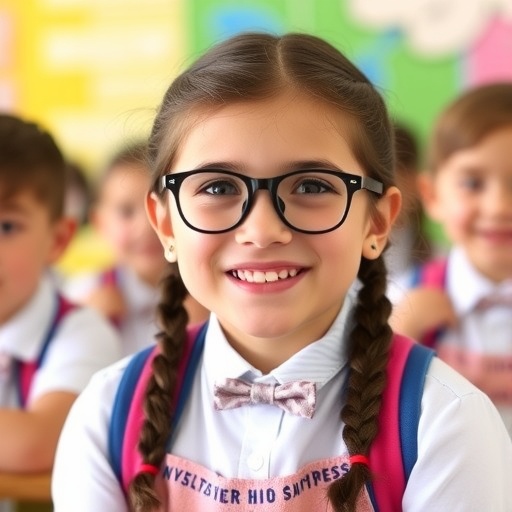
A groundbreaking new study conducted by researchers at the Norwegian University of Science and Technology (NTNU) has unveiled striking gender-based disparities in young children’s well-being and psychological safety at school. Led by Professor Hermundur Sigmundsson, the research delves into the nuanced experiences of 6 to 9-year-old students, revealing that girls consistently report higher levels of happiness during school hours than boys. The findings pivot around how feelings of safety and belonging intertwine with academic engagement and overall emotional health in primary education.
The investigation involved a comprehensive survey of 1,620 children, predominantly seven to eight years old, representing Norway’s youngest cohort in formal schooling. This meticulous evaluation employed a novel psychometric instrument developed by the research team called the “Well-being and Perceived Safety in School Scale,” designed to quantify children’s subjective experiences of safety, social connection, and enjoyment in the school environment. The robust methodology enabled the team to capture the complex relational dynamics between perceived safety and emotional well-being with precision rarely seen in early childhood education research.
One of the salient outcomes of this study is the strong correlation established between children’s well-being and their sense of safety within both classroom and recess contexts. Professor Sigmundsson emphasizes, “Enjoying school and feeling safe are deeply interconnected; children who feel secure tend to report greater happiness and engagement.” This connection highlights the importance of ensuring safe physical and social environments for young learners to thrive academically and emotionally. The study notes that safety perceived during recess—a traditionally less-structured part of the school day—is as crucial as feeling safe during formal class time.
The survey results also reveal intriguing gender differences that suggest schools may be inherently more suited to girls’ psychological and biological tendencies. Girls’ happiness at school surpasses that of boys, a disparity potentially rooted in neurochemical and hormonal factors. Dopamine, often simplistically labeled the “happiness hormone,” appears to be more intensely activated in girls through social interaction and communal engagement. Contrastingly, boys’ dopamine activity is linked to more self-directed behaviors and higher testosterone levels that drive a greater need for physical activity and movement, creating a mismatch in the traditional sedentary classroom setup.
This biological underpinning may partly explain why extended periods of sitting still and passive learning—which dominate many early schooling practices—appear less conducive to boys’ well-being. Sigmundsson suggests, “Boys generally require more physical stimulation and active engagement than current school structures typically provide, which could adversely affect their mood and academic motivation.” He advocates for structural reforms incorporating increased physical activity and course content that taps into children’s individual passions, which preliminary evidence from similar educational interventions in Iceland have shown to foster improved classroom atmosphere and student well-being.
Moreover, the study dives deeper into how children perceive their academic strengths and preferences through gendered lenses. While girls generally express higher liking and self-assessed competence in reading and science subjects, boys tend to believe they excel more in mathematics, despite reporting similar enjoyment levels for math as girls. Boys also show a marked preference for physical education, scoring it as their favorite subject, although both genders rate their performance similarly here. This bifurcation in subject affinity may reflect broader psychological and motivational differences that influence engagement and success in distinct academic domains.
Another fascinating facet revealed by the research is the relatively low correlation between liking reading and liking physical education among students, suggesting these interests cater to different cognitive and affective needs. Sigmundsson explains, “Children who excel and enjoy reading are often a different group than those who thrive in physical education, pointing to diverse developmental profiles within early learners.” Understanding these nuanced student profiles may help educators tailor instruction that respects varied competencies and interests, thereby enhancing inclusion and motivation.
Significantly, the research team also compared the children’s self-reported enjoyment of different subjects with their actual performance, as verified by school assessments. This comparison unearthed a strong positive relationship between liking a subject and achieving good results in it, underscoring the role of intrinsic motivation in academic success. Rather than mere perception, the data reflected tangible outcomes: children who enjoyed reading, math, science, or physical education tended to perform better in those subjects, highlighting how emotional engagement can drive measurable educational gains.
Insights from this study hold substantial implications for pedagogy and school policy. The link between psychological safety and academic engagement urges educators to reconsider school environments through the lens of emotional and physical comfort. Interventions aimed at improving safety—whether through anti-bullying programs, inclusive classroom cultures, or structural changes to recess management—may yield significant benefits for well-being and learning outcomes. Furthermore, gender-sensitive adaptations, such as integrating more physical activity to satisfy boys’ biological needs, might foster a more equitable and fulfilling educational experience for all children.
The study’s revelations also lend credence to the idea that early schooling should not adopt a one-size-fits-all approach but rather embrace differentiated strategies based on individual temperaments, biological drives, and interest areas. Promoting children’s passions alongside academic requirements, for instance through passion projects or flexible learning modules, could nurture holistic development and emotional resilience, preparing younger generations for lifelong learning and social competence.
In conclusion, Professor Sigmundsson and his team’s research offers a vital exploration of how interrelated factors like psychological safety, gender, and academic preference influence young learners’ school experiences. By shedding light on the subtle yet impactful distinctions in well-being between boys and girls, and linking emotional safety to academic performance, the study provides a roadmap for reimagining early childhood education. Implementing evidence-based adaptations that recognize the biological and psychological realities of children could transform schools into environments where every child flourishes, both emotionally and intellectually.
The promising findings emphasize the necessity for ongoing research and dynamic educational reforms. As schools worldwide grapple with improving student mental health and achievement, insights like those from NTNU’s survey provide actionable knowledge grounded in empirical data. Moving forward, educators, policymakers, and researchers must collaborate to create schooling systems that respond sensitively to diverse student needs, ensuring that psychological safety and well-being are placed at the core of educational practice.
News Publication Date: 15-Nov-2025
Web References:
- https://www.tandfonline.com/doi/full/10.1080/1350293X.2025.2586675
- https://pubmed.ncbi.nlm.nih.gov/41072296/
References:
Sigmundsson, H., Litlabø, V. R., Matos, M., & Haga, M. (2025). Robust children: exploring engagement with academic subjects, well-being and psychological safety in schoolchildren aged 6–9 years in Norway. European Early Childhood Education Research Journal, 1–16. DOI: 10.1080/1350293X.2025.2586675
Cite Scienmag News
Courtney Benton. (February 1, 2026). Why Girls Are Happiest at School: The Science Behind It. Scienmag. https://scienmag.com/why-girls-are-happiest-at-school-the-science-behind-it/
Courtney Benton. "Why Girls Are Happiest at School: The Science Behind It." Scienmag, 1 February 2026, https://scienmag.com/why-girls-are-happiest-at-school-the-science-behind-it/. Accessed 3 September 2026.
Courtney Benton. "Why Girls Are Happiest at School: The Science Behind It." Scienmag. February 1, 2026. https://scienmag.com/why-girls-are-happiest-at-school-the-science-behind-it/


