


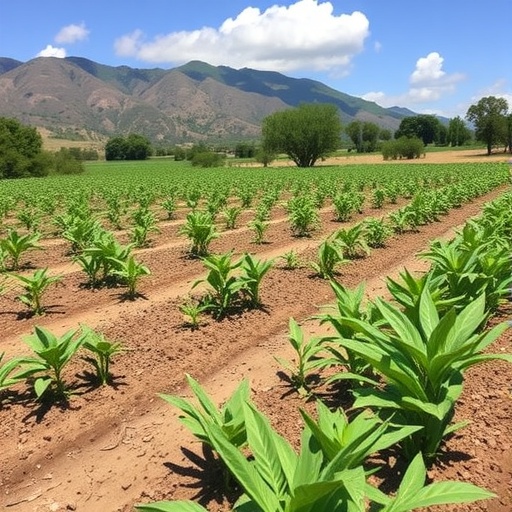
In the aftermath of conflict, landscapes, communities, and livelihoods can be profoundly altered. In the Laelay Mychew district of Northern Ethiopia, this transformation offers a keen insight into the interplay between agriculture and resilience. Newly published research by Welderufael et al. showcases the intricate web formed by crop biocultural trait diversity and the sustenance it provides to post-conflict seed systems. The researchers delve into how traditional agricultural knowledge, varieties of crops, and local practices reshape both food security and community stability.
At the core of their research lies the concept of biocultural diversity, which interweaves genetic diversity in agriculture with cultural practices and knowledge. This is not merely an academic exploration; it is vital for understanding how communities adapt to changing circumstances. In Laelay Mychew, the lingering effects of conflict have necessitated a reevaluation of agricultural practices. The study emphasizes the importance of harnessing local biocultural resources as essential assets for rebuilding a resilient agricultural framework.
The ramifications of this research extend well beyond academic circles, influencing policy and sustainable practices. The authors argue that recognizing the local diversity of crops is crucial for developing strategies that enable communities to withstand environmental shocks and social challenges. The idea that indigenous knowledge can serve as a roadmap for recovery is a central theme that resonates throughout their findings. By identifying and valuing local traits, communities can enhance their agricultural diversity, leading to improved food production and security.
The researchers conducted extensive field studies, engaging directly with local farmers and community leaders. This participatory approach highlights a critical avenue for fostering resilience: the cultivation of community-driven agricultural practices. Farmers possess intricate knowledge about the resilience of various crop varieties under different environmental stresses. By documenting these traditions, the study not only elevates the voices of local farmers but also provides a blueprint for how similar practices can be implemented in other regions facing conflict.
Ethiopia’s agricultural landscape is characterized by a rich tapestry of crops that have been cultivated over generations. The study illustrates how enriching this genetic library—through understanding and enhancing crop biocultural traits—can provide a robust foundation for food security. As global climate patterns shift, the resilience of specific traits may become increasingly important in ensuring that crops can withstand droughts, floods, and other climatic irregularities.
An interesting aspect of this research is how the authors attribute the resilience of post-conflict communities to the very characteristics of biocultural trait diversity. By linking these traits to cultural practices, they posit that successful adaptation is deeply rooted in cultural identity. This perspective urges us to rethink conventional agricultural policies that often overlook the significant benefits of integrating cultural practices into modern farming systems.
Moreover, the findings highlight that a return to traditional agricultural methods can bolster community ties and create avenues for collaboration. The study showcases examples where groups of farmers engage with each other to share knowledge on crop cultivation, pest management, and sustainable practices. This collective approach not only helps in immediate recovery but also nurtures a sense of community, ultimately contributing to the overarching goal of long-term resilience.
One of the most striking implications of the study is the synergy between biodiversity and food security. By maintaining a diverse range of crops, the community enhances its food security against unpredictable supply chain disruptions. The research illustrates that diversifying crop sources significantly mitigates the risks associated with relying on a single crop. This principle is especially relevant as we witness increasing global food price volatility and supply chain fragility exacerbated by geopolitical tensions.
Understanding the historical context of Laelay Mychew further enriches this discussion. The district has experienced climatic challenges and socio-political upheaval that have historically disrupted agricultural practices. Recognizing this context is vital to appreciate how historical knowledge shapes current agricultural techniques. The integration of traditional crop varieties with modern agricultural practices speaks to the potential for sustainable development that preserves cultural heritage while fostering advancement.
The research outcomes also have significant implications for policymakers. By advocating for a shift in policy that recognizes the importance of localized agricultural practices, the authors suggest that governments can facilitate better recovery strategies. In essence, investing in agricultural biodiversity and local knowledge systems proves not only beneficial but essential for community stability.
As the global community continues to confront issues of climate change and food insecurity, lessons from Laelay Mychew underscore the importance of localized solutions. This research serves as a clarion call for the need to invest in local agricultural systems that honor biocultural diversity as a valid pathway toward sustainability. By embracing this approach, we stand to gain not only in terms of food production but also through the enrichment of cultural identity and community resilience.
The research paves the way for future investigations that can explore other regions affected by conflict and environmental changes. The methodology developed in this study can be replicated to cultivate a deeper understanding of the relationship between biocultural diversity and resilience globally. This approach fosters an appreciation for indigenous knowledge as a vital component of agricultural innovation, directing us toward a more sustainable and equitable future.
As the global discourse on sustainability advances, the findings presented by Welderufael and colleagues provide crucial insights. By intertwining agricultural practices with cultural narratives, there exists a profound opportunity to not just remedy the scars of conflict but to build a fortified framework for the future. The call to action is clear: communities can emerge stronger when they embrace the teachings of their past and leverage them to adapt to the challenges of the present and future.
In conclusion, the resilience of agricultural systems in post-conflict areas is not solely dependent on modern technology and economic inputs. Instead, it is deeply rooted in the preservation and innovation of local agricultural practices. By prioritizing the diverse traits inherent in crops and the cultural knowledge surrounding them, communities like those in Laelay Mychew can reshape their futures through a lens of sustainability and resilience. The path forward will undoubtedly require sustained efforts, but the lessons gleaned from this study illustrate a roadmap rich with potential.
Welderufael, S., Gidey, T., Gebreslassie, H. et al. Crop biocultural trait diversity and its contribution to post conflict seed system resilience in Laelay Mychew district Northern Ethiopia. Discov Sustain (2026). https://doi.org/10.1007/s43621-026-02638-7
Cite Scienmag News
Alan Morgan. (February 1, 2026). Enhancing Seed System Resilience in Northern Ethiopia. Scienmag. https://scienmag.com/enhancing-seed-system-resilience-in-northern-ethiopia/
Alan Morgan. "Enhancing Seed System Resilience in Northern Ethiopia." Scienmag, 1 February 2026, https://scienmag.com/enhancing-seed-system-resilience-in-northern-ethiopia/. Accessed 1 September 2026.
Alan Morgan. "Enhancing Seed System Resilience in Northern Ethiopia." Scienmag. February 1, 2026. https://scienmag.com/enhancing-seed-system-resilience-in-northern-ethiopia/


