


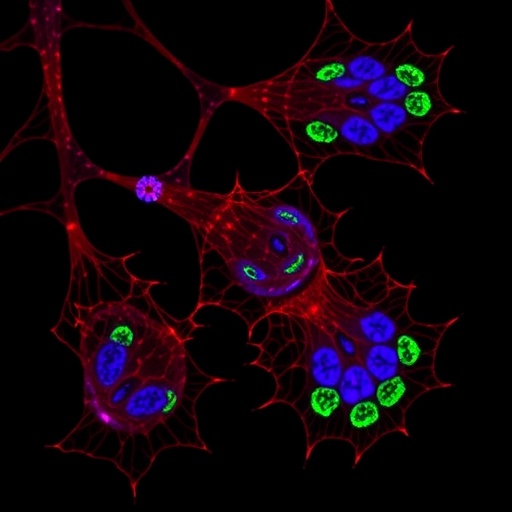
In a groundbreaking study published in Molecular Cancer, researchers explored the role of CircKIAA1617 in the context of estrogen receptor-positive (ER-positive) breast cancer, a prevalent subtype that often poses therapeutic challenges. The team, led by esteemed scientists Yang, Li, and Wang, sought to understand how the circular RNA CircKIAA1617 influences cancer stemness, a concept crucial for understanding tumor initiation, progression, and treatment resistance. This research points to promising avenues for novel therapeutic strategies tailored to combat this formidable disease.
Breast cancer remains one of the leading causes of cancer-related morbidity and mortality among women worldwide. Understanding the underlying mechanisms that contribute to the aggressive nature of ER-positive variants is crucial for developing effective treatment modalities. Among the various molecular players implicated in the development and persistence of cancer stem cells, CircKIAA1617 has emerged as a significant factor worth investigating. This circular RNA has been shown to orchestrate various cellular processes, but its role in breast cancer specifically warranted this thorough examination.
One of the primary methods researchers utilized in their investigation was RNA sequencing, an advanced technique that allows for the comprehensive analysis of gene expression profiles. By comparing the RNA expression patterns in ER-positive breast cancer cells with varying levels of CircKIAA1617, the researchers discovered a striking correlation between high levels of this circular RNA and enhanced cancer stem cell characteristics. This finding suggests a potential oncogenic role of CircKIAA1617 in promoting cellular attributes associated with self-renewal and tumorigenesis.
Diving deeper into the molecular mechanisms, the authors discovered that CircKIAA1617 mediates its effects through the regulation of USP14 and PGRMC1. USP14, a deubiquitinating enzyme, plays a pivotal role in protein stability and degradation pathways. In the context of cancer, its interactions with various substrates can influence critical cellular processes, including apoptosis and cell cycle progression. The researchers demonstrated that CircKIAA1617 enhances the stability of USP14, leading to an increase in its activity, which, in turn, promotes a cellular environment conducive to stemness.
Another key player identified in this study is PGRMC1, a multifunctional protein known for its involvement in various cellular signaling pathways. The interplay between USP14 and PGRMC1 appears to be central to the reprogramming of autophagy and lipid metabolism in the context of ER-positive breast cancer. Autophagy, a cellular degradation process, is often co-opted by cancer cells to survive in unfavorable conditions, while altered lipid metabolism fuels the energetic demands of rapidly proliferating tumor cells. By modulating these pathways, CircKIAA1617 positions itself as a critical regulator of cancer cell plasticity.
The researchers further demonstrated that silencing CircKIAA1617 led to decreased expression levels of USP14 and PGRMC1, effectively impairing the cancer stemness characteristics observed in ER-positive breast cancer cell lines. This finding highlights the potential of targeting CircKIAA1617 as a therapeutic approach to curb the aggressive behavior of these tumors. The ability to manipulate cancer stem cell properties through RNA-based interventions represents a groundbreaking approach in cancer therapeutics.
Interestingly, the study also unveiled the involvement of lipid metabolism in promoting cancer stemness through the CircKIAA1617-USP14-PGRMC1 axis. The researchers observed that high levels of CircKIAA1617 were associated with increased fatty acid synthesis and oxidation, both of which are pivotal for cancer cell survival and proliferation. This metabolic reprogramming could represent an adaptive mechanism by which cancer cells sustain themselves in a hostile tumor microenvironment, thus further emphasizing the multifaceted role of CircKIAA1617 in tumor biology.
Furthermore, the implications of this study extend beyond breast cancer alone. The pathways elucidated in this research may provide insights into similar mechanisms operating in other cancers characterized by stemness, thus broadening the potential impact of targeting CircKIAA1617 or its downstream effectors. The discoveries made by Yang and colleagues could pave the way for novel therapeutic strategies that exploit the vulnerabilities of cancer stem cells, which are notoriously resistant to conventional treatments.
In summary, the research led by Yang, Li, and Wang elucidates a novel regulatory mechanism involving CircKIAA1617 in ER-positive breast cancer. By promoting stemness through USP14 and PGRMC1-mediated autophagy and lipid metabolism reprogramming, this circular RNA has opened new avenues for targeted therapies aimed at eradicating cancer stem cells. The findings not only deepen our understanding of the molecular intricacies underpinning breast cancer but also highlight the potential for innovative treatment strategies that could dramatically improve patient outcomes in this challenging disease landscape.
Overall, this study exemplifies the importance of investigating the non-coding regions of RNA and their contributions to cancer biology. As research continues to unravel the complexity of cancer, circular RNAs like CircKIAA1617 could become pivotal players in a new era of precision oncology. As such, future studies will undoubtedly build on these findings, exploring the clinical applicability of targeting CircKIAA1617 and its associated pathways in the fight against ER-positive breast cancer and beyond. The anticipation surrounding these emerging therapeutic strategies reflects the growing recognition of the transformative potential that lies within the realms of RNA biology.
Surprisingly, while much attention has been directed towards the more conventional oncogenes and tumor suppressors, investigations like these illuminate the significance of previously overlooked molecular entities. Not only do they challenge existing paradigms regarding gene regulation and expression, but they also inspire new quests for biomarkers and therapeutic targets that can revolutionize cancer treatment. The implications of this work are significant, not only for the scientific community but also for patients grappling with the challenges posed by ER-positive breast cancer.
In conclusion, Yang, Li, and Wang’s research into CircKIAA1617 offers a compelling narrative that underscores the dynamic interplay between RNA biology and cancer. By detailing how this circular RNA modulates critical processes associated with stemness and metabolism, this study lays the groundwork for future endeavors aimed at translating these findings into tangible clinical benefits. Protein levels, enzymatic activities, and metabolic pathways are all malleable to intervention; thus, harnessing the power of CircKIAA1617 may ultimately lead to innovative therapeutic approaches that will enhance the lives of those affected by this formidable disease.
Yang, J., Li, Y., Wang, Z. et al. CircKIAA1617 promotes stemness via USP14/PGRMC1-mediated autophagy and lipid metabolism reprogramming in ER-positive breast cancer. Mol Cancer (2026). https://doi.org/10.1186/s12943-026-02580-2
Cite Scienmag News
Nathaniel Bowman. (January 31, 2026). CircKIAA1617 Enhances Stemness in ER-Positive Breast Cancer. Scienmag. https://scienmag.com/circkiaa1617-enhances-stemness-in-er-positive-breast-cancer/
Nathaniel Bowman. "CircKIAA1617 Enhances Stemness in ER-Positive Breast Cancer." Scienmag, 31 January 2026, https://scienmag.com/circkiaa1617-enhances-stemness-in-er-positive-breast-cancer/. Accessed 4 September 2026.
Nathaniel Bowman. "CircKIAA1617 Enhances Stemness in ER-Positive Breast Cancer." Scienmag. January 31, 2026. https://scienmag.com/circkiaa1617-enhances-stemness-in-er-positive-breast-cancer/


