


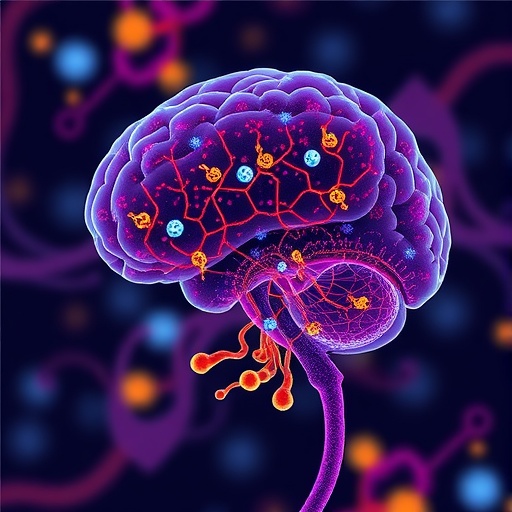
In a groundbreaking study poised to reshape our understanding of Parkinson’s disease (PD), researchers have uncovered compelling evidence linking the human microbiome to the complex functional pathways that drive this neurodegenerative disorder. Published in the prestigious journal npj Parkinson’s Disease, the work by Park, Özdinç, Coker, and their team unveils novel insights gained through advanced metagenomic analysis, emphasizing the intricate interplay between gut bacteria and neurological health. This research not only broadens the horizon of PD pathogenesis but also opens promising avenues for therapeutic interventions targeting microbial communities.
Parkinson’s disease, primarily characterized by motor dysfunction such as tremors, rigidity, and bradykinesia, remains an enigma in terms of its root causes and progression. Traditionally attributed to the loss of dopaminergic neurons in the substantia nigra region of the brain, recent years have witnessed an evolution in thinking about environmental and systemic contributors to the disease. Among these, the gut-brain axis has emerged as a focal point, driven by observations of gastrointestinal symptoms often preceding motor deficits by years. This study significantly enriches this narrative by leveraging metagenomic sequencing to unravel the microbial landscape and its functional capacities in PD patients.
The researchers employed a comprehensive metagenomic approach, analyzing stool samples from a large cohort of individuals diagnosed with Parkinson’s disease in comparison to healthy controls. Metagenomics allows the examination of the total genetic content of microbial communities, beyond just identification of bacterial species, capturing functional genes and metabolic pathways active within these microbiomes. Using cutting-edge bioinformatics tools, they meticulously mapped microbial gene functions that diverged between PD patients and controls, linking these changes to known disease mechanisms.
One of the pivotal findings from this study is the identification of specific microbial taxa whose abundance shifts significantly in PD. These bacteria are not mere bystanders; their altered presence correlates directly with disruptions in metabolic pathways implicated in neuroinflammation, oxidative stress, and mitochondrial dysfunction—hallmarks of Parkinson’s disease pathology. For instance, decreases in short-chain fatty acid (SCFA)-producing bacteria were observed, which may contribute to compromised gut barrier integrity and subsequent systemic immune activation, factors that exacerbate neurodegeneration.
Functionally, the team reported a pronounced alteration in microbial metabolic pathways involved in neurotransmitter synthesis and degradation. Particularly striking was the modulation of pathways governing dopamine precursor metabolism. Given dopamine’s central role in PD, these microbial-driven shifts potentially influence central nervous system dopamine availability indirectly, thereby linking gut microbiota composition to neural outcomes. This insight underscores a microbiome-mediated modulation of key neurotransmitter systems, offering a new dimension to Parkinson’s pathology.
The study further elucidated a dysregulation in microbial genes associated with the metabolism of neuroactive compounds such as gamma-aminobutyric acid (GABA) and serotonin. Both neurotransmitters are critical to motor and non-motor symptoms in PD. Altered microbial pathways controlling these molecules could contribute to the wide spectrum of Parkinson’s symptoms, ranging from mood disturbances to autonomic dysfunction. This finding suggests that gut bacteria may influence not just motor neurons but also the broader neurochemical milieu affecting Parkinson’s disease expression.
Beyond metabolic influences, the clincal implications of microbial immunomodulatory activities were brought to light. The research unveiled modifications in bacterial genes involved in lipopolysaccharide (LPS) synthesis, a potent endotoxin that can induce systemic inflammation and potentially breach the blood-brain barrier. Enhanced LPS production by certain gut bacteria might drive chronic neuroinflammation, a recognized feature accelerating PD’s neurodegenerative processes. This insight into microbial pro-inflammatory factors presents new targets for modulating disease progression.
Intriguingly, the study details evidence pointing to microbial involvement in mitochondrial health. Given that mitochondrial dysfunction is a central pathological event in PD, the discovery that certain bacteria harbor genes capable of influencing host mitochondrial pathways is revolutionary. This reveals yet another layer whereby the microbiome may contribute to neuronal vulnerability, through either direct metabolite effects or systemic signaling cascades.
The authors employed network analysis techniques to visualize interactions between microbial species and functional pathways, illuminating a complex web of microbiome-host dynamics in Parkinson’s disease. These networks demonstrate how shifts in one microbial group cascade through metabolic systems, ultimately impacting neurological function. Such systemic perspectives are vital for understanding PD’s multifactorial nature and for designing multipronged interventions.
Importantly, the findings catalyze the prospect of microbiome-based biomarkers for early PD diagnosis. By characterizing distinct microbial and functional signatures, clinicians might identify at-risk individuals before clinical symptoms manifest, allowing for preventative strategies and monitoring disease trajectory through non-invasive means. This is a major leap forward, addressing one of Parkinson’s disease’s biggest challenges: late diagnosis after significant neuronal loss.
Therapeutically, the study fuels exploration into microbiome modulation as a complementary avenue in PD management. Probiotics, prebiotics, dietary interventions, and even fecal microbiota transplantation become more than theoretical approaches. Understanding which microbial functions to restore or suppress can enhance the design of targeted microbial therapies, potentially slowing PD progression or alleviating symptoms through gut-brain axis modulation.
The interdisciplinary nature of this research, integrating microbiology, neurology, genomics, and computational biology, exemplifies the future of Parkinson’s disease investigations. It showcases how advanced sequencing technologies coupled with robust bioinformatic algorithms can decode the complex environmental and biological contributors to neurodegeneration. This work sets a benchmark for subsequent studies to refine our grasp of PD and other neurodegenerative diseases with microbiome involvement.
In summary, this seminal study by Park and colleagues transcends previous paradigms by positioning the gut microbiome not as a passive collection of microbes but as an active participant in Parkinson’s disease pathophysiology. By emphasizing functional microbiome changes and their influence on metabolic and inflammatory pathways, the research offers a comprehensive, mechanistic framework linking intestinal biology with brain health. These insights stand to revolutionize diagnostic and therapeutic strategies, providing hope for millions affected by this debilitating disease.
As the field progresses, further research will be crucial to validate these findings in larger, diverse populations and to elucidate causative mechanisms more precisely. Additionally, longitudinal studies tracking microbiome changes from prodromal to advanced PD stages can illuminate temporal dynamics and therapeutic windows. Nonetheless, the current study undeniably marks a pivotal moment, heralding a new era where microbial genomics intertwines with neuroscience in the fight against Parkinson’s disease.
The convergence of metagenomics and Parkinson’s research not only deepens our understanding but also signifies the dawn of personalized medicine informed by microbiome signatures. This innovative approach could tailor treatment plans based on individual microbiome profiles, potentially optimizing outcomes and minimizing side effects, thereby transforming care paradigms.
In closing, the interdisciplinary revelation of microbiome and functional pathway interconnections in Parkinson’s disease underscores the complexity and interconnectedness of human health. By decoding the microbiome’s contribution to neurodegeneration, scientists are unlocking powerful tools to confront one of the most challenging neurological disorders of our time.
Park, S.J., Özdinç, B.E., Coker, K.G. et al. Metagenomics indicates an interplay of the microbiome and functional pathways in Parkinson’s disease. npj Parkinsons Dis. (2026). https://doi.org/10.1038/s41531-026-01271-5
Cite Scienmag News
Morgan Morrow. (January 31, 2026). Metagenomics Reveals Microbiome-Pathway Links in Parkinson’s. Scienmag. https://scienmag.com/metagenomics-reveals-microbiome-pathway-links-in-parkinsons/
Morgan Morrow. "Metagenomics Reveals Microbiome-Pathway Links in Parkinson’s." Scienmag, 31 January 2026, https://scienmag.com/metagenomics-reveals-microbiome-pathway-links-in-parkinsons/. Accessed 4 September 2026.
Morgan Morrow. "Metagenomics Reveals Microbiome-Pathway Links in Parkinson’s." Scienmag. January 31, 2026. https://scienmag.com/metagenomics-reveals-microbiome-pathway-links-in-parkinsons/


