


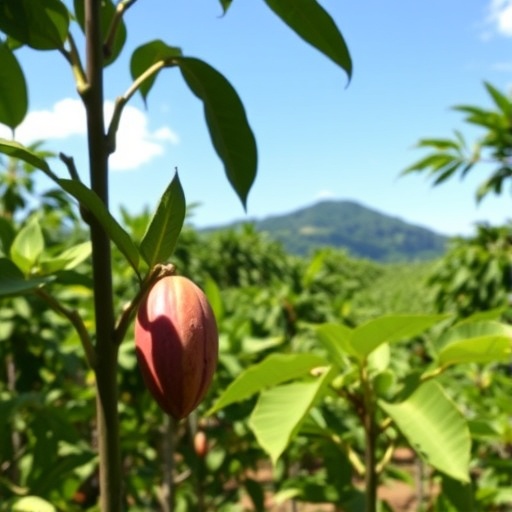
In recent years, the cocoa industry has faced increasing scrutiny regarding its sustainability practices, leading to a movement toward implementing voluntary sustainability standards (VSS). These standards aim to promote ethical sourcing, environmentally friendly farming methods, and improved labor practices within the cocoa global value chain. A systematic review conducted by Romano, Demaria, and Carbone investigates the broad impacts of these voluntary sustainability standards on cocoa production and trade, shedding light on an often-overlooked segment of the agricultural sector.
The review’s findings present a nuanced picture of how VSS have transformed cocoa farming and processing practices across various regions. With heightened consumer awareness about unsustainable agricultural practices, there has been a marked shift toward sourcing cocoa from certified farms. These farms, which comply with specific sustainability criteria, often experience enhanced market access and can charge premium prices for their products. However, the implementation of these standards is not without challenges, raising critical questions about the effectiveness and equity of such initiatives.
Voluntary sustainability standards were developed as frameworks for producers to adhere to practices that foster environmental conservation and social responsibility. The analysis reveals that VSS can significantly influence farming techniques, urging farmers to adopt better agricultural methods that minimize chemical inputs and safeguard biodiversity. These changes have shown promising results in terms of soil health and ecosystem preservation, contributing to the long-term viability of cocoa farming.
A key aspect of the review highlights the socioeconomic impacts of VSS on cocoa farming communities. While some farmers reap the benefits of certifications by accessing premium markets, others remain excluded due to the costs associated with compliance. This disparity raises concerns about social equity, as smaller producers may struggle to meet the rigorous requirements set forth by certification bodies. Thus, while VSS can enhance some producers’ livelihoods, they can simultaneously put others at a disadvantage, perpetuating inequalities within the cocoa supply chain.
The review also identifies an interesting trend: the growing importance of consumer demand for ethically sourced chocolate products. As consumers become more conscientious about their purchasing decisions, manufacturers are increasingly seeking certified cocoa. This shift not only influences market dynamics but also prompts farmers to align their practices with VSS to meet the evolving expectations of the market. The growing consumer appetite for traceable, sustainably produced goods has triggered an influx of companies investing in certification programs, aiming to establish a competitive edge in the chocolate industry.
Moreover, the impacts of VSS extend beyond the farm gate. The review outlines how these standards influence downstream actors in the value chain, including traders, processors, and retailers. As demand for certified cocoa rises, these stakeholders are compelled to adapt their operations, ensuring that their sourcing aligns with sustainable practices. This transformation within the value chain could lead to a wider adoption of sustainability principles, potentially reshaping the sector holistically.
However, the review cautions that while VSS can drive positive change, there are systemic obstacles that must be addressed. Issues such as climate change, varying governance structures, and differing interpretations of sustainability standards can undermine the effectiveness of VSS in certain contexts. For instance, variations in local regulations and enforcement mechanisms can create inconsistencies in how standards are implemented, leading to confusion and skepticism among farmers and stakeholders.
Despite these challenges, there is optimism around the role of VSS in addressing pressing global issues such as deforestation, child labor, and poverty in cocoa-producing regions. The review calls for a collaborative approach among stakeholders, including governments, NGOs, and the private sector, to leverage the strengths of VSS while mitigating their shortcomings. By fostering dialogue and establishing best practices, there is potential for VSS to contribute significantly to the cocoa industry’s transformation towards sustainability.
As the review notes, the future of cocoa production will heavily depend on the industry’s ability to embrace sustainability. With a growing population and increasing demand for chocolate, the pressure on cocoa producers to implement sustainable practices will intensify. This reality underscores the importance of ongoing research and dialogue regarding the efficacy of VSS and their long-term impact on both producers and consumers.
The review suggests that further empirical studies are necessary to explore the multifaceted impacts of VSS in different contexts. By examining diverse geographical and socio-economic settings, researchers can better understand the conditions under which VSS thrive and the factors that hinder their effectiveness. This knowledge will be crucial for designing supportive frameworks that enable cocoa farmers to succeed while maintaining environmental integrity.
In conclusion, the systematic review by Romano, Demaria, and Carbone presents a comprehensive overview of the implications of voluntary sustainability standards on the cocoa global value chain. While these standards offer a pathway toward improved practices and market access, their effectiveness is contingent on addressing underlying social and systemic inequalities. As the cocoa industry evolves, fostering an inclusive approach that balances economic viability with environmental stewardship will be vital to ensuring a sustainable future for all stakeholders involved. This ongoing transformation highlights the critical need for robust research, collaboration, and innovation within the sector.
Cite Scienmag News
Sloane Callahan. (January 30, 2026). Evaluating Voluntary Sustainability Standards in Cocoa Industry. Scienmag. https://scienmag.com/evaluating-voluntary-sustainability-standards-in-cocoa-industry/
Sloane Callahan. "Evaluating Voluntary Sustainability Standards in Cocoa Industry." Scienmag, 30 January 2026, https://scienmag.com/evaluating-voluntary-sustainability-standards-in-cocoa-industry/. Accessed 3 September 2026.
Sloane Callahan. "Evaluating Voluntary Sustainability Standards in Cocoa Industry." Scienmag. January 30, 2026. https://scienmag.com/evaluating-voluntary-sustainability-standards-in-cocoa-industry/


