


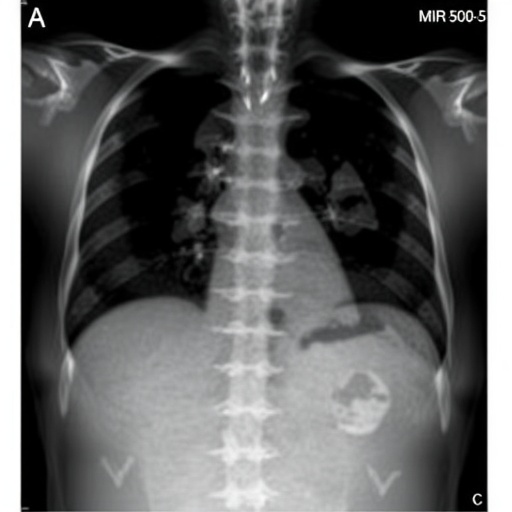
In the complex landscape of medical research, one groundbreaking study stands out for its identification of microRNA as a potential biomarker for a serious condition frequently encountered in multiple myeloma patients. The collaborative effort led by researchers Guo, Yan, and Yang reveals that miR-503-5p could serve as an important indicator of deep venous thrombosis (DVT), a prevalent complication in patients with this blood cancer.
Deep venous thrombosis, a condition characterized by the formation of blood clots in deep veins, can lead to serious health risks, including pulmonary embolism. Despite its severity, the underlying mechanisms linking multiple myeloma and DVT remain inadequately understood. This research fills a significant gap by exploring the molecular levels at which these two conditions intersect, illuminating the pathways that could lead to better diagnostic and therapeutic strategies.
The study provides a detailed analysis of the role of miR-503-5p, examining its expression levels and influence within the context of multiple myeloma. The researchers posited that understanding the expression of this microRNA could not only improve the diagnosis of associated venous thromboembolism but also potentially guide treatment strategies tailored to individual patients. Their findings indicate that patients with higher levels of miR-503-5p might experience different disease outcomes, emphasizing the potential of this biomarker in clinical settings.
This discovery has profound implications for improving patient care. Traditionally, diagnosing DVT relies on a combination of clinical assessment, imaging studies, and laboratory tests, which can prove inadequate, especially in late-stage multiple myeloma cases. miR-503-5p as a biomarker offers an innovative approach, potentially streamlining the diagnostic process, thus reducing the risk of misdiagnosis or delay in treatment.
The researchers utilized advanced methodologies to assess the presence and function of miR-503-5p in a series of controlled experiments. Using blood samples from multiple myeloma patients, they employed quantitative real-time polymerase chain reaction technology to measure expression levels of the microRNA, comparing them to control groups. Their meticulous approach ensured a reliable data set, establishing a substantial foundation for the conclusions drawn in the study.
Beyond just diagnosing DVT, miR-503-5p may also unlock new avenues for understanding how multiple myeloma progresses, offering insights into therapeutic targets. The interplay between this microRNA and the coagulation cascade could reveal novel mechanisms of thrombosis in cancer, elucidating why patients with such diseases are more susceptible to clotting disorders. By deepening our understanding of these interactions, clinicians and researchers can develop more effective interventions.
Furthermore, this study does not operate in isolation. The findings contribute to a growing body of literature centered around microRNAs as essential regulators in cancer biology. These small but powerful molecules are increasingly recognized for their role in various biological processes, including cell proliferation, apoptosis, and angiogenesis. Understanding their function provides not just academic value but also practical applications in devising treatment protocols that are more targeted and personalized.
The significance of miR-503-5p and its implications for deep venous thrombosis in multiple myeloma suggests that it warrants further exploration. Subsequent studies may focus on larger patient cohorts, enabling researchers to validate these findings and their clinical utility. In addition, a deeper dive into the regulatory networks involving this microRNA may yield further insights into its role in both cancer progression and thrombotic complications associated with it.
In conclusion, the research conducted by Guo et al. underscores a critical advancement in the field of hematology and oncology, revealing miR-503-5p as a potential dual-purpose biomarker. By linking deep venous thrombosis and multiple myeloma through molecular pathways, this study lays the groundwork for innovative diagnostic and therapeutic strategies. The ongoing exploration of microRNAs in clinical applications highlights an exciting frontier in medicine, suggesting that such molecules may be key players in unraveling the complexities of cancer and its associated complications.
As this research garners attention, it is poised to influence future studies and clinical practices. The integration of such biomarkers into routine evaluations could radically transform the landscape of patient management in multiple myeloma, offering hope for better outcomes among affected individuals. Coupled with continued advancements in molecular research, findings like those reported in this study pave the way for a new era of precision medicine in oncology.
The potential impact of miR-503-5p extends beyond multiple myeloma, offering tantalizing possibilities for understanding thrombosis across various malignancies. As we look to the future, the insights gained from this research will hopefully lead to enhanced preventive measures and treatments, ultimately improving quality of life and survival for patients facing similar challenges.
In summary, the study led by Guo and colleagues stands as a potent reminder of the intricate connections within human biology, illustrating how a seemingly simple molecule can hold the key to understanding complex diseases. As the scientific community delves deeper into the role of microRNAs, the potential for breakthroughs in patient care and treatment personalization remains vast and exciting, reaffirming the importance of continued research in this dynamic field.
Guo, Y., Yan, L., Yang, X. et al. MiR-503-5p as a potential biomarker for deep venous thrombosis (DVT) in multiple myeloma (MM) and its role in disease development.
Ann Hematol 104, 6205–6214 (2025). https://doi.org/10.1007/s00277-025-06720-4
Cite Scienmag News
Nathaniel Bowman. (January 30, 2026). MiR-503-5p: A Biomarker for DVT in Multiple Myeloma. Scienmag. https://scienmag.com/mir-503-5p-a-biomarker-for-dvt-in-multiple-myeloma/
Nathaniel Bowman. "MiR-503-5p: A Biomarker for DVT in Multiple Myeloma." Scienmag, 30 January 2026, https://scienmag.com/mir-503-5p-a-biomarker-for-dvt-in-multiple-myeloma/. Accessed 4 September 2026.
Nathaniel Bowman. "MiR-503-5p: A Biomarker for DVT in Multiple Myeloma." Scienmag. January 30, 2026. https://scienmag.com/mir-503-5p-a-biomarker-for-dvt-in-multiple-myeloma/


