


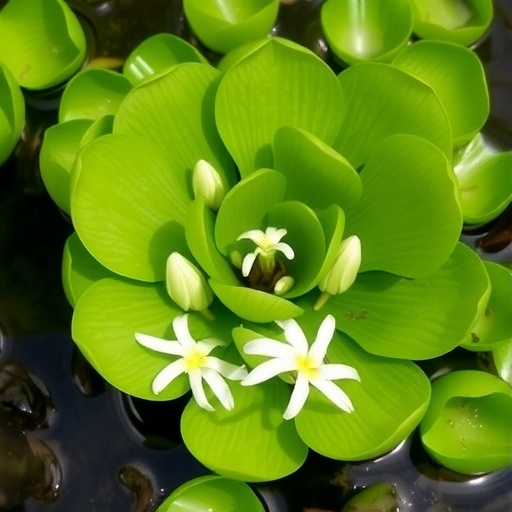
In recent years, the monitoring of invasive species has garnered significant attention due to their detrimental impacts on native ecosystems and biodiversity. Among these invaders, the water hyacinth, scientifically known as Eichhornia crassipes, has emerged as a particularly problematic aquatic plant. Originating from South America, this species has spread rapidly across various regions, often choking waterways, displacing native flora, and causing substantial harm to aquatic ecosystems. The challenge lies not only in controlling its growth but also in effectively detecting and monitoring its spread to implement appropriate management strategies.
Advancements in technology have paved the way for innovative methods of monitoring invasive species like water hyacinth. Traditional techniques, often reliant on manual surveys and visual inspections, are not only time-consuming, but can also miss critical changes in plant populations. As environmental challenges continue to mount, researchers are exploring the potential of satellite imagery, drone surveillance, and remote sensing technologies to provide a more comprehensive understanding of Eichhornia crassipes dynamics. These methods promise to enhance our ability to map infestations accurately and in real-time, enabling swift responses to outbreaks.
Satellite imagery is becoming an increasingly popular tool for environmental monitoring. The ability to capture large areas in high resolution allows scientists to track the spread of water hyacinth over vast territories. Advanced algorithms can analyze these images to detect subtle changes in vegetation cover, providing critical data on the extent and density of infestations. This method not only saves time but also grants researchers the ability to observe regions that may be difficult to access on the ground. By integrating satellite data with in-situ observations, a more nuanced understanding of water hyacinth populations can be achieved.
Drones represent another revolutionary advancement in monitoring invasive species. Equipped with high-resolution cameras and various sensors, drones can fly over infested areas and collect data that would be impractical to gather on foot. They are particularly useful in detecting smaller infestations that satellite images might overlook. Moreover, drones can operate in challenging terrains and provide real-time data, allowing for immediate assessment and management of invasive water hyacinth populations. This technology’s rapid evolution is making it an increasingly viable option for environmental managers.
Remote sensing technologies, similar to drones and satellites, help provide critical data from a distance. Utilizing various wavelengths of light, remote sensing can differentiate between various types of vegetation, enabling the identification of water hyacinth amidst other plant species. This capability is particularly essential in complex ecosystems where identifying invasive species can be a challenge. Effective remote sensing technologies can enhance monitoring efforts and contribute to informed decision-making concerning management interventions.
Moreover, integrating machine learning with these monitoring techniques is set to revolutionize the detection and management of water hyacinth. Through vast datasets derived from satellite images, drone footage, and in-situ measurements, machine learning algorithms can identify patterns and predict future outbreaks of invasive species. This predictive capability allows stakeholders to transition from reactive to proactive management strategies, addressing potential infestations before they escalate into widespread problems.
Public engagement is also crucial in combating the spread of water hyacinth. Awareness campaigns and community involvement in monitoring efforts can lead to early detection and prevention. Citizen science has emerged as an invaluable resource, enabling individuals to report sightings of invasive species through mobile applications designed for that purpose. By harnessing collective observations, researchers can obtain a more comprehensive picture of where water hyacinths are proliferating and respond quickly to emerging threats.
Despite the promise of technological advancements in monitoring, various challenges remain. The complexity of aquatic ecosystems and the dynamic nature of invasiveness pose constant hurdles for researchers. For instance, environmental factors such as seasonal changes, hydrology, and weather patterns can significantly influence the growth of water hyacinth. Therefore, monitoring strategies must be adaptable and responsive to these variables to remain effective.
Effective management of water hyacinth also requires collaboration among scientists, policymakers, and local communities. Tailoring management interventions to specific regional conditions hinges on thorough data analysis and understanding the ecological context. Through interdisciplinary collaboration and data-sharing networks, stakeholders can develop comprehensive strategies that not only target the invasive species but also consider the holistic health of aquatic ecosystems.
Furthermore, research into biological control and sustainable management practices will complement monitoring efforts in tackling the water hyacinth problem. By exploring natural predators or competitive native species, scientists could potentially mitigate the proliferation of this invasive plant without resorting to chemical herbicides, which can have deleterious effects on water quality and biodiversity. Such integrative approaches are essential for creating resilient ecosystems that can withstand the pressures of invasive species.
As we advance our understanding of invasive species detection and management, it is crucial to convey that successful outcomes rely on a multi-faceted approach. Integrating technology with traditional ecological methods, fostering community involvement, and ensuring collaboration between various stakeholders can lead to better outcomes in combating water hyacinth. A sustained commitment to research is essential for developing innovative solutions to invasive species challenges worldwide.
In conclusion, monitoring invasive water hyacinth through the lens of technological advancements offers immense potential for the conservation of aquatic ecosystems. As researchers critically evaluate and refine current monitoring techniques, the pathway toward effective management of this invasive species becomes clearer. By embracing a holistic view of problem-solving and fostering collaboration across disciplines, we have the opportunity to protect our aquatic habitats from the ravages of Eichhornia crassipes and pave the way for healthier ecosystems for future generations.
Mkechera, R., Dahiya, S. Advancements in the detection of invasive water hyacinth (Eichhornia crassipes): a critical review of monitoring techniques for aquatic ecosystem management.
Environ Monit Assess 198, 179 (2026). https://doi.org/10.1007/s10661-026-14979-x
Cite Scienmag News
Violet Maxwell. (January 27, 2026). Innovative Techniques for Monitoring Invasive Water Hyacinth. Scienmag. https://scienmag.com/innovative-techniques-for-monitoring-invasive-water-hyacinth/
Violet Maxwell. "Innovative Techniques for Monitoring Invasive Water Hyacinth." Scienmag, 27 January 2026, https://scienmag.com/innovative-techniques-for-monitoring-invasive-water-hyacinth/. Accessed 3 September 2026.
Violet Maxwell. "Innovative Techniques for Monitoring Invasive Water Hyacinth." Scienmag. January 27, 2026. https://scienmag.com/innovative-techniques-for-monitoring-invasive-water-hyacinth/


