
Saturday, February 7, 2026
Science
No Result
View All Result
  • Login
  • HOME
  • SCIENCE NEWS
  • CONTACT US
  • HOME
  • SCIENCE NEWS
  • CONTACT US
No Result
View All Result
Scienmag
No Result
View All Result
Home Science News Chemistry

Ab initio methods help scientists make sense of complex particle collisions

July 5, 2024
in Chemistry
Reading Time: 2 mins read
0
Ab initio methods help scientists make sense of complex particle collisions
66
SHARES
599
VIEWS
Share on FacebookShare on Twitter
ADVERTISEMENT

The Science

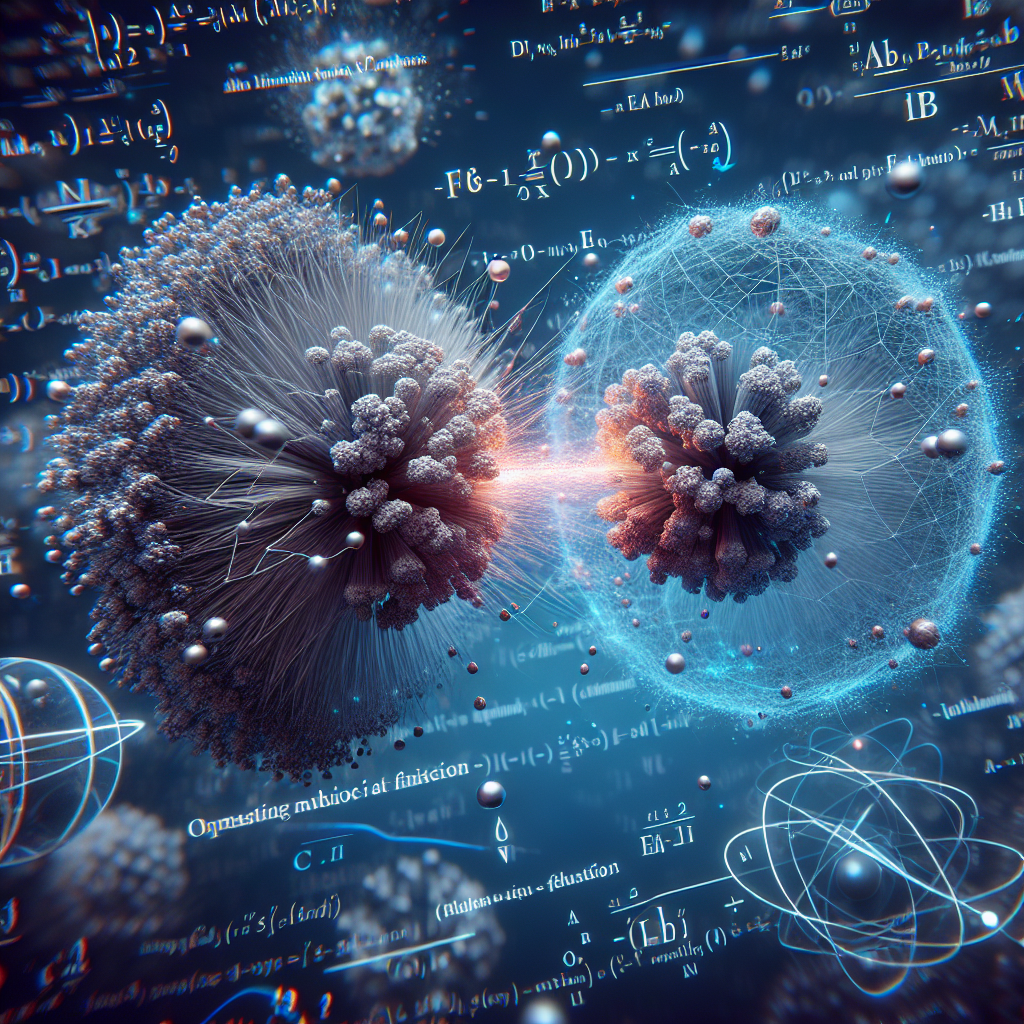
When atomic nuclei and subatomic particles interact, the results are incredibly complex. These are the “many body problems” of quantum mechanics. To help make sense of these interactions, scientists create ways to simplify the range of possible outcomes. One example is “effective interactions,” which simplify the interactions between a nucleon (a proton or a neutron) and an atomic nucleus. Effective interactions help scientists develop theories of the reactions that result when nuclei collide with each other or with subatomic particles. These tools are part of a group of methods called effective field theory (EFT). EFT in turn is a type of approach called “ab initio,” or “first principles.” Ab initio means a calculation starts with the established laws of physics without any other assumptions. In the case of effective interactions, working ab initio means that physicists use consistent assumptions about the protons and neutrons in a nucleus to both describe a nucleus before it interacts with another particle, and to describe the protons and neutrons after they scatter from that nucleus.

The Impact

In ab initio studies, scientists use EFTs to compute how nucleons interact and scatter. EFTs allow scientists to examine different energy levels for these interactions. They can also examine different levels of accuracy for the calculations. These calculations help scientists understand observations from experiments. Now, scientists have performed the first nucleon-nucleus scattering calculations using nucleon-nucleon interactions with EFT. They used statistical analysis to examine how much uncertainty the calculations produce. This will help scientists interpret how well the EFT approach works for different nucleon-nucleon interactions. It will also help them interpret the findings of physics experiments.

Summary

This study found that the diagnostic tools scientists use to study atomic nuclei with just a few neutrons and protons can also be used to study the scattering of protons and neutrons off atomic nuclei. Specifically, the theoretical model on which this study is based gives a good description of scattering of protons from carbon-12 and oxygen-16 at low energies, especially for scattering at more forward scattering angles. Combining the successful description of nuclei  with ab initio methods with approaches to nuclear reactions has been and still is a challenge in theoretical nuclear physics. Addressing this challenge is an important task in the era of the Facility for Rare Isotope Beams.


Funding

This research was supported by the Department of Energy (DOE) Office of Science, Nuclear Physics and Advanced Scientific Computing Research offices and the Scientific Discovery through Advanced Computing (SciDAC) program. The research was also supported by the National Energy Research Scientific Computing Center, a DOE Office of Science user facility.

Share26Tweet17
Previous Post

New method cracked for high-capacity, secure quantum communication

Next Post

Scientists create first mouse model with complete, functional human immune system

Related Posts

blank
Chemistry

Breakthrough in Environmental Cleanup: Scientists Develop Solar-Activated Biochar for Faster Remediation

February 6, 2026
blank
Chemistry

Cutting Costs: Making Hydrogen Fuel Cells More Affordable

February 6, 2026
blank
Chemistry

Scientists Develop Hand-Held “Levitating” Time Crystals

February 6, 2026
blank
Chemistry

Observing a Key Green-Energy Catalyst Dissolve Atom by Atom

February 6, 2026
blank
Chemistry

Saarbrücken Chemists Break New Ground: Iconic Aromatic Molecule Synthesized with Silicon After Decades of Global Pursuit

February 6, 2026
blank
Chemistry

How Cancer Cells Harness Water Pressure to Navigate the Body

February 6, 2026
Next Post
Paulo Casali, MD

Scientists create first mouse model with complete, functional human immune system

  • Mothers who receive childcare support from maternal grandparents show more parental warmth, finds NTU Singapore study

    Mothers who receive childcare support from maternal grandparents show more parental warmth, finds NTU Singapore study

    27610 shares
    Share 11040 Tweet 6900
  • University of Seville Breaks 120-Year-Old Mystery, Revises a Key Einstein Concept

    1017 shares
    Share 407 Tweet 254
  • Bee body mass, pathogens and local climate influence heat tolerance

    662 shares
    Share 265 Tweet 166
  • Researchers record first-ever images and data of a shark experiencing a boat strike

    529 shares
    Share 212 Tweet 132
  • Groundbreaking Clinical Trial Reveals Lubiprostone Enhances Kidney Function

    515 shares
    Share 206 Tweet 129
Science

Embark on a thrilling journey of discovery with Scienmag.com—your ultimate source for cutting-edge breakthroughs. Immerse yourself in a world where curiosity knows no limits and tomorrow’s possibilities become today’s reality!

RECENT NEWS

  • Barriers and Boosters of Seniors’ Physical Activity in Karachi
  • Boosting Remote Healthcare: Stepped-Wedge Trial Insights
  • Enhancing Education: Effective Support for Gender Equality
  • Improving Dementia Care with Enhanced Activity Kits

Categories

  • Agriculture
  • Anthropology
  • Archaeology
  • Athmospheric
  • Biology
  • Biotechnology
  • Blog
  • Bussines
  • Cancer
  • Chemistry
  • Climate
  • Earth Science
  • Editorial Policy
  • Marine
  • Mathematics
  • Medicine
  • Pediatry
  • Policy
  • Psychology & Psychiatry
  • Science Education
  • Social Science
  • Space
  • Technology and Engineering

Subscribe to Blog via Email

Enter your email address to subscribe to this blog and receive notifications of new posts by email.

Join 5,190 other subscribers

© 2025 Scienmag - Science Magazine

Welcome Back!

Login to your account below

Forgotten Password?

Retrieve your password

Please enter your username or email address to reset your password.

Log In
No Result
View All Result
  • HOME
  • SCIENCE NEWS
  • CONTACT US

© 2025 Scienmag - Science Magazine

Discover more from Science

Subscribe now to keep reading and get access to the full archive.

Continue reading
