


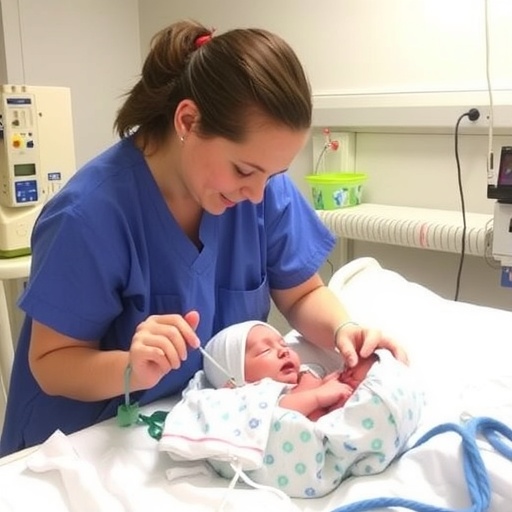
In the quiet hum of neonatal intensive care units (NICUs) around the globe, a profound and complex narrative unfolds daily—one that intertwines advances in medicine with economic realities, ethical considerations, and the very fabric of healthcare systems. The article “Tiny babies, big bills: the vital role of the NICU in sustaining lives and health systems,” published recently in the Journal of Perinatology, delves into the indispensable, yet financially daunting, role NICUs play in supporting the most vulnerable patients: premature and critically ill newborns.
NICUs represent a pinnacle of neonatal medicine, equipped with cutting-edge technology and staffed by specialized clinical teams who vigilantly monitor and treat infants at the edge of viability. These units have transformed survival rates for preterm infants born at less than 28 weeks’ gestational age, turning what was once a near-certain mortality into signals of hope and life. The article emphasizes how the delicate balance between technology, expert care, and resource allocation comes under strain as hospitals and health systems strive to manage the skyrocketing costs associated with such intensive care.
The financial implications of NICU care are staggering. Infants admitted to these specialized units often require prolonged hospital stays, sometimes lasting weeks or even months. This extended care involves sophisticated respiratory support such as high-frequency ventilation and extracorporeal membrane oxygenation (ECMO), complex parenteral nutrition regimens, and constant monitoring for complications that range from bronchopulmonary dysplasia to retinopathy of prematurity. Each intervention, while essential for survival, exponentially increases the cost per infant, contributing to what the authors term “tiny babies, big bills.”
Beyond the technological and clinical demands, the article explores how NICU expenditure deeply impacts health systems financially and operationally. Hospitals face a challenging paradox: the imperative to offer state-of-the-art neonatal care collides with budgetary constraints and the broader pressures of healthcare sustainability. Particularly in public health systems with limited resources, the cost per quality-adjusted life year (QALY) saved by NICU interventions can raise difficult questions about allocation and equitable access to care. The financial crisis underscored by NICU care is not merely about sums on ledgers but implicates critical policy decisions affecting healthcare planning and equity.
Moreover, the authors outline how the NICU acts as a microcosm where ethical dilemmas emerge with intensity. Decisions surrounding the initiation or continuation of intensive life-sustaining treatments for extremely premature infants often involve weighing medical benefits against potential long-term morbidities and the emotional and financial impact on families. The article discusses the nuanced, often heart-wrenching conversations clinicians engage in with parents, highlighting the importance of integrative decision-making frameworks that respect family values while grounded in evidence-based prognosis.
Remarkably, despite these formidable challenges, NICUs epitomize the success of modern perinatal medicine. Survival rates have improved dramatically over the past few decades, thanks to innovations in antenatal corticosteroid administration, surfactant therapy, and the development of gentle ventilation strategies. These medical breakthroughs illustrate the progress made but simultaneously amplify the complexities of sustaining such high-level care universally.
The authors also scrutinize the broader systemic implications, noting that NICUs may serve as indicators of a health system’s maturity and responsiveness. The availability and accessibility of NICU services reflect societal values placed on neonatal survival and long-term health outcomes. As survival rates improve, the emerging demographic of former NICU graduates places new demands on healthcare and educational infrastructures, underlining the lifelong continuum of care required for this population.
An intriguing component of the analysis is consideration of innovations beyond the bedside. The article highlights ongoing research into cost-effective technologies, telemedicine-enabled neonatal consultations, and regionalized care models designed to optimize resource use while preserving quality of care. These strategies aim to strike a sustainable balance, providing equitable access to NICU services without overwhelming health budgets or compromising medical outcomes.
The psychological and economic impacts on families of NICU-admitted infants receive careful attention as well. Parents frequently face prolonged stress, financial hardship, and disruption of family dynamics. The article underscores the importance of integrating social support services and mental health resources into neonatal care programs, thereby enhancing holistic family-centered approaches that recognize the intrinsic link between infant health and familial well-being.
Health policy architects are urged to consider these findings seriously. Investments in NICU infrastructure and workforce development are indispensable, but equally critical is designing financing mechanisms that distribute costs fairly and foster sustainable growth. Public-private partnerships, innovative insurance models, and outcome-based funding could be pathways to ensure NICUs remain a cornerstone of neonatal care without imposing unmanageable burdens on health systems.
Reflecting on the global landscape, disparities in NICU access and quality are profound. The gap between resource-rich nations equipped with highly specialized centers and low-resource settings where basic neonatal care is elusive highlights stark inequalities. The article advocates for international collaborations and scalable interventions adapted to diverse contexts to mitigate neonatal mortality worldwide, reaffirming the global commitment to the United Nations Sustainable Development Goals regarding child health.
In conclusion, the article presents the NICU as both a beacon of clinical innovation and a reflection of systemic challenges. The survival of tiny babies is a triumph of science, yet the remarkable advances compel urgent conversations about cost, ethics, equity, and the future of healthcare systems. Policymakers, clinicians, and researchers are called upon to innovate not only in medicine but also in healthcare delivery and financing to ensure that every neonate has the best chance at life without insurmountable financial barriers.
The map of neonatal care is continuously evolving as new technologies emerge, and societal values shift. How societies respond to the challenges highlighted in this article will define the trajectory of neonatal health for generations to come. The NICU’s pivotal role in sustaining lives and health systems cannot be overstated; it is a testament to human ingenuity, compassion, and the relentless pursuit of saving the smallest among us.
Cite Scienmag News
Harold Sullivan. (January 26, 2026). Tiny Babies, Huge Bills: NICU’s Crucial Role. Scienmag. https://scienmag.com/tiny-babies-huge-bills-nicus-crucial-role/
Harold Sullivan. "Tiny Babies, Huge Bills: NICU’s Crucial Role." Scienmag, 26 January 2026, https://scienmag.com/tiny-babies-huge-bills-nicus-crucial-role/. Accessed 7 September 2026.
Harold Sullivan. "Tiny Babies, Huge Bills: NICU’s Crucial Role." Scienmag. January 26, 2026. https://scienmag.com/tiny-babies-huge-bills-nicus-crucial-role/


