


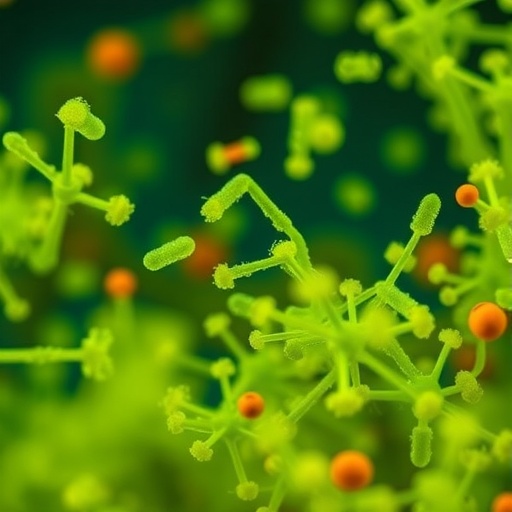
In an intriguing advance within the fields of environmental science and aquatic ecology, a recent study has showcased an innovative technique for improving the edibility of cyanobacteria—often viewed as harmful algae—in aquatic ecosystems. These microorganisms, while vital to the energy flow in aquatic food webs, can become overabundant in nutrient-rich waters, leading to harmful algal blooms (HABs) which disrupt local ecosystems and pose risks to water quality. Researchers Y. Iseri, A. Hao, and Y. Wang conducted a study examining how an impinging jet mechanism can be employed to pulverize cyanobacteria, transforming these once hazardous organisms into a more palatable food source for zooplankton. This research addresses both ecological concerns and food web dynamics in eutrophic lakes, which are characterized by high nutrient levels.
The underlying motivation for this research stems from the pressing need to mitigate the impacts of eutrophication—a phenomenon driven by excessive nutrient input, mainly nitrogen and phosphorus, often attributed to agricultural runoff, industrial effluents, and inadequate wastewater treatment. The results of this study illuminate a potential pathway to enhance trophic transfer efficiency in these lakes, thereby fostering healthier aquatic ecosystems. By refining cyanobacteria through mechanical pulverization, this method could not only support zooplankton populations but also help sustain the higher trophic levels that rely on these small crustaceans for nourishment.
Utilizing an impinging jet system, the researchers successfully developed a technique capable of disaggregating the cellular structure of cyanobacteria. This process increases the surface area available for zooplankton feeding, effectively making these microorganisms more accessible and digestible. The study methodically examined various parameters, including jet velocity and the angle of impact, to optimize the pulverization process. Such precise control allows researchers to tailor their approach, ultimately enhancing the efficacy of cyanobacteria as a food source in dense blooms.
Through careful experimentation, the study yielded promising findings indicating that zooplankton displayed a marked increase in feeding rates on pulverized cyanobacteria compared to their non-pulverized counterparts. This enhancement in edibility not only signifies a possible reduction in the negative ecological impacts of algal blooms but also suggests a pragmatic solution to the energy transfer inefficiencies typically observed in these nutrient-rich environments. By improving the digestibility of cyanobacteria, an essential energy resource for aquatic food webs, researchers present a strategic approach to sustaining biodiverse ecosystems in the face of environmental degradation.
Moreover, this research has significant implications for managing and predicting the dynamics of trophic interactions in various aquatic environments. Understanding how altered feeding dynamics can facilitate greater energy transfer between different trophic levels may lead to innovative strategies in fisheries management, conservation efforts, and ecological restoration projects. The approach could serve as a practical tool for accelerating biomass turnover rates in bloom conditions, which could ultimately contribute to enhanced water quality and ecosystem resilience.
The findings also unveil the capacity of mechanical innovations to tackle environmental challenges. Employing technology such as impinging jets, researchers are harnessing mechanical forces to replicate natural processes that enhance nutrient cycling and energy flow. This intersection of engineering and ecology not only emphasizes the diversity of methods available to scientists but also showcases the ingenuity required to address complex environmental issues, particularly in increasingly eutrophic conditions.
While the study’s initial results are encouraging, further explorations are needed to quantify the long-term effects of this intervention on both zooplankton health and overall ecological stability. Such investigations will be critical for establishing comprehensive models that can accurately predict the outcomes of integrating this technique into eutrophic lake management practices. The promise of a more robust food web, supported by enhanced relationships between organisms, hinges on our ability to understand and manipulate these interactions with precision.
This research opens the doors to future studies incorporating a broader spectrum of aquatic organisms, assessing how the reshaping of cyanobacterial structures might influence entire food webs. The potential benefits of establishing a rapport between primary producers and consumers through targeted biophysical interventions could propel this area of study into new territories, bridging gaps in current ecological understanding.
As urbanization and agriculture continue to exert pressure on freshwater ecosystems, the spotlight remains on developing sustainable practices that curtail the occurrence and impact of harmful algal blooms. The recognition of cyanobacteria as a resource, rather than merely a nuisance, is a transformative perspective aligned with contemporary ecological frameworks aiming to enhance ecosystem services rather than diminish them.
In conclusion, the pulverization of cyanobacteria using an impinging jet is a creative response to the challenges posed by eutrophication, providing a novel avenue for researchers and practitioners alike to explore. By advancing our understanding of how mechanical methodologies can influence biological systems, this study paves the way for eco-engineering solutions that harmonize human activities with natural processes, thereby fostering a sustainable balance in our water resources.
Cite Scienmag News
Gavin Prescott. (January 25, 2026). Enhancing Cyanobacteria Edibility for Zooplankton Through Pulverization. Scienmag. https://scienmag.com/enhancing-cyanobacteria-edibility-for-zooplankton-through-pulverization/
Gavin Prescott. "Enhancing Cyanobacteria Edibility for Zooplankton Through Pulverization." Scienmag, 25 January 2026, https://scienmag.com/enhancing-cyanobacteria-edibility-for-zooplankton-through-pulverization/. Accessed 4 September 2026.
Gavin Prescott. "Enhancing Cyanobacteria Edibility for Zooplankton Through Pulverization." Scienmag. January 25, 2026. https://scienmag.com/enhancing-cyanobacteria-edibility-for-zooplankton-through-pulverization/


