


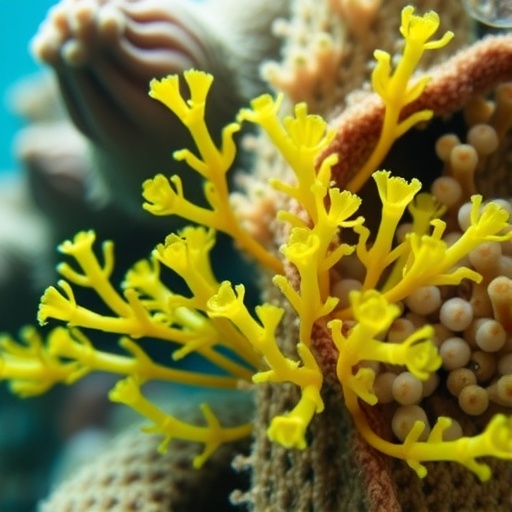
In the vast and dynamic world of marine ecosystems, cyanobacteria play a crucial role not only as primary producers but also as indicators of environmental health. Among these blue-green microalgae, selected species have garnered attention for their unique adaptations to stress conditions, particularly oxidative stress caused by reactive oxygen species (ROS). A recent study led by Hussain et al. explores this phenomenon further by investigating the comprehensive ROS defense mechanisms in selected marine cyanobacteria against hydrogen peroxide challenges. This research sheds light on the complex interplay between environmental stressors and microbial resilience, revealing insights that could pave the way for biotechnological applications.
Reactive oxygen species, including hydrogen peroxide, are byproducts of various metabolic processes. Under stress conditions, these molecules can accumulate to toxic levels, leading to oxidative damage in cells. The ability of organisms to cope with ROS is crucial for survival and function, particularly in fluctuating environments such as those experienced by marine organisms. The study provides a detailed examination of how selected marine cyanobacteria protect themselves from oxidative stress, thus enhancing our understanding of their resilience and adaptability in changing ecosystems.
The researchers conducted a series of controlled experiments to evaluate the effects of hydrogen peroxide on various strains of marine cyanobacteria. The results revealed significant differences in the ROS defense strategies employed by different species. Some strains exhibited robust antioxidant activities, deploying enzymes such as superoxide dismutase (SOD) and catalase, which serve to neutralize ROS before they can inflict cellular damage. Others utilized non-enzymatic defense mechanisms, including antioxidants like ascorbate and glutathione, which play a vital role in reducing oxidative stress.
A striking finding of the study is the expression of genes involved in ROS scavenging pathways in response to hydrogen peroxide stress. This gene expression analysis highlighted the intricate regulatory networks that cyanobacteria leverage to modulate their antioxidant defenses. The genetic adaptations not only underscore the evolutionary significance of these microorganisms but also hint at their potential applications in biotechnology as natural antioxidants or bioremediation agents.
In the context of climate change and ocean acidification, understanding the adaptive mechanisms of marine cyanobacteria becomes increasingly relevant. As these microorganisms are central to marine food webs and global carbon cycling, their ability to withstand oxidative stress could have cascading effects on marine ecosystems. The implications of this research extend beyond basic science, as the findings have potential applications in environmental monitoring, aquaculture, and the development of bioproducts derived from cyanobacteria.
Furthermore, the study opens new avenues for research into the biochemical pathways that govern ROS defense in marine cyanobacteria. By uncovering the molecular basis of oxidative stress responses, scientists can develop targeted strategies to enhance the resilience of aquaculture stocks against environmental stressors. This could lead to more sustainable practices and improved yields in the face of global change.
The significance of oxidative stress defense extends into the realm of human health as well. Compounds derived from cyanobacteria have shown promise in various medical applications, including anti-inflammatory and anticancer properties. The study’s insights into ROS defense mechanisms may aid the discovery and development of novel therapeutic agents derived from marine cyanobacteria, contributing to a better understanding of their biochemical potential.
As researchers continue to delve deep into the environmental resilience of marine organisms, the study by Hussain et al. serves as a vital piece of the puzzle. By examining the comprehensive ROS defense toolbox of selected marine cyanobacteria, the authors have illuminated key aspects of microbial survival that are critical in an era of rapid environmental change. Future studies, inspired by these findings, are expected to broaden our knowledge of marine biodiversity and its implications for ecosystem function and human benefit.
Moreover, the intricate relationship between cyanobacteria and their environments underscores the importance of conservation efforts aimed at protecting marine habitats. As human activities continue to impact global ocean health, safeguarding the biodiversity of microorganisms such as cyanobacteria is essential for maintaining the ecological balance. The knowledge gained from studies like this one adds to the growing body of evidence that emphasizes the interconnectedness of life forms and their environments.
In conclusion, the exploration of ROS defenses in marine cyanobacteria not only elucidates the mechanisms of stress resilience but also opens doors to practical applications that could benefit humanity. As scientists continue to investigate the multifaceted roles of these microorganisms, the potential for marine cyanobacteria to contribute to sustainable solutions in agriculture, medicine, and environmental management becomes increasingly apparent. The future of this research will likely yield transformative insights into the resilience of life in extreme conditions, offering hope for both the marine environments and human societies dependent on them.
The work of Hussain et al. represents a significant advancement in our understanding of marine cyanobacteria and their adaptive strategies. This research, positioned at the intersection of environmental science, molecular biology, and biotechnology, not only enhances our knowledge of these ancient organisms but also provides a foundation for future innovations. As we continue to unravel the complexities of life in the ocean, studies like this remind us of the profound connections that bind all living organisms and the ecosystems they inhabit.
Through their findings, the authors encourage a re-evaluation of the roles that cyanobacteria can play in biotechnology and ecosystem management. Their potential contributions to technological advancements in various sectors could be pivotal as society faces mounting environmental challenges. In fostering a greater appreciation for the resilience and versatility of marine life, we can better harness its potential to address our most pressing scientific and social issues.
In summary, the exploration of the ROS defense toolbox in marine cyanobacteria not only enriches our academic understanding but also holds promise for real-world applications that could enhance both ecological health and human well-being. As we look toward the future, it is crucial that we continue to support research efforts that bridge the gap between basic science and practical solutions, ensuring that the resilience of our oceans is preserved for generations to come.
Cite Scienmag News
Gregory Coleman. (January 24, 2026). Harnessing Marine Cyanobacteria’s ROS Defense Against Stress. Scienmag. https://scienmag.com/harnessing-marine-cyanobacterias-ros-defense-against-stress/
Gregory Coleman. "Harnessing Marine Cyanobacteria’s ROS Defense Against Stress." Scienmag, 24 January 2026, https://scienmag.com/harnessing-marine-cyanobacterias-ros-defense-against-stress/. Accessed 4 September 2026.
Gregory Coleman. "Harnessing Marine Cyanobacteria’s ROS Defense Against Stress." Scienmag. January 24, 2026. https://scienmag.com/harnessing-marine-cyanobacterias-ros-defense-against-stress/


