


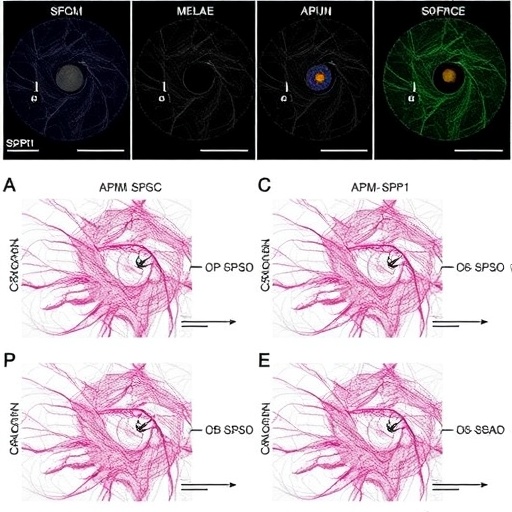
In the expanding realm of vascular biology, a promising discovery has emerged regarding the role of sphingosine-1-phosphate (S1P) in the regulation of ocular health. Recent findings suggest that ApoM-bound S1P exerts a significant influence on endothelial cell behavior, particularly in the context of choroidal neovascularization (CNV) and vascular leakage. This phenomenon has substantial implications for diseases characterized by aberrant blood vessel formation, such as age-related macular degeneration (AMD), a leading cause of vision impairment worldwide.
The research conducted by Jung, Yagi, Kuo, and their collaborators details the intricate mechanisms by which ApoM-bound S1P interacts with endothelial S1P receptors, specifically S1PR1. This interaction has been shown to possess a dual modulatory effect: it not only inhibits excessive neovascularization but also mitigates vascular leakage. These processes are crucial for maintaining normal retinal architecture and function, which can be drastically altered in various pathological conditions.
Choroidal neovascularization is defined as the formation of new, abnormal blood vessels from the choroid into the retina. This process is often driven by factors released during retinal stress or damage, leading to compromised ocular vascular integrity. Increased permeability and leakiness of these newly formed vessels contribute to the progression of vision-threatening diseases. Understanding the molecular pathways involved offers new therapeutic avenues for managing such debilitating conditions.
At the cellular level, the research underscores the importance of understanding endothelial cell signaling pathways, particularly those mediated by G protein-coupled receptors like S1PR1. When activated by S1P, these receptors initiate downstream signaling cascades crucial for cell survival, migration, and proliferation. In the context of the study, the activation of S1PR1 leads to the suppression of processes driving excessive neovascularization, which could be a critical intervention point for therapeutic strategies aimed at preserving vision.
Interestingly, the role of ApoM as a binding protein for S1P adds another layer of complexity to this investigation. ApoM serves not only as a protector of S1P in the circulatory system but also enhances its bioavailability. This enhanced stability strategically positions ApoM-bound S1P to inhibit neovascular processes while also shielding the retina from the damaging effects of uncontrolled angiogenesis, highlighting a nuanced approach to treatment.
The implications of these findings are significant, as they indicate a potential for developing targeted therapies that harness the effects of ApoM-bound S1P. Such treatments would aim to fine-tune the balance of angiogenesis within the eye, promoting healing and regeneration while staving off the pathological progression associated with conditions like AMD. Furthermore, the research sets the stage for additional studies exploring the diverse roles of S1P in various vascular-related pathology throughout the body.
Additionally, the research provides a captivating look at how small lipid mediators can have profound effects on complex biological systems. S1P, derived from sphingolipid metabolism, exemplifies how metabolites participate in the regulation of biological processes beyond mere cellular energy management. The intricate involvement of S1P in endothelial biology underscores the need for a deeper understanding of lipid signaling pathways involved in vascular health and disease.
In a broader sense, the findings emphasize the importance of post-translational modifications and protein interactions in mediating cellular responses. The complex interplay between ApoM, S1P, and their respective receptors is a prime example of how cellular signaling is intricately regulated. This understanding paves the way for innovations in pharmacological interventions that can manipulate such pathways for therapeutic gain, offering hope to individuals afflicted with various forms of vascular complications.
In conclusion, this breakthrough in understanding the role of ApoM-bound S1P and its effect on endothelial cell behavior presents a promising frontier in the fight against vision loss due to vascular diseases. The clear link between S1P signaling, angiogenesis, and vascular leakage highlights the potential of targeted therapeutic strategies that could stabilize or restore retinal health, fostering a new era of treatment paradigms focused on precision medicine in ophthalmology.
The research ushers in a new opportunity for scientists and clinicians alike to revisit existing treatment protocols and integrate emerging biomolecular insights into routine patient care. It also exemplifies the critical role of collaborative interdisciplinary efforts in medicine and research, whereby insights from molecular biology can translate into meaningful clinical applications.
As researchers continue to unravel the complexities of endothelial signaling pathways, the potential for new and effective treatments for choroidal neovascularization remains a compelling area of pursuit. This study serves as a pivotal reminder that understanding molecular interactions can lead to innovative and transformative approaches in the realm of ocular health.
In light of these discoveries, the scientific community stands on the cusp of potentially groundbreaking advancements aimed at combating diseases that threaten our sight. The research underscores not only the importance of foundational science but also the urgency for continued exploration of the nuanced relationships between lipids and cellular kinetics.
As we look forward, the insights gleaned from this study may pave the way for upcoming clinical trials and therapeutic developments that promise to enhance the quality of life for countless individuals grappling with vision-related ailments.
With the continuous evolution of biomedical discoveries, the future of ocular treatment appears increasingly optimistic, fueled by both scientific curiosity and an unwavering commitment to advancing human health.
The journey of ApoM and S1P from the laboratory to clinical practice will require a collaborative effort and an integrated approach to understand the broader implications of these findings. The tantalizing prospect of new therapies and their potential to change the landscape of ocular medicine stands as a testament to the power of scientific inquiry and innovation.
Cite Scienmag News
Nathaniel Bowman. (January 24, 2026). ApoM-S1P Reduces Choroidal Neovascularization via S1PR1. Scienmag. https://scienmag.com/apom-s1p-reduces-choroidal-neovascularization-via-s1pr1/
Nathaniel Bowman. "ApoM-S1P Reduces Choroidal Neovascularization via S1PR1." Scienmag, 24 January 2026, https://scienmag.com/apom-s1p-reduces-choroidal-neovascularization-via-s1pr1/. Accessed 3 September 2026.
Nathaniel Bowman. "ApoM-S1P Reduces Choroidal Neovascularization via S1PR1." Scienmag. January 24, 2026. https://scienmag.com/apom-s1p-reduces-choroidal-neovascularization-via-s1pr1/


