


In recent months, significant attention has been directed toward the role of red blood cell distribution width (RDW) as a potential prognostic factor in various medical conditions. Among the myriad of studies conducted, a fresh investigation spearheaded by Lan, Zhao, and Sun has shone a light on peripheral T-cell lymphoma (PTCL), a type of cancer that has historically presented challenges in both diagnosis and treatment. This novel research posits that baseline RDW could serve as a valuable predictive biomarker for patient outcomes in PTCL, providing a vital tool for clinicians battling this aggressive malignancy.
Peripheral T-cell lymphoma encompasses a diverse array of hematologic disorders characterized by the proliferation of T-cells in the lymphatic system. As the nomenclature suggests, the disease emanates from peripheral tissues, which complicates early detection. The prognosis for patients suffering from PTCL can vary significantly, influenced by various factors including age, performance status, and underlying health conditions. The quest to identify reliable predictive markers has never been more urgent, and the latest study brings to the forefront the potential relevance of RDW in this context.
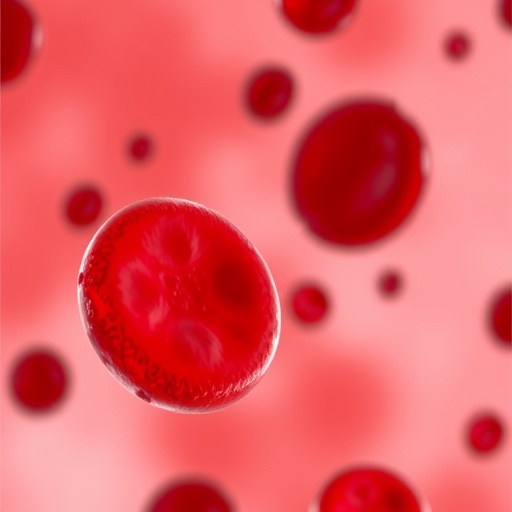
Red blood cell distribution width is a measure of the variability in the size of red blood cells within a given sample. This metric has garnered interest in hematologic malignancies due to its association with systemic inflammation and other clinical complications that may affect patient outcomes. The exploration into RDW has led researchers to ponder whether this seemingly innocuous measure could provide insights beyond what traditional laboratory markers can yield. Specifically, the study investigates whether elevated RDW levels at baseline correlate with worse prognosis in PTCL patients, thereby offering a straightforward and cost-effective solution for prognostication.
The findings elucidated by Lan and colleagues are impressive, revealing that higher RDW levels were indeed associated with poorer survival rates among PTCL patients. This correlation raises critical questions regarding the underlying physiological mechanisms that could be at play. One plausible explanation revolves around the inflammatory milieu commonly observed in malignancies, which may lead to alterations in erythropoiesis and consequently influence RDW. As inflammation occurs, it can disrupt normal blood cell production, resulting in not only higher RDW values but also poor clinical outcomes, thus intertwining the two variables in a complex web of causation.
An important aspect of the study involves the utilization of a substantial sample size derived from patient data, which enhances the statistical power and reliability of the findings. The researchers adopted rigorous methodologies to ensure that confounding variables were properly controlled, thus allowing for a more accurate assessment of RDW’s prognostic capacity. As a result, the study asserts that RDW should be viewed as a significant predictor when considering treatment strategies and patient management in PTCL.
Interestingly, this research adds to a growing catalogue of studies that unearth the prognostic potential of commonly measured lab values, demonstrating the increasing necessity to look beyond conventional metrics. In a field often driven by the latest therapeutic advancements, the study serves as a crucial reminder of the value of integrating simple, existing laboratory tests into comprehensive treatment protocols. It empowers clinicians to make more informed decisions based on multidimensional insights derived from accessible laboratory metrics.
Furthermore, the clinical implications of this study cannot be overstated. If incorporated into routine practice, RDW could transform the approach taken by hematologists and oncologists when diagnosing and monitoring patients with PTCL. This may lead to stratified treatment regimens that align with individual patient profiles, ensuring a more personalized therapy approach that could improve outcomes. Given the aggressive nature of PTCL, identifying at-risk patients early on could vastly alter the landscape of treatment.
Looking onto the horizon, the emergence of precision medicine prompts a critical reevaluation of how we define prognostic factors in hematologic malignancies. The findings surrounding RDW pave the way for further investigation into other easily obtainable biomarkers that could contribute to a more holistic understanding of disease progression in PTCL. The time is ripe for exploratory studies that continue to challenge existing paradigms and delve deeper into the interplay of blood values and cancer prognosis.
Moreover, this research initiates a broader conversation about systemic inflammation as a common thread among various forms of cancer. This emphasis on inflammation may call for a paradigm shift in how clinicians consider general health markers in relationship to cancer outcomes. It stands to reason that the multifactorial nature of cancer can often be traced back to inflammatory processes, and the correlation of RDW with such processes underscores the importance of this dimension in patient care.
As oncology continues to evolve, the integration of findings such as those from Lan and colleagues’ study provides a pathway toward more effective management strategies. It also underscores the importance of ongoing research that focuses on bridging the gap between laboratory findings and real-world clinical applications. By delving into the intricacies of biomarkers like RDW, the medical community takes one step closer to improving prognosis and ultimately, survival rates for patients battling the formidable challenge of PTCL.
The study and its implications bring hope not just to oncologists and hematologists, but also to patients and their families. The potential for utilizing baseline RDW to forecast outcomes represents a significant breakthrough in the nuanced field of cancer treatment. As researchers continue to build upon this foundational work, there is optimism that more discoveries will follow, leading to innovative approaches that can elevate patient care standards across the board.
In summary, the pioneering research highlighting the predictive capacity of baseline RDW in PTCL patients lays the groundwork for a new avenue in prognostic evaluation. The emphasis on readily available blood metrics reaffirms the significance of comprehensive assessments while also pushing the boundaries of clinical practice toward a personalized care model. The medical community stands at the brink of a transformative era, shaped by studies like this, which not only advance scientific understanding but also bring tangible hope to those affected by this challenging lymphoma subtype.
Lan, Y., Zhao, Y., Sun, J. et al. Can baseline red blood cell distribution width predict outcomes in peripheral T-cell lymphoma patients?.
Ann Hematol 105, 55 (2026). https://doi.org/10.1007/s00277-026-06835-2
Cite Scienmag News
Nathaniel Bowman. (January 23, 2026). Can Red Blood Cell Width Predict T-Cell Lymphoma Outcomes? Scienmag. https://scienmag.com/can-red-blood-cell-width-predict-t-cell-lymphoma-outcomes/
Nathaniel Bowman. "Can Red Blood Cell Width Predict T-Cell Lymphoma Outcomes?" Scienmag, 23 January 2026, https://scienmag.com/can-red-blood-cell-width-predict-t-cell-lymphoma-outcomes/. Accessed 4 September 2026.
Nathaniel Bowman. "Can Red Blood Cell Width Predict T-Cell Lymphoma Outcomes?" Scienmag. January 23, 2026. https://scienmag.com/can-red-blood-cell-width-predict-t-cell-lymphoma-outcomes/


