


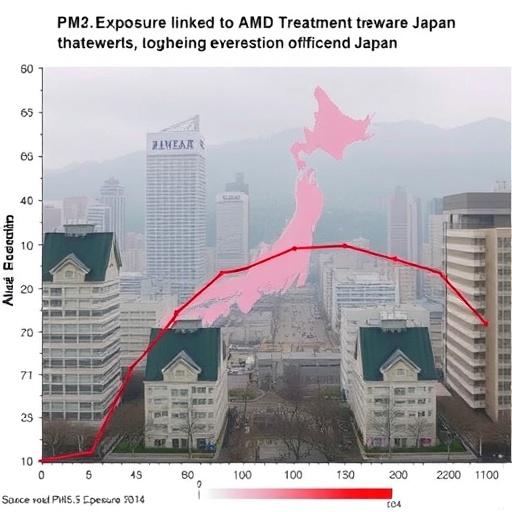
Air pollution is increasingly recognized as a significant risk factor for various health issues, and a recent ecological study from Japan sheds light on the troubling link between exposure to PM2.5 and the demand for anti-VEGF treatments in patients suffering from age-related macular degeneration (AMD). Conducted by researchers T. Mimura and H. Noma, this study illustrates how environmental factors can dramatically influence healthcare needs, shedding light on a complex interplay between air quality and ocular health.
PM2.5 refers to fine particulate matter with diameters of less than 2.5 micrometers, which can penetrate deeply into the respiratory tract and even enter the bloodstream. Its sources often include vehicle emissions, industrial discharges, and natural phenomena such as wildfires. Given PM2.5’s widespread prevalence and the susceptibility of certain demographic groups, including the elderly, understanding its broader health implications is crucial. This study highlights a notable concentration of AMD cases in regions with higher PM2.5 exposure, suggesting that compromised air quality significantly correlates with an increased need for anti-VEGF treatments.
AMD is a progressive eye disease and a leading cause of vision loss among older adults. The condition arises from the degeneration of the retina, leading to blurred vision and eventual blindness if untreated. Anti-VEGF (vascular endothelial growth factor) medications are often employed to slow the progression of subtypes of AMD, particularly the neovascular form. The investigation into whether environmental pollutants such as PM2.5 exacerbate the incidence or progression of AMD introduces a potentially game-changing perspective for both environmental health and ophthalmology.
Japan, known for its advanced healthcare system, provided a unique environment for this nationwide ecological study. By analyzing data from various regions, the researchers established a comprehensive correlation between levels of PM2.5 exposure and the number of patients seeking anti-VEGF treatment across the country. The results offer critical insights not just into AMD, but also into how environmental factors induce systemic health issues, emphasizing the need for integrated healthcare strategies that consider environmental health as part of patient care.
The study’s methodology was robust, employing not only healthcare data but also air quality metrics collected from official monitoring stations scattered across Japan. By establishing a clear link between higher rates of PM2.5 exposure and the demand for AMD treatment, the authors call for urgent public health interventions. The findings illustrate that regions with poor air quality had a markedly higher incidence of AMD cases, creating a compelling argument for more stringent air quality regulations.
Moreover, the results are in line with existing literature that links environmental pollutants to various health outcomes. Studies have indicated that fine particulate matter can contribute to systemic inflammation, oxidative stress, and vascular damage, all of which can be detrimental to eye health. This research further establishes a foundation for future studies investigating the biological mechanisms through which PM2.5 may exacerbate conditions like AMD, paving the way for innovative preventative measures in both urban planning and healthcare.
The implications of this study are manifold. First, it raises awareness among healthcare providers about the potential risks posed by air pollution to ocular health. Secondly, it compels policymakers to reconsider air quality regulations and public health initiatives aimed at reducing PM2.5 emissions. By prioritizing clean air initiatives, governments could not only improve overall public health but also alleviate the financial burden on healthcare systems due to increased demands for treatments like anti-VEGF therapies.
The research also opens up discussions on the necessity of multidisciplinary approaches in tackling health issues in a rapidly urbanizing world. As cities grow and pollution levels rise, the urgent need for collaboration between environmental scientists, city planners, and healthcare professionals becomes apparent. Addressing the air quality problem thus involves public health initiatives that include educational campaigns, legislation, and community involvement aimed at reducing pollution levels while promoting healthier lifestyles.
Additionally, individuals at risk of AMD, particularly those residing in high-PM2.5 areas, should consider proactive measures for monitoring their ocular health. Regular eye exams could lead to earlier detection of AMD, allowing for timely intervention and management of the disease, potentially mitigating visual loss. Increased public awareness about the correlation between air quality and health issues would encourage more people to take action for their wellbeing.
In conclusion, the ecological study conducted by Mimura and Noma is a powerful reminder of the far-reaching effects of air pollution on public health. As researchers continue to unearth the connections between environmental factors and health outcomes, it becomes increasingly clear that addressing pollution is not only an environmental issue but also a crucial healthcare challenge. The findings emphasize the critical need for collaborative efforts aimed at both improving air quality and protecting vulnerable populations from the adverse effects of pollutants on their eye health and overall wellbeing.
The urgency to act is palpable, and with continuous research and awareness, society can strive to break the cycle of environmental degradation and health inequities. By doing so, we not only protect our planet but also safeguard the health of future generations.
Cite Scienmag News
Russell Cooper. (January 23, 2026). PM2.5 Exposure Linked to AMD Treatment Demand in Japan. Scienmag. https://scienmag.com/pm2-5-exposure-linked-to-amd-treatment-demand-in-japan/
Russell Cooper. "PM2.5 Exposure Linked to AMD Treatment Demand in Japan." Scienmag, 23 January 2026, https://scienmag.com/pm2-5-exposure-linked-to-amd-treatment-demand-in-japan/. Accessed 3 September 2026.
Russell Cooper. "PM2.5 Exposure Linked to AMD Treatment Demand in Japan." Scienmag. January 23, 2026. https://scienmag.com/pm2-5-exposure-linked-to-amd-treatment-demand-in-japan/


