


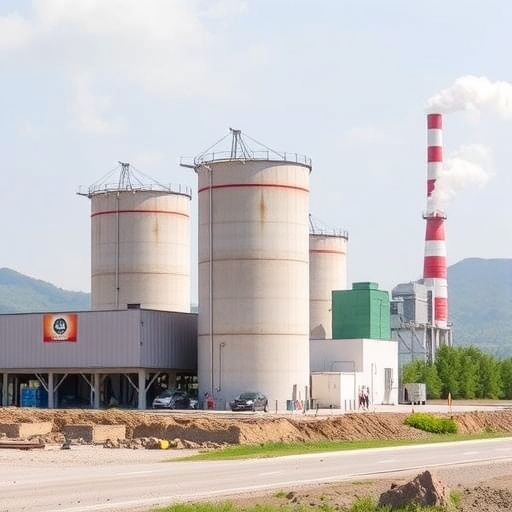
In the quest for sustainability, the North American cement industry—a sector traditionally known for its high carbon dioxide (CO₂) emissions—stands at a significant crossroad. With increasing pressures from climate change and regulatory bodies, the need to achieve net-zero emissions is not merely a target; it is an imperative. A recent study by Román, Kabir, and Mirmohammadsadeghi delves into the methodologies for forecasting CO₂ emissions within this pivotal industry, highlighting pathways to achieve these ambitious goals.
Cement production is responsible for approximately 8% of global CO₂ emissions. This statistic presents a considerable challenge for the North American cement industry, which must balance its essential role in construction and infrastructure development with the pressing need for environmental stewardship. The findings from the research provide a model that illuminates the potential for CO₂ emission reductions while maintaining economic viability in this sector.
One of the critical insights from the study involves the assessment of historical emission data coupled with predictive modeling techniques. By analyzing past trends, the researchers have established a framework that can forecast future emissions based on various factors, including production levels, technological advancements, and regulatory impacts. This kind of data-driven approach enables stakeholders to visualize potential emission trajectories and identify strategies for interventions.
The researchers specifically emphasized the role of adopting innovative technologies in the cement production process. Techniques such as carbon capture and storage (CCS) have been identified as viable options to significantly reduce emissions. However, there are challenges inherent in deploying such technologies on a wide scale, including high costs and the need for infrastructure development to support these systems.
Moreover, the study underscores the importance of alternative raw materials and fuels in cement production. The shift from traditional fossil fuels to renewable energy sources can substantially reduce the carbon footprint of cement manufacturing. The incorporation of industrial byproducts as alternative materials not only curtails emissions but also addresses waste management issues, leading to a more circular economy in the construction sector.
Collaboration among various stakeholders is another significant focal point in the research. The authors advocate for enhanced cooperation between governments, industry players, and academia to foster innovation. Such collaborations can lead to comprehensive policies that support research and deployment of low-emission technologies in the industry. This collective effort is key to overcoming the barriers that have historically hampered progress toward sustainability.
In addition to technical solutions, the report highlights the importance of robust regulatory frameworks. Policymakers play a crucial role in setting emissions reduction targets and implementing incentives for low-carbon technologies. By creating an environment conducive to innovation, regulations can stimulate rapid advancements and facilitate the transition toward net-zero emissions.
Public awareness and engagement were also found to be pivotal in driving change within the industry. As consumers become increasingly aware of the environmental impacts of construction materials, they are likely to demand more sustainable practices from suppliers. This shift in consumer behavior can encourage companies to invest in greener technologies and practices to stay competitive.
The urgent need for action is underscored by various environmental assessments that predict worsening climate conditions if current trends continue. The cement industry, being a significant contributor to these trends, must act decisively. The research highlights that the timing of implementing emissions reduction strategies is critical; the sooner measures are adopted, the more substantial the potential impact on reaching net-zero goals.
Furthermore, the analysis presented in the study illustrates how emission forecasts can be integrated into corporate planning and investment decisions. By understanding future emission scenarios, companies can align their business strategies with sustainability objectives, which not only benefits the environment but can result in financial savings and improved brand reputation.
Transparency in reporting emissions data is also emphasized in the findings. Accurate and consistent reporting can enhance accountability within the sector, allowing stakeholders to track progress toward reduction goals effectively. This transparency is necessary for building trust with the public and demonstrates a genuine commitment to sustainability initiatives.
Finally, the study concludes by reiterating that while the journey toward net-zero emissions for the North American cement industry is fraught with challenges, it is attainable through collaborative efforts, innovative technologies, and strong regulatory support. As the world continues to grapple with the implications of climate change, the commitment of the cement industry to transform its practices will be crucial in shaping a sustainable future.
The implications of these findings extend beyond the cement industry; they serve as a blueprint for other heavy industries facing similar emissions challenges. By adopting a proactive stance towards emissions reduction, industries can contribute to broader sustainability goals, combatting climate change effectively and responsibly.
Cite Scienmag News
Sloane Callahan. (January 22, 2026). Achieving Net-Zero: Predicting CO2 Emissions in Cement. Scienmag. https://scienmag.com/achieving-net-zero-predicting-co2-emissions-in-cement/
Sloane Callahan. "Achieving Net-Zero: Predicting CO2 Emissions in Cement." Scienmag, 22 January 2026, https://scienmag.com/achieving-net-zero-predicting-co2-emissions-in-cement/. Accessed 4 September 2026.
Sloane Callahan. "Achieving Net-Zero: Predicting CO2 Emissions in Cement." Scienmag. January 22, 2026. https://scienmag.com/achieving-net-zero-predicting-co2-emissions-in-cement/


