


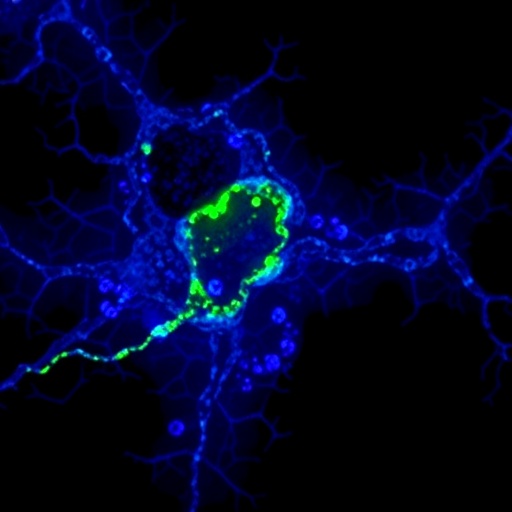
A recent groundbreaking study has shed light on the intricate world of neuroblastoma, a malicious pediatric cancer that remains one of the foremost challenges in oncology. Researchers have unveiled a promising strategy to combat this malignancy by targeting a crucial protein known as survivin. This study, spearheaded by Cazzanelli, Dalle Vedove, Broso, and their associates, focuses on a previously underexplored pathway: the role of casein kinase 2 (CK2) in the activation of survivin. This essential research paves the way for developing innovative therapeutic approaches that could significantly enhance patient outcomes in neuroblastoma treatment.
Neuroblastoma primarily affects infants and young children and originates from neural crest cells. The survival rates for high-risk neuroblastoma remain dishearteningly low, highlighting the urgent need for novel treatments. Traditional therapies have often faced limitations, including severe side effects and inadequate efficacy, which raises the necessity for alternative strategies. The study presents an enticing opportunity to alter the trajectory of treatment through targeted molecular interventions.
At the heart of this research lies the protein survivin, a member of the inhibitor of apoptosis (IAP) family. Survivin plays a dual role in cancer progression; it not only inhibits apoptosis, allowing cancer cells to evade programmed cell death, but also promotes cellular proliferation. The expression of survivin is often upregulated in various tumors, contributing to the aggressive behavior of cancerous cells. Thus, devising ways to inhibit survivin’s function may lead to enhanced therapeutic strategies.
Central to this study is CK2, a serine/threonine kinase involved in multiple cellular processes, including cell growth, proliferation, and stress response. CK2 has been implicated in promoting tumorigenesis, as it can enhance the stability and activity of various oncoproteins, including survivin. By understanding the mechanistic interactions between CK2 and survivin, researchers can identify potential intervention points for therapeutic development.
The methodology employed by the research team combines advanced molecular biology techniques, including CRISPR-Cas9 gene editing and small-molecule inhibitors. CRISPR-Cas9 allows precise editing of the genes responsible for CK2 expression, effectively silencing redundant signaling pathways that contribute to survival in neuroblastoma cells. These innovations enable researchers to assess the direct impact of CK2 inhibition on survivin activity and, consequently, the overall survival of neuroblastoma cells in vitro.
By silencing CK2, the researchers observed a significant decrease in survivin levels, resulting in heightened apoptosis among neuroblastoma cells. This compelling finding underscores the prospect of using CK2 inhibition as part of a targeted therapeutic regimen aimed at overcoming the survival advantage conferred by survivin. It is a hopeful step toward enhancing the efficacy of existing treatment modalities by incorporating targeted molecular inhibitors.
Moreover, the implications of this research extend beyond neuroblastoma, as CK2 and survivin signaling pathways are involved in various malignancies. The potential for repurposing existing CK2 inhibitors for broader oncological applications could revolutionize cancer therapy. This versatility opens the door to comprehensive treatment strategies targeting multiple cancers, empowering clinicians with more effective tools to combat different tumor types.
As the academic community continues to dissect the complexities of cancer biology, this study emphasizes the critical need for interdisciplinary approaches. It calls for collaboration between biologists, chemists, and clinicians to translate these findings into clinical practice. Although challenges remain, particularly in ensuring selective inhibition of CK2 without disrupting normal cellular functions, the urgency of advancing cancer therapeutics necessitates continued exploration of innovative strategies.
Furthermore, the broad ramifications of this research signify a shift in how we perceive cancer treatment. By targeting specific molecular players like CK2 and survivin, therapies can be tailored to individual patients based on their unique tumor profiles. This personalized approach could usher in a new era of oncology, where the precision of treatment aligns with the complexity of cancer biology.
Moving forward, clinical trials will be essential in evaluating the safety and effectiveness of these novel therapeutic agents. Translating bench research into clinical practice involves rigorously testing these strategies within controlled environments, enabling healthcare professionals to gather meaningful data on patient responses. Furthermore, the insights gleaned from these studies will provide invaluable information regarding dosing strategies and patient selection criteria.
In conclusion, the research led by Cazzanelli and colleagues opens new avenues for understanding and treating neuroblastoma. By illuminating the role of CK2 in survivin activation, this study lays a scientific foundation for the development of effective therapies. With further exploration, there is hope that such advancements can transform the landscape of pediatric oncology, ultimately leading to improved survival rates and better quality of life for young patients battling this formidable disease.
In sum, the future of neuroblastoma treatment may lie in our ability to effectively switch off detrimental pathways like CK2-mediated activation of survivin. This multifaceted approach could potentially herald a new generation of cancer therapies that are less toxic and more effective, addressing the dire need for improved treatment options in pediatric oncology.
Cazzanelli, G., Dalle Vedove, A., Broso, F. et al. Switching off CK2-mediated activation of survivin offers new therapeutic opportunities in neuroblastoma.
Exp Mol Med (2026). https://doi.org/10.1038/s12276-025-01628-5
Cite Scienmag News
Nathaniel Bowman. (January 22, 2026). Inhibiting CK2 Unleashes Neuroblastoma Treatment Potential. Scienmag. https://scienmag.com/inhibiting-ck2-unleashes-neuroblastoma-treatment-potential/
Nathaniel Bowman. "Inhibiting CK2 Unleashes Neuroblastoma Treatment Potential." Scienmag, 22 January 2026, https://scienmag.com/inhibiting-ck2-unleashes-neuroblastoma-treatment-potential/. Accessed 3 September 2026.
Nathaniel Bowman. "Inhibiting CK2 Unleashes Neuroblastoma Treatment Potential." Scienmag. January 22, 2026. https://scienmag.com/inhibiting-ck2-unleashes-neuroblastoma-treatment-potential/


