


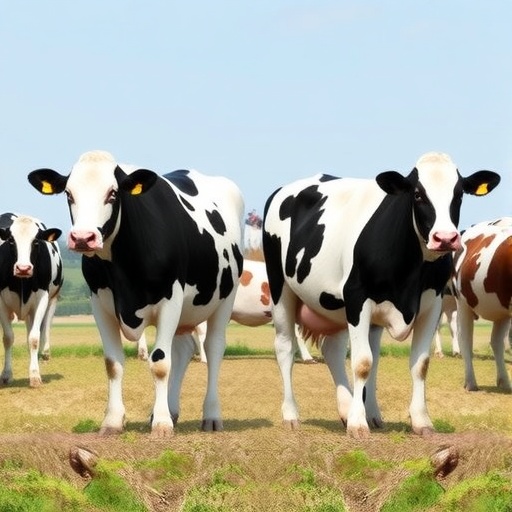
In an unprecedented exploration of genetic diversity, recent research delves into the genomics of Italian Holstein bulls, unlocking the potential implications of unfinished genetic selection processes. The intricate interplay between genetic structure and selective breeding practices has long fueled the quest to enhance livestock productivity. This study, spearheaded by a team of researchers including Falchi, Cesarani, and Brito, highlights how runs of homozygosity (ROH) can unveil insights into the evolutionary history of these animals and inform future genetic strategies.
Runs of homozygosity are segments of a genome that are identical due to inheritance from both parents, typically arising from inbreeding. These genetic markers serve as significant indicators of genetic diversity, offering researchers a window into the population’s breeding practices and its implications on health and productivity. By examining ROH patterns in Italian Holstein bulls, the researchers have put forth a compelling narrative about how specific genomic regions are potentially under selection pressure.
The study employed a permutation approach that not only analyzes ROH but also circumvents biases introduced by population structure. This innovative methodology allows for a robust mapping of genomic regions over time, shedding light on how historical and contemporary selection pressures have sculpted the genetic landscape of these bulls. The implications of this research extend beyond the confines of the breeding barn; they resonate within broader discussions on animal welfare, genetic health, and sustainability in livestock farming.
Furthermore, the nuanced approach taken in this study offers a refreshing alternative to traditional single-nucleotide polymorphism (SNP)-based analyses. By focusing on larger segments of the genome, the research captures a more comprehensive picture of genetic relatedness among individuals, paving the way for enhanced understanding of genetic traits that correlate with performance outcomes. This shift in focus could herald new standards in genomic evaluation and selection, particularly in breeds where narrow genetic bases have prompted concerns over inbreeding depression.
The study provides foundational insights into how the genetic architecture of Italian Holstein bulls of today may reflect broader agricultural practices that have evolved over decades. With the European dairy industry increasingly attentive to the shadows cast by past breeding decisions, this work stands at a pivotal crossroads of genomics and animal husbandry. It signals a clarion call for more nuanced breeding strategies that prioritize genetic diversification while maintaining high standards of production.
In addition to exploring the historical context of selection pressures, the authors highlight practical implications for contemporary breeders. By identifying specific genomic regions that exhibit ROH, practitioners can better navigate breeding decisions aimed at optimizing traits such as milk yield, disease resistance, and overall fitness. This holistic approach to genomic selection could ultimately lead to healthier herds and more sustainable production systems.
As the global agricultural community grapples with the challenges posed by climate change and food security, findings from this research are timely. Sustainable breeding practices that integrate knowledge of genetic diversity could provide a buffer against emerging threats, from novel pathogens to changing environmental conditions. In this landscape of uncertainty, understanding genetic resilience takes on new urgency, framing breeding choices as not merely economic decisions, but as ethical imperatives.
Moreover, the implications of ROH patterns extend to the realm of animal welfare. By illuminating areas of the genome that may be particularly vulnerable due to inbreeding, breeders can pivot towards strategies that mitigate the risks associated with diminished genetic diversity. A focus on genetic health can result in stronger animals that are more adaptable to their environments, reducing the need for interventions that can compromise animal welfare.
The robust datasets generated through this research also have the potential to enhance breeding programs far beyond the Italian Holstein breed. As genetic datasets continue to expand, the methodologies and insights garnered from this study could become universally applicable, presenting opportunities to reformulate breeding strategies across various livestock species. This research thus not only contributes to the understanding of a specific breed but also enriches the entire field of animal genetics.
As the authors indicate, a key pillar of their research stems from the time-based mapping of genomic regions. By situating genetic findings within a temporal framework, it becomes possible to discern patterns of selection that are influenced by shifting market demands and environmental pressures over time. This dynamic approach not only enriches the narrative of genetic selection but also equips breeders with the foresight needed to navigate future challenges with agility.
Ultimately, the convergence of advanced genomic techniques and practical breeding applications encapsulated in this research heralds a new era of informed decision-making within livestock agriculture. The insights derived from runs of homozygosity patterns present a foundation upon which future genetic interventions can be built. Through an informed synthesis of past practices and innovative methodologies, the possibility emerges for a more resilient and productive future in animal husbandry.
As critical as these findings are, the study opens the floor for further exploration. Longitudinal studies integrating real-time data collection with genomic analyses will be vital in continuing this dialogue and pushing the boundaries of our understanding. The quest for knowledge in genomics is far from over and stands to make significant contributions to both scientific literature and practical applications in the years to come.
In summation, the ongoing discourse catalyzed by this study of Italian Holstein bulls reinforces the importance of genetic diversity and informed breeding strategies. With a clear emphasis on the ramifications of historical practices on contemporary breeding, this research lays the groundwork for evolving livestock genetics aligned with modern agricultural needs. As we look to the future of food security and environmental sustainability, the genomic narratives we construct today will resonate across generations of livestock.
Falchi, L., Cesarani, A., Brito, L.F. et al. Runs of homozygosity in Italian Holstein bulls: a permutation approach and time-based mapping of the genomic regions potentially under selection.
BMC Genomics (2026). https://doi.org/10.1186/s12864-026-12564-7
Cite Scienmag News
Juliet Wilcox. (January 22, 2026). Homozygosity in Italian Holstein Bulls: A Permutation Study. Scienmag. https://scienmag.com/homozygosity-in-italian-holstein-bulls-a-permutation-study/
Juliet Wilcox. "Homozygosity in Italian Holstein Bulls: A Permutation Study." Scienmag, 22 January 2026, https://scienmag.com/homozygosity-in-italian-holstein-bulls-a-permutation-study/. Accessed 3 September 2026.
Juliet Wilcox. "Homozygosity in Italian Holstein Bulls: A Permutation Study." Scienmag. January 22, 2026. https://scienmag.com/homozygosity-in-italian-holstein-bulls-a-permutation-study/


