


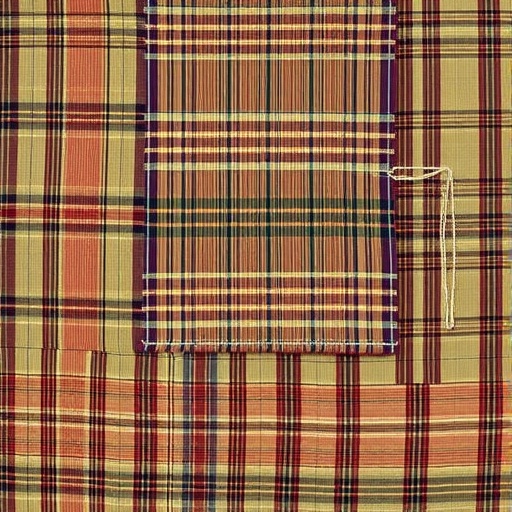
Southeast Asia stands as a vibrant tapestry of cultures, traditions, and historical nuances. Among the region’s various artistic expressions, weaving has played a particularly significant role, not just as a means of creating textiles but as a vessel of cultural heritage and identity. Recent investigations into the origins of weaving traditions in this part of the world reveal the intricate connections between history, technology, and cultural practices. As outlined by C.D. Buckley in his latest study published in Asian Archaeology, the archaeological perspective on weaving traditions illuminates aspects of Southeast Asia’s rich tapestry and provides a framework for understanding how these art forms developed over millennia.
Archaeological evidence plays a pivotal role in tracing the lineage of weaving techniques in Southeast Asia. Buckley’s research underscores the importance of excavations and findings that reveal ancient textile fragments and tools, suggesting the longstanding presence of weaving in the daily lives of people from this region. Such evidence allows us to reconstruct not only the techniques used but also the social and economic circumstances that influenced textile production and use throughout history. Textiles were more than mere functional items; they held profound significance in rituals, trade, and social interactions, marking their owners’ identities and statuses.
The continuity of weaving traditions across generations is a compelling aspect highlighted in Buckley’s analysis. From ancient spindle whorls to contemporary weaving practices, the evolution of techniques reflects both continuity and change, influenced by external factors such as trade, colonization, and globalization. This historical narrative reveals how Southeast Asian societies adapted their weaving practices while retaining core elements of their ancestral techniques. This melding of tradition and innovation is fascinating, as it showcases the resilience of cultural practices in the face of external changes.
Central to understanding these weaving traditions is the concept of community. Weaving is often a communal activity, involving intricate social networks that transcend individual craftsmanship. Women, in particular, have historically been the primary weavers, and their roles in these practices have had significant implications for their status within communities. Buckley’s findings indicate that weaving can serve as an empowering tool, offering women a means of economic independence while simultaneously reinforcing social bonds within the community. Such insights into gender dynamics enrich our understanding of how traditional crafts intertwine with broader social structures.
Furthermore, the archaeological perspective emphasizes the role of motifs and designs in Southeast Asian weaving. The meanings embedded within these patterns can often be traced back to ancient beliefs, cosmologies, and environmental factors. Buckley identifies specific symbolisms inherent in various regional weaving styles, suggesting that each design holds a story or lesson that reflects the socio-cultural context from which it emerged. These stories serve not only as artistic expression but also as philosophical reflections on life, nature, and the universe.
An additional area of focus is the impact of the natural environment on weaving traditions. Southeast Asia is characterized by its diverse ecosystems, which have influenced the materials available for weaving. The choice of fibers—from cotton and hemp to silk—coupled with dye sources derived from local flora, highlights the ingenuity of communities in utilizing their surroundings. As highlighted in the research, understanding these environmental relationships offers deeper insights into sustainable practices embedded in traditional weaving, revealing a history of ecological knowledge and adaptation.
Trade routes also played a crucial role in shaping Southeast Asian weaving traditions. Buckley’s research outlines how interaction with neighboring cultures through trade facilitated the exchange of techniques, materials, and styles. This cross-cultural exchange significantly influenced the textile arts, leading to the integration of foreign motifs and weaving methods into local practices. The confluence of different cultural influences produced a rich diversity in weaving styles that reflect the complexity of Southeast Asia’s cultural landscape.
In examining the historical shifts in weaving practices, Buckley’s study also touches upon challenges faced by traditional weavers today. Globalization, technological advancements, and changing consumer preferences threaten to overshadow these age-old practices. Many artisans find it increasingly difficult to sustain their crafts in a market driven by mass production. However, Buckley emphasizes that a revival of interest in traditional crafts, bolstered by efforts in cultural preservation, can provide a pathway for these traditions to thrive alongside modernity. Initiatives promoting fair trade and the ethical consumption of textiles can play a critical role in supporting traditional artisans and maintaining the vibrancy of these weaving cultures.
The ramifications of Buckley’s findings extend beyond academic discourse; they raise essential questions about cultural identity and preservation in a rapidly changing world. At a time when globalization often projects a singular cultural narrative, understanding and celebrating the distinct weaving traditions of Southeast Asia can provide a counter-narrative that honors diversity. This awareness fosters appreciation not only among those within the region but also globally, cultivating a desire to explore and support unique cultural expressions.
In a broader context, the archaeological approach to studying weaving traditions opens up possibilities for interdisciplinary collaboration. Historians, anthropologists, and textile specialists can come together to create a more nuanced understanding of the cultural significance of textiles. By integrating various methodologies, the complexities inherent in the art of weaving can be fully appreciated—from the practicalities of technique to the philosophical dimensions of symbolism and identity.
The past serves as a wellspring of knowledge for contemporary discussions about cultural heritage. Buckley’s in-depth exploration into the origins of Southeast Asian weaving traditions emphasizes the importance of sustaining these practices as living expressions of cultural identity. The preservation of traditional skills not only pays homage to the legacies of past generations but also enriches the cultural narratives of future generations. As societies grapple with the impacts of modernization, recognizing the value of one’s heritage becomes increasingly essential in fostering resilience and continuity.
In conclusion, the intricate tapestry of Southeast Asian weaving traditions narrates a story of cultural heritage, resilience, and adaptation. Buckley’s research provides essential insights into this multifaceted art form, reinforcing its significance as a testament to the creativity and ingenuity of communities across the region. As we celebrate these weaving traditions, it becomes crucial to promote their sustainability, ensuring that they continue to inspire and educate future generations about the rich cultural legacies that define Southeast Asia.
Buckley, C.D. The origins of southeast Asian weaving traditions: the perspective from archaeology.
asian archaeol 7, 151–162 (2023). https://doi.org/10.1007/s41826-023-00074-4
Cite Scienmag News
Courtney Benton. (January 20, 2026). Unraveling Southeast Asia’s Ancient Weaving Traditions. Scienmag. https://scienmag.com/unraveling-southeast-asias-ancient-weaving-traditions/
Courtney Benton. "Unraveling Southeast Asia’s Ancient Weaving Traditions." Scienmag, 20 January 2026, https://scienmag.com/unraveling-southeast-asias-ancient-weaving-traditions/. Accessed 3 September 2026.
Courtney Benton. "Unraveling Southeast Asia’s Ancient Weaving Traditions." Scienmag. January 20, 2026. https://scienmag.com/unraveling-southeast-asias-ancient-weaving-traditions/


