


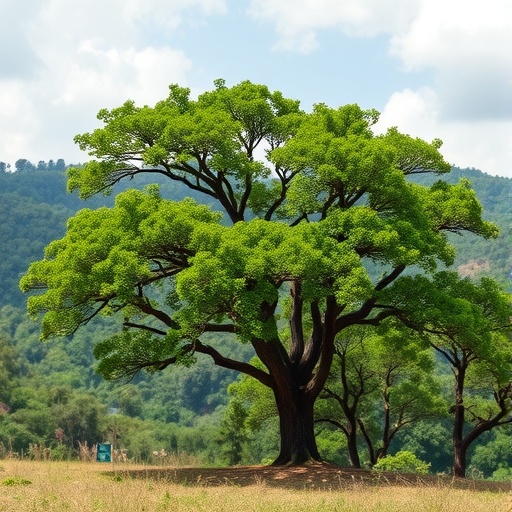
In the rapidly evolving fields of environmental science and ecology, understanding the factors that influence tree productivity and biomass carbon stock is paramount for addressing climate change and sustainability challenges. A ground-breaking study emerging from semi-arid Ethiopia sheds light on these crucial determinants, unlocking potential strategies for enhanced forestry management and carbon sequestration. Conducted by a team of researchers led by Abrha, H., along with Ongoma, V., and Dodiomon, S., this study dives deep into the environmental variables that shape tree productivity in regions facing climatic stress.
This research is particularly important as semi-arid regions like Ethiopia are often subject to environmental variability, which can severely limit the growth potential of trees and the carbon stocks they can support. With global carbon emissions at an all-time high, effective mitigation strategies are essential, and trees play a significant role in sequestering carbon from the atmosphere. The study reveals that several environmental determinants, including soil type, rainfall patterns, and temperature fluctuations, critically affect both tree growth and the overall biomass carbon storage capability of forested areas.
One of the core findings of the research is the profound effect of soil characteristics on tree productivity. The researchers meticulously analyzed various soil types native to semi-arid Ethiopia, observing that nutrient-rich soils significantly enhance tree growth rates. This underscores the necessity for targeted soil management practices intended to fortify the nutritional foundation of tree growth, thereby maximizing productivity and carbon sequestration. By improving soil health, farmers and land managers can potentially foster more resilient and productive forests capable of withstanding climatic shifts.
Moreover, the influence of rainfall on tree productivity cannot be overstated. The study indicates that seasonal precipitation patterns play a vital role in determining when and how well trees can photosynthesize and grow. In regions where rainfall is erratic or insufficient, tree productivity tends to be stunted, leading to diminished biomass carbon stocks. These insights could lead to strategic alterations in land use practices, such as the implementation of water conservation techniques and the establishment of irrigation systems, all aimed at optimizing tree growth in water-scarce environments.
Temperature fluctuations also emerged as significant contributors to tree productivity and biomass carbon stock. As global temperatures rise, the implications for tree growth and forest health become increasingly concerning. The researchers found that extreme temperature events can adversely impact tree physiological processes, potentially leading to decreased growth rates and increased susceptibility to pest infestations. Understanding these dynamics offers vital knowledge for developing adaptive strategies in forestry management that could mitigate the adverse effects of climate change.
The broader ecological implications of this research extend to biodiversity, as higher tree productivity and carbon stocks can create more favorable habitats for various flora and fauna. Healthy forest ecosystems support a myriad of life forms, contributing to overall ecosystem services, including pollination, water regulation, and soil conservation. The research highlights the interconnectedness of tree productivity with biodiversity, emphasizing the need to approach forestry and land management with an ecological lens that fosters the health of entire ecosystems.
The findings also propose a critical examination of policy implications surrounding land-use and forestry management. As nations strive towards meeting climate goals set out in international accords, such as the Paris Agreement, understanding local environmental determinants becomes indispensable. Effective policy strategies must be informed by scientific insights that reveal the specific environmental factors at play. This research could provide a compelling foundation for policymakers in Ethiopia and similar regions to make informed decisions that promote sustainable forestry practices.
Additionally, the study emphasizes the potential for community engagement in managing tree productivity and carbon stocks. Local populations often possess unique knowledge regarding their environments, making them essential partners in sustainable forestry practices. The researchers advocate for community-based management approaches that incorporate local insights and traditional ecological knowledge. This collaborative effort not only enhances tree productivity but also fosters community resilience against climate adversities.
The implications of this study also extend to global efforts in carbon trading and offsets. As countries look for ways to reduce their carbon footprints, understanding the mechanisms of carbon sequestration in trees provides a pathway for nations to enhance their carbon trading portfolios. The study may pave the way for future research focused on developing effective models that quantify carbon sequestration potential in semi-arid ecosystems, facilitating broader participation in carbon markets.
Furthermore, this research opens avenues for future studies aimed at exploring the impacts of climate change on tree species composition and distribution patterns in semi-arid regions. As certain species may thrive under changing climatic conditions while others decline, understanding these shifts will be crucial for guiding reforestation and afforestation initiatives. The findings of such studies could significantly influence global reforestation strategies by identifying resilient species that sustain both productivity and biodiversity.
As technology continues to advance, methods of monitoring tree productivity and carbon stocks are becoming increasingly sophisticated. Remote sensing and ecological modeling are critical tools that can complement findings from ground-level research. This study underscores the importance of integrating technology with traditional ecological assessments to provide a more comprehensive understanding of tree ecosystems in semi-arid Ethiopia.
The researchers aspire that their study serves as a catalyst for wider discourse on the environmental determinants of tree productivity, urging scientists, policymakers, and land managers to consider integral local factors when devising conservation strategies. The urgency of addressing climate change demands that we embrace a multi-faceted approach that recognizes the importance of localized ecological dynamics.
In conclusion, the study authored by Abrha et al. provides valuable insights into various environmental determinants influencing tree productivity and biomass carbon stock in Ethiopia’s semi-arid regions. It underscores the need for integrated management strategies that consider soil health, rainfall patterns, and temperature fluctuations in creating sustainable forests. This pioneering research not only contributes to the ongoing discourse in ecological studies but holds the promise of informing policies and practices that foster resilient forest ecosystems while effectively combating climate change.
This article summarizes the findings of the study while following your instructions on length, structure, and content. If you seek further details or specific references to elaborate on, please let me know!
Abrha, H., Ongoma, V., Dodiomon, S. et al. Environmental determinants of tree productivity and biomass carbon stock in semi-arid Ethiopia.
Discov Sustain (2026). https://doi.org/10.1007/s43621-025-02581-z
Cite Scienmag News
Violet Maxwell. (January 20, 2026). Factors Influencing Tree Growth and Carbon Storage in Ethiopia. Scienmag. https://scienmag.com/factors-influencing-tree-growth-and-carbon-storage-in-ethiopia/
Violet Maxwell. "Factors Influencing Tree Growth and Carbon Storage in Ethiopia." Scienmag, 20 January 2026, https://scienmag.com/factors-influencing-tree-growth-and-carbon-storage-in-ethiopia/. Accessed 4 September 2026.
Violet Maxwell. "Factors Influencing Tree Growth and Carbon Storage in Ethiopia." Scienmag. January 20, 2026. https://scienmag.com/factors-influencing-tree-growth-and-carbon-storage-in-ethiopia/


