


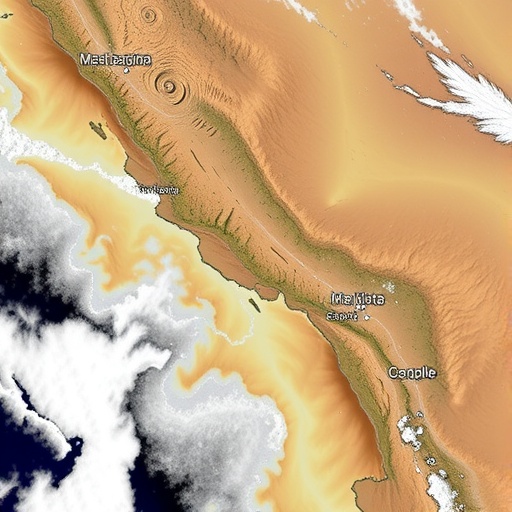
In a groundbreaking study, the intricate dynamics of salt dust storms emerging from the Mar Chiquita Lagoon in Argentina have been meticulously examined over a span of two decades. This research, spearheaded by esteemed scientists including Pagot, Dimari, and Martino, delves deeply into the phenomena of saline sediment mobilization and atmospheric particulate matter (PM10) distribution. The 20-year occurrence analysis has unearthed significant findings regarding the frequency and intensity of these dust storms, which affect not only local ecosystems but also human health and the environment.
The Mar Chiquita Lagoon is a vast saline body of water that serves as a critical ecological zone in Argentina. Over the years, its unique geographical features and climatic conditions have made it a hotspot for the generation of salt dust storms. These storms are not just fleeting weather events; they are mechanisms that transform the landscape and have profound implications for the surrounding areas. The research team has employed advanced methodologies, including WRF-Chem modeling, to better understand PM10 distribution during selected case studies of dust storms.
One of the key findings of the study illustrates the cyclical nature of these dust storms, revealing a pattern that correlates with seasonal changes and climatic variations. Through an exhaustive analysis of meteorological data, the researchers have identified periods of heightened storm activity, providing valuable insights into how such phenomena can be anticipated and potentially mitigated. Given the increasing frequency of extreme weather events worldwide, these findings resonate on a global scale, echoing the urgent need for localized climate action.
Furthermore, the study has highlighted the significance of PM10, which consists of particulate matter small enough to penetrate deep into the human respiratory system. High concentrations of PM10 are associated with various health problems, including respiratory diseases and cardiovascular issues. The connection between dust storms and public health is particularly concerning for populations living in close proximity to the Mar Chiquita Lagoon, underscoring the importance of ongoing monitoring and effective policy measures to safeguard community health.
In their exploration, the researchers utilized WRF-Chem, a powerful modeling tool that integrates meteorological data with chemical transport models. This sophisticated approach allowed them to simulate the movement and dispersion of PM10 during dust storms, providing enhanced clarity on how these airborne particles pose risks to both health and the environment. The simulations have revealed intricate patterns that inform us about potential pathways of particulate matter across the region.
One notable observation from the model results is the influence of wind patterns on dust storm development. Strong winds, predominantly from the northwest, have been shown to play a pivotal role in the erosion of salt crusts and the subsequent lifting of particles into the atmosphere. This finding emphasizes the need for a comprehensive understanding of regional wind systems and their interactions with local topography when assessing the risks associated with these dust events.
The research also draws attention to the ecological consequences of salt dust storms, as the arid conditions surrounding the Mar Chiquita Lagoon can exacerbate desertification processes. The interplay between dust mobilization and land degradation may lead to a loss of biodiversity, affecting both terrestrial and aquatic ecosystems. Hence, the long-term environmental health of the region is at stake, demanding vigilant conservation efforts and informed policy decisions.
Interestingly, the study has implications that extend beyond local boundaries. With the climate crisis manifesting through shifting weather patterns, the dynamics of dust storms in one region can influence air quality and environmental conditions far afield. For instance, dust transported by wind can cross oceans, altering nutrient availability in distant marine ecosystems and even affecting climate systems on a broader scale. It’s a stark reminder that environmental issues are often interconnected and that localized phenomena can have global consequences.
In addition to the effects on health and ecology, the research raises critical questions regarding economic impacts. As salt dust storms continue to sporadically disrupt agricultural activities, the livelihoods of many local communities may be jeopardized. Understanding the economic ramifications and incorporating this data into future agricultural planning is essential for developing resilience strategies within affected sectors.
Moreover, the convergence of scientific research with community engagement is crucial in addressing the challenges posed by dust storms. Promoting awareness among local populations regarding the health risks associated with increased PM10 levels can facilitate proactive measures. Community members can play a pivotal role in monitoring environmental changes, collaborating with scientists to enhance resilience against the adverse impacts of dust storms.
In conclusion, the visionary research on salt dust storms from the Mar Chiquita Lagoon emphasizes the pressing need to blend scientific inquiry with actionable strategies to combat environmental challenges. As we advance, it is incumbent upon local authorities, scientists, and communities to harness this knowledge, foster sustainable practices, and champion public health initiatives. The threats posed by salt dust storms are clear, but equipped with rigorous analysis and collaborative efforts, there is potential for a positive impact on both local ecosystems and human health.
This comprehensive study of the Mar Chiquita Lagoon serves as an essential contribution to the growing dialogue on environmental management and climate adaptation. By identifying trends and establishing robust models, we take a crucial step toward addressing the multifaceted dimensions of dust storms and their broader implications. As the global climate continues to shift, the lessons learned here could guide future research and initiatives aimed at fostering resilience in the face of environmental change.
Ultimately, the findings of Pagot and colleagues illuminate a pathway toward understanding and mitigating the impacts of salt dust storms. With continued research and commitment to addressing these challenges, we can work towards a future that not only protects our air quality but also enhances our ecological integrity and public health amidst the ongoing climate crisis.
Cite Scienmag News
Violet Maxwell. (January 20, 2026). 20-Year Study: Salt Dust Storms from Mar Chiquita. Scienmag. https://scienmag.com/20-year-study-salt-dust-storms-from-mar-chiquita/
Violet Maxwell. "20-Year Study: Salt Dust Storms from Mar Chiquita." Scienmag, 20 January 2026, https://scienmag.com/20-year-study-salt-dust-storms-from-mar-chiquita/. Accessed 3 September 2026.
Violet Maxwell. "20-Year Study: Salt Dust Storms from Mar Chiquita." Scienmag. January 20, 2026. https://scienmag.com/20-year-study-salt-dust-storms-from-mar-chiquita/


