


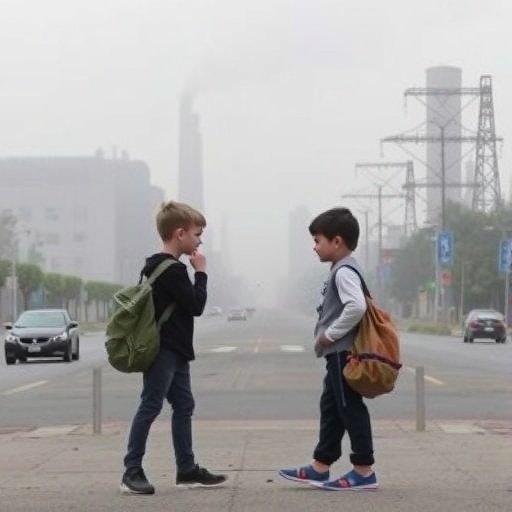
In a groundbreaking study set to be published in Child Psychiatry and Human Development, researchers unveil significant findings regarding the intersection of environmental pollution and the psychosocial development of low-income boys. The paper, led by notable scientists such as P. Sieck, D.S. Shaw, and P. Miller, highlights a unique exploration into how various pollutant exposures correlate with an increase in antisocial behaviors among marginalized youth. This research brings forward critical conversations about public health, environmental policy, and social equity.
The study recognizes that children are particularly vulnerable to environmental factors, and, when embedded in low-income settings, the psychological repercussions can be even more pronounced. The researchers employed a comprehensive methodology that included longitudinal assessments, which allowed them to observe changes over time in the behavior of the participants. By utilizing both qualitative and quantitative measures, the researchers provided a robust framework for interpreting the complex relationship between pollution exposure and behavior.
Key to this investigation was the identification of independent variables related to pollution exposure. The study meticulously cataloged types of pollution, ranging from air quality indicators to chemical contaminants in water. By assessing the various sources of pollutants—be it traffic emissions in urban areas or industrial waste—the team was able to establish a direct correlation with behavioral outcomes among boys in lower-income brackets. The results underscore the dire need for clean environments as a fundamental aspect of healthy child development.
An equally important angle of the study was the interaction between family dynamics and environmental factors. The researchers found that socioeconomic stressors exacerbate the negative impacts of pollution on behavior. For instance, when families face financial instability, the additional stress can hinder effective parenting, leading to a higher likelihood of antisocial behaviors in children. The findings suggest that tackling environmental pollution alone is not sufficient; solutions must also address the socioeconomic contexts that amplify these issues.
Moreover, the study offers unique insights into the behavioral manifestations of the affected individuals. Antisocial behavior, including aggression, delinquency, and social withdrawal, can significantly impede a child’s ability to thrive socially and academically. The researchers advocated for early interventions that could mitigate these adverse outcomes. They emphasized the importance of community resources and support structures designed to foster resilience among affected families.
The implications of this study extend far beyond academic circles. Public health officials and policymakers are already considering how to translate these findings into actionable strategies. This research not only highlights the need for cleaner air and water but also serves as a call to action for governments to prioritize environmental health in low-income neighborhoods. An investment in these areas could yield profound benefits, reducing overall healthcare costs while improving the quality of life for vulnerable populations.
Furthermore, the ethical considerations of this research cannot be overlooked. The study posits that environmental justice is a critical issue, with marginalized communities disproportionately affected by pollution. This research highlights the intersectionality of environmental issues and social inequities, making a compelling case for policy reform. The researchers urge that effective change must involve collaboration with community leaders and stakeholders to ensure that solutions are equitable and sustainable.
As the discussion on climate change and environmental degradation continues to escalate globally, this research provides a sobering reminder that pollution is not just an environmental issue but a public health crisis affecting vulnerable populations. By drawing attention to the specific challenges faced by low-income boys, the researchers aim to inspire further studies and initiatives that target these disparities directly.
The findings are expected to contribute to a growing body of literature that seeks to illuminate the multifaceted relationships between environmental factors and child development. As awareness of these issues increases, it is anticipated that more research will emerge, focusing on how to effectively address these critical intersections between environment, behavior, and socio-economic status.
In conclusion, the study authored by Sieck, Shaw, and Miller marks a significant step forward in understanding the complexities of pollution exposure and its repercussions on the behavioral health of low-income boys. Their comprehensive approach, which intermeshes environmental science with psychological health, underlines the urgency in advocating for cleaner environments and more supportive social structures. This pivotal research will likely resonate well within academic and public circles alike, creating avenues for discussion and action that promise to benefit future generations.
By elucidating the realities faced by low-income families dealing with pollution and behavioral issues, this investigation sets the groundwork for actionable strategies that can lead to systemic changes. As communities and policymakers digest these findings, there is hope for not merely improving health outcomes but fostering a more equitable society where all children, regardless of their economic background, can thrive.
Sieck, P., Shaw, D.S., Miller, P. et al. Independent and Interactive Connections Between Exposure to Pollution and the Development of Low-Income Boys’ Antisocial Behavior.
Child Psychiatry Hum Dev (2026). https://doi.org/10.1007/s10578-025-01949-6
Cite Scienmag News
Glenn Wilkins. (January 19, 2026). Pollution Exposure Linked to Antisocial Behavior in Boys. Scienmag. https://scienmag.com/pollution-exposure-linked-to-antisocial-behavior-in-boys/
Glenn Wilkins. "Pollution Exposure Linked to Antisocial Behavior in Boys." Scienmag, 19 January 2026, https://scienmag.com/pollution-exposure-linked-to-antisocial-behavior-in-boys/. Accessed 4 September 2026.
Glenn Wilkins. "Pollution Exposure Linked to Antisocial Behavior in Boys." Scienmag. January 19, 2026. https://scienmag.com/pollution-exposure-linked-to-antisocial-behavior-in-boys/


