


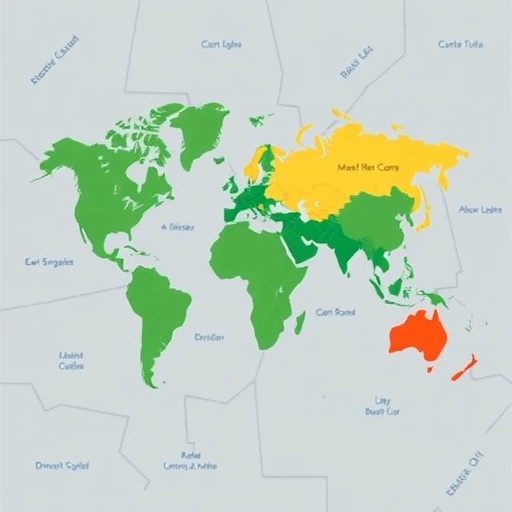
In a pivotal study recently published in the journal Ambio, researchers María Coll-Planell and Marc Rodó-Zárate unpack the intricate relationship between climate change and everyday experiences through the innovative concept of Climate Relief Maps. By employing an intersectional lens, this methodological framework seeks to amplify the voices of marginalized communities, bringing forth a clarion call for addressing the inequalities exacerbated by climate change. This groundbreaking research not only highlights the severity of the crisis but also offers an avenue to explore personal narratives, making the science of climate change more relatable and urgent.
The primary focus of this research lies in the creation of Climate Relief Maps, which provide a visually compelling method to represent the varied experiences of individuals confronting climate change. By utilizing geographic information systems (GIS) and qualitative data, these maps serve as a narrative tool that communicates the lived realities of individuals from diverse backgrounds. This approach transcends traditional climate data, ensuring that the stories of vulnerable populations are preserved and acknowledged within the scientific narrative surrounding climate crisis.
A significant aspect of this study is the integration of intersectionality, a theoretical framework that examines how various social identities overlap and contribute to unique modes of discrimination and oppression. Coll-Planell and Rodó-Zárate argue that without this lens, the climate narrative often overlooks how factors such as race, gender, and socioeconomic status exacerbate the impact of environmental changes on marginalized communities. By emphasizing intersectionality, their research champions inclusivity, pushing for a comprehensive understanding of how climate change disproportionately affects different groups.
Moreover, the Climate Relief Maps are not merely static representations; they are dynamic tools poised for use in advocacy and education. The researchers envision these maps as catalysts for change, empowering local communities to articulate their challenges and advocate for policy reform. By engaging with these maps, stakeholders can create targeted interventions that resonate with the specific needs of communities, thereby fostering resilience and adaptability in the face of climate crisis.
The implications of this study extend beyond academia, traversing into the realms of public policy and climate activism. Policymakers are urged to consider the intersectional experiences illustrated through the Climate Relief Maps when drafting legislation aimed at mitigating climate change. By recognizing the disparities highlighted in these maps, initiatives can be designed that not only address environmental concerns but also promote social equity. This integrative approach could ultimately lead to more effective and holistic climate policies.
In addition, the researchers underscore the importance of participatory methods in developing Climate Relief Maps. Engaging local communities in the data collection process ensures that their voices are not only heard but prioritized. Collaboration with residents allows for a more nuanced understanding of the local context, creating a sense of ownership over the maps produced. This participatory approach fosters trust and strengthens community relationships, which are critical elements in developing effective climate resilience strategies.
The urgency of this research is particularly highlighted against the backdrop of increasing climate-related disasters, which disproportionately impact vulnerable populations. The ramifications of climate change—rising sea levels, extreme weather events, and disrupted ecosystems—do not occur in a vacuum; they are deeply interconnected with social justice issues. The authors call for immediate action, asserting that the tools developed through their research can play a significant role in mobilizing communities and advocating for systemic change.
Interestingly, the framework presented in this study is adaptable and can be applied to various geographic contexts. Whether addressing urban centers facing heat waves or rural areas experiencing drought, Climate Relief Maps can be tailored to capture the unique challenges faced by different communities. This flexibility enhances the potential for widespread application and engagement, broadening the scope of discourse around climate change and its implications.
As the scientific and public communities grapple with the enormity of climate change, the work of Coll-Planell and Rodó-Zárate serves as a timely reminder of the need for inclusive and intersectional approaches. They challenge traditional narratives that often prioritize abstract data over human experience, thereby inviting a more empathetic engagement with climate science. By centering the voices of those most affected, this research aims to bridge the gap between scientific understanding and lived experience.
Furthermore, this study not only fills a gap in the existing literature but also sets the stage for future research avenues. Scholars are encouraged to explore additional frameworks that could complement Climate Relief Maps, fostering more multidimensional understandings of climate impacts. The authors anticipate that their work will inspire others to contribute to this burgeoning field, urging a collective effort in combating climate change and advocating for social justice.
In conclusion, the methodological innovations put forth by Coll-Planell and Rodó-Zárate exemplify the power of intersectional perspectives in understanding climate change. By grounding their research in the realities faced by marginalized communities, they make a compelling case for the necessity of inclusive frameworks in environmental research. As the effects of climate change continue to unfold globally, the call to action articulated in this study resonates louder than ever, urging us all to consider the human dimensions of climate science and the imperative for equity in addressing this crisis.
Indeed, the breadth of this research not only enriches our understanding of climate change but also reorients the conversation towards collective resilience and societal change. It challenges each of us to listen, learn, and act, ensuring that no voice is left unheard in the quest for a sustainable future.
Coll-Planell, M., Rodó-Zárate, M. Correction: Climate Relief Maps: A methodological framework for exploring everyday experiences of climate change through an intersectional lens. Ambio (2026). https://doi.org/10.1007/s13280-025-02312-8
Cite Scienmag News
Violet Maxwell. (January 17, 2026). Mapping Climate Experiences: An Intersectional Approach. Scienmag. https://scienmag.com/mapping-climate-experiences-an-intersectional-approach/
Violet Maxwell. "Mapping Climate Experiences: An Intersectional Approach." Scienmag, 17 January 2026, https://scienmag.com/mapping-climate-experiences-an-intersectional-approach/. Accessed 3 September 2026.
Violet Maxwell. "Mapping Climate Experiences: An Intersectional Approach." Scienmag. January 17, 2026. https://scienmag.com/mapping-climate-experiences-an-intersectional-approach/


