


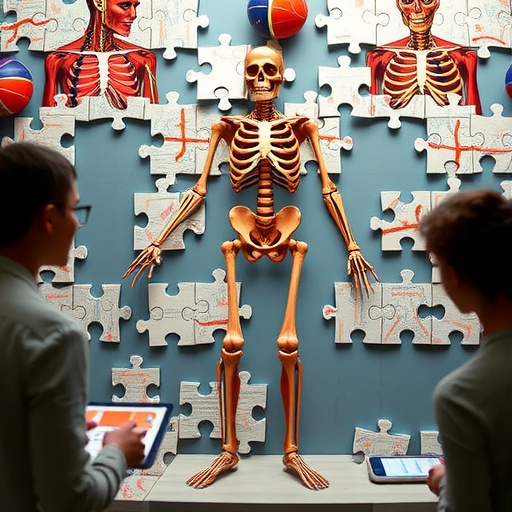
In the realm of education, innovative teaching methods continuously strive to surpass traditional pedagogical approaches. One such method gaining traction in higher education is the Jigsaw teaching technique. This playful yet structured approach shifts the conventional paradigms of instruction, particularly in complex subjects such as anatomy and physiology. A recent randomized controlled trial, spearheaded by researchers Stokstad, Nedrehagen, and Hufthammer, shed light on the efficacy of the Jigsaw method compared to traditional teaching in boosting students’ knowledge in these essential medical fields.
The Jigsaw method, originally designed to foster collaboration and peer learning, organizes students into small groups. Each group member becomes an “expert” on a particular segment of the subject matter before reassembling into new groups to teach each other. This multi-step process not only reinforces individual understanding of specific topics but also promotes a deeper, holistic view of the broader subject—a significant advantage in fields that require synthesizing substantial amounts of interrelated information.
In the context of a randomized controlled trial conducted by the pioneers of this research, the study meticulously evaluated the learning outcomes of students exposed to the Jigsaw method versus those subjected to traditional lectures. The trial’s structure was compelling: students were randomly assigned to either group, ensuring that any results could be attributed directly to the teaching method rather than other variables.
Participants in the Jigsaw group reported a marked increase in engagement and collaborative learning. The process encouraged them to communicate, share ideas, and potentially correct misconceptions before teaching their peers, fostering an environment ripe for deeper understanding. The ability to learn from fellow students also alleviated much of the anxiety associated with performance in a traditional lecture-based environment where students may feel isolated in their learning experience.
In contrast, students taught via traditional methods often exhibited less motivation and engagement. Lectures, while structured and informative, can sometimes present challenges in retention and comprehension, particularly in complex subjects. The traditional approach tends to place students in a more passive role, as they are often receivers of information rather than active participants in their educational journey. This lack of interaction may ultimately hinder their ability to fully grasp intricate concepts inherent to subjects like anatomy and physiology.
Moreover, the study aimed to assess not just knowledge retention, but also application of that knowledge in practical scenarios, something that is critical for students in medical fields. The researchers designed assessments that would measure not only recall but the ability to apply anatomical and physiological knowledge in clinical or practical contexts. Preliminary results indicated that students from the Jigsaw method group excelled in these aspects, showcasing the potential for improved pedagogical outcomes when utilizing active learning strategies.
Judging the success of teaching methods requires an analysis of both immediate assessments and long-term retention. The study plans to follow up with participants to determine if the advantages gained through the Jigsaw method persist over time. Early signs are promising, indicating that active engagement leads to not only better short-term understanding but may also cultivate enduring knowledge crucial for future medical professionals.
The implications of this research extend beyond the classroom as well. The healthcare industry recognizes the necessity for practitioners who can think critically and collaborate effectively. The Jigsaw method not only equips students with a stronger knowledge base but also nurtures the soft skills needed in the healthcare sector. As the profession increasingly seeks individuals who can function in team-based environments, methods like Jigsaw may provide a transformative pathway to developing these competencies in new healthcare providers.
Furthermore, the findings may urge educational institutions to rethink curriculum design and teaching strategies in various disciplines. By integrating participative and collaborative techniques, educational bodies can enhance the effectiveness of teaching and learning. This study provides a strong case for educators to adopt innovative teaching practices, emphasizing the importance of flexible, student-centered approaches.
As educators and institutions contemplate the integration of new methodologies, the compelling data from this study may serve as a catalyst for widespread reform in teaching practices. As the educational landscape continues to evolve, it is crucial to prioritize techniques that enhance engagement, understanding, and application of knowledge—not just for anatomy and physiology, but across all disciplines.
In summary, the research conducted by Stokstad and colleagues holds significant promise for the evolution of educational methodologies in higher education. By demonstrating the effectiveness of the Jigsaw teaching technique, they challenge the status quo and advocate for a shift towards more interactive, engaging learning environments. As we look to the future, it may well be these innovative methods that pave the way for more effective education in medical fields and beyond.
In conclusion, the landscape of medical education is ripe for change, and studies like this highlight the importance of collaborative learning techniques such as the Jigsaw method. As institutions aim to foster skilled, knowledgeable, and collaborative healthcare professionals, embracing these progressive teaching methods may ultimately lead to a more competent and well-prepared medical workforce.
Cite Scienmag News
Courtney Benton. (January 17, 2026). Jigsaw Method Boosts Anatomy Learning Over Traditional Teaching. Scienmag. https://scienmag.com/jigsaw-method-boosts-anatomy-learning-over-traditional-teaching/
Courtney Benton. "Jigsaw Method Boosts Anatomy Learning Over Traditional Teaching." Scienmag, 17 January 2026, https://scienmag.com/jigsaw-method-boosts-anatomy-learning-over-traditional-teaching/. Accessed 3 September 2026.
Courtney Benton. "Jigsaw Method Boosts Anatomy Learning Over Traditional Teaching." Scienmag. January 17, 2026. https://scienmag.com/jigsaw-method-boosts-anatomy-learning-over-traditional-teaching/


