


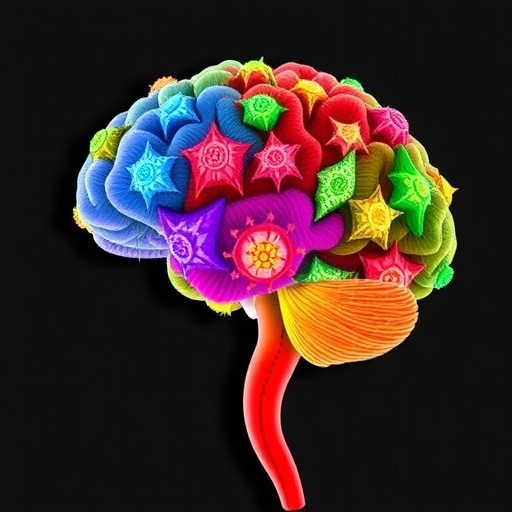
The burgeoning field of spatial single-cell multiomics is revolutionizing our understanding of complex diseases by allowing researchers to examine cellular heterogeneity within tissues with unprecedented resolution. A recent groundbreaking study published in npj Parkinson’s Disease has leveraged these advanced techniques to uncover striking insights into peripheral immune dysfunction in Parkinson’s disease (PD) and inflammatory bowel disease (IBD). This research sheds new light on the intricate, and often enigmatic, link between neurodegeneration and chronic inflammatory states, potentially opening up new therapeutic avenues.
Parkinson’s disease, long recognized for its hallmark motor symptoms and the neuropathological loss of dopaminergic neurons in the substantia nigra, is increasingly appreciated as a multisystem disorder involving peripheral and systemic changes. Among these, immune system alterations have attracted considerable attention, but the precise cellular and molecular underpinnings remained elusive until now. By applying spatially resolved single-cell multiomics—which integrates transcriptomics, proteomics, and epigenomics at a cellular level with spatial context—Bolen and colleagues have mapped immune dysfunction with remarkable detail, focusing specifically on peripheral immune cells.
The researchers collected peripheral blood and tissue samples from patients diagnosed with Parkinson’s disease and inflammatory bowel disease, two conditions previously linked epidemiologically and immunologically but not thoroughly compared at the single-cell molecular level. The innovative approach allowed the team to characterize immune cells not only by gene expression profiles but also by their spatial localization within tissues, protein expression signatures, and epigenetic landscapes. This multidimensional data set provides a comprehensive map of immune dysregulation patterns shared between these diseases as well as unique signatures.
One of the most compelling findings was the identification of distinct peripheral immune cell populations exhibiting dysfunctional phenotypes in Parkinson’s patients compared to healthy controls. Particularly, subsets of monocytes, T cells, and natural killer cells showed altered activation states, cytokine profiles, and epigenetic marks associated with chronic inflammation and immune exhaustion. These dysfunctional cells were spatially localized within specific tissue microenvironments, suggesting that their pathological roles are context-dependent and potentially modulated by local cues.
Interestingly, when examining inflammatory bowel disease samples, the research team found overlapping immune dysfunction markers, notably in the monocyte and T cell compartments. This convergence hints at a shared immunopathogenic mechanism underlying both disorders, consistent with clinical observations that PD patients often exhibit gastrointestinal symptoms and altered intestinal permeability preceding motor symptoms. The spatial aspect of the multiomic data further revealed that immune cells in inflamed gut tissue shared molecular features with circulating immune cells in PD peripheral blood, demonstrating a systemic connection.
The study employed cutting-edge computational analyses to integrate the diverse omics layers, enabling the authors to build predictive models of immune dysregulation. These models highlighted key transcription factors and signaling pathways likely driving the dysfunctional immune phenotypes. Among the pathways implicated were NF-kB signaling, interferon responses, and senescence-associated secretory phenotypes—pathways commonly linked to chronic inflammatory diseases and neurodegenerative processes. The data strongly suggest that peripheral immune abnormalities contribute to the etiology and progression of Parkinson’s disease beyond central nervous system involvement.
Another hallmark of this research is its focus on the spatial heterogeneity within tissues, moving beyond bulk analyses that obscure cell-to-cell variability and microenvironment influences. The spatial resolution allowed researchers to identify immune cell niches enriched for disease-associated signatures, which could be targeted for therapeutic intervention. For example, clusters of exhausted T cells localized near blood vessels might represent an accessible and actionable target to restore immune competence in PD and IBD patients.
The implications for drug development and biomarker discovery are profound. By mapping peripheral immune dysfunction with such precision, clinicians could potentially diagnose Parkinson’s disease earlier and monitor disease progression or response to therapy through minimally invasive blood tests that reflect tissue-level pathologies. Furthermore, treatments modulating immune function could be personalized based on a patient’s unique immune cell landscape as revealed by spatial multiomics.
Beyond Parkinson’s and inflammatory bowel disease, this study exemplifies the transformative power of spatial single-cell multiomics in unraveling the complexities of immune dysregulation in human disease. The technical challenges overcome include isolating intact cells from heterogeneous tissues, capturing multiomics data without loss of spatial information, and developing bioinformatic pipelines capable of integrating multi-layered data in high-dimensional spaces.
Looking forward, the authors advocate for expanding such studies to larger patient cohorts and other neurodegenerative or autoimmune diseases to validate and extend their findings. The establishment of immune dysfunction as a pivotal component in PD encourages interdisciplinary collaborations between neuroscientists, immunologists, and clinical researchers, potentially leading to breakthrough therapies that target systemic and peripheral factors rather than focusing solely on the brain.
Moreover, the refinement of spatial single-cell multiomics technologies will likely continue to accelerate research into complex diseases. As methods improve in sensitivity, throughput, and cost-effectiveness, routine clinical application may become feasible. This paradigm shift toward precision medicine, grounded in comprehensive cellular and molecular pathology, could herald a new era of disease management that alters outcomes and quality of life for millions worldwide.
Ultimately, this seminal work provides a compelling narrative that peripheral immune dysfunction is not just a consequence of neurodegeneration but an integral, driving factor in Parkinson’s disease and possibly other inflammatory disorders. By illuminating the cellular choreography underlying this dysfunction, Bolen, Buendia, Shi, and colleagues have set a new standard for mechanistic insights framed by high-dimensional, spatially resolved data. The promise inherent in these insights fuels optimism for innovative interventions that disrupt disease progression at its immunological roots.
As the scientific community digests the implications of this study, it becomes clear that spatial multiomics is more than a technological feat—it is a gateway to understanding the interplay between immune systems and chronic diseases in extraordinary detail. The revelations garnered from this work will undoubtedly inspire further research exploring the immune-neural axis, with the ultimate goal of transforming diagnosis, treatment, and prevention of Parkinson’s disease and beyond. The future of medicine might well be shaped by the ability to chart cellular states within their native environments, unraveling the mysteries of disease one cell at a time.
Cite Scienmag News
Diana Fleming. (January 16, 2026). Spatial Multiomics Uncovers Immune Dysfunction in Parkinson’s, IBD. Scienmag. https://scienmag.com/spatial-multiomics-uncovers-immune-dysfunction-in-parkinsons-ibd/
Diana Fleming. "Spatial Multiomics Uncovers Immune Dysfunction in Parkinson’s, IBD." Scienmag, 16 January 2026, https://scienmag.com/spatial-multiomics-uncovers-immune-dysfunction-in-parkinsons-ibd/. Accessed 1 September 2026.
Diana Fleming. "Spatial Multiomics Uncovers Immune Dysfunction in Parkinson’s, IBD." Scienmag. January 16, 2026. https://scienmag.com/spatial-multiomics-uncovers-immune-dysfunction-in-parkinsons-ibd/


