


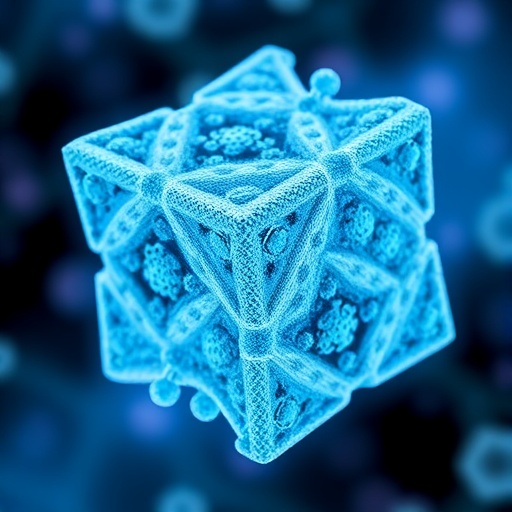
In a groundbreaking advancement towards accessible clean water, researchers have developed an ultrapermeable polyamide nanofiltration membrane designed to operate without electricity, revolutionizing portable water purification technology. This novel membrane, inspired by fractal patterns found in nature, presents a solution that addresses longstanding challenges faced by traditional nanofiltration systems, particularly in remote or underserved regions where power supply and system complexity hinder deployment.
Nanofiltration has long been recognized as a powerful technology for water purification, effectively removing harmful pathogens, micropollutants, and dissolved ions to produce safe and clean potable water. Despite these advantages, conventional nanofiltration devices are heavily reliant on continuous electrical input and complex mechanical arrangements, limiting their practical use in areas lacking reliable infrastructure. Responding to this critical gap, the research team harnessed the structural efficiency of natural fractal transport networks, like those observed in leaves and blood vessels, to engineer a novel membrane substrate that optimizes fluid dynamics and filtration performance.
The core innovation lies in the membrane’s fractal-inspired substrate design. This architecture mimics nature’s strategy for distributing fluids through highly branched, fractal-like networks that maximize flow efficiency and minimize energy waste. By embedding a thin polyamide nanofilm atop this substrate, the system achieves an unprecedented permeance rate of 113.6 liters per square meter per hour per bar of pressure. Remarkably, this permeance surpasses current commercial nanofiltration membranes by an order of magnitude, marking a quantum leap in membrane technology.
Such high permeance carries significant implications for field applications. The portable purifier employing this membrane can operate fully electricity-free, relying solely on simple manual vacuum pumping mechanisms. A palm-sized membrane disk, spanning an area of just 157 square centimeters, enables the rapid generation of over 250 milliliters of purified water within a mere 15 minutes. This performance metric not only represents a user-friendly design but also promises scalability and practical utility in diverse contexts, from emergency relief zones to rural communities.
Beyond throughput, the membrane excels in ensuring water quality by delivering impressive contaminant rejection rates. The system demonstrated an exceptionally high removal efficiency of common salts, exemplified by a 98.0% rejection rate of sodium sulfate (Na2SO4). Additionally, it showcased remarkable pathogen elimination, achieving over 99.9999% removal—a level of disinfection critical for safe drinking water standards. The membrane also effectively targets micropollutants, with a noted 99.1% removal of persistent organic contaminants like perfluorooctanesulfonate (PFOS), which pose significant health risks even at low concentrations.
The technical success of this fractal-inspired membrane represents a fundamental shift in nanofiltration science, where permeance and selectivity often trade off against one another. By eliminating the need for external electrical power, the device shows exceptional promise for universal water access, aligning closely with the United Nations Sustainable Development Goal 6, which focuses on ensuring availability and sustainable management of water and sanitation worldwide. The technology’s portability, ease of use, and high filtration performance underline its potential impact on global health outcomes.
Integral to the device’s innovation is the polyamide nanofilm, a material widely known for its chemical resilience and filtration capabilities. Coupled with the fractally structured substrate, this layer forms a highly efficient barrier that promotes ultrafast water transport alongside stringent contaminant exclusion. This synergy between material engineering and biomimetic design opens new horizons for membrane science, challenging the conventionally accepted limits of filtration selectivity and flux.
The design methodology embraced fractal geometry principles to address a classical limitation in membrane filtration: balancing membrane permeability with contaminant rejection. The fractal substrate enhances fluid distribution within the membrane, mitigating concentration polarization and allowing the membrane surface to maintain high flux without sacrificing rejection performance. This biomimetic approach represents a pioneering application of natural design principles to overcome engineering bottlenecks traditionally encountered in water purification membranes.
Practically, the research implies that water treatment no longer must be tethered to grid electricity, chemical additives, or bulky equipment. The membrane-based purifier can be utilized in variable environmental conditions, powered solely by manual operation that is accessible to anyone, anywhere. This simplicity and robustness may catalyze public health improvements in regions stricken by water scarcity, contamination crises, or disaster conditions where conventional filtration technologies are unfeasible.
The research also opens avenues for further innovation in wearable or household water treatment systems that blend ultrapermeable membranes with user-centered design. Miniaturization facilitated by high permeance rates allows for stackable or modular membrane arrays that can meet different volumetric needs without increasing operational complexity. Moreover, the membrane’s resilience against challenging micropollutants signals broader applicability, extending beyond potable water to industrial wastewater reclamation or environmental remediation.
Underlying this achievement is a meticulous fabrication process that integrates nanofilm synthesis with the fractal substrate, ensuring uniformity and mechanical integrity at scale. Maintaining the delicate balance between membrane thickness and permeability required advanced polymer chemistry techniques and substrate engineering, demonstrating a sophisticated convergence of materials science and fluid mechanics. Such interdisciplinary synergy is crucial for the next generation of water treatment technologies.
Furthermore, addressing global water challenges through such innovation contributes meaningfully to Sustainable Development Goals by reducing reliance on fossil fuel-based power generation and hazardous chemical sterilization. The electricity-free operation reduces the environmental footprint of water purification while satisfying the pressing humanitarian need for accessible clean water. The technology’s low cost and ease of dissemination promise equitable benefits across socioeconomic strata, fostering resilience in vulnerable populations.
In conclusion, this fractal-inspired ultrapermeable nanofiltration membrane marks a significant milestone in water purification technology. It blends inspiration drawn from nature’s own fluid transport architectures with cutting-edge polymer science to deliver a high-performance, electricity-free water purifier. The potential for such devices to democratize access to clean and safe drinking water is immense, representing a powerful example of how biomimicry and advanced materials science can collaboratively address one of humanity’s most urgent needs. As the technology moves towards broader application, it promises to shape the future landscape of sustainable water treatment, offering hope and health to millions globally.
Cite Scienmag News
Violet Maxwell. (January 14, 2026). Fractal Membranes Enable Portable Electricity-Free Nanofiltration. Scienmag. https://scienmag.com/fractal-membranes-enable-portable-electricity-free-nanofiltration/
Violet Maxwell. "Fractal Membranes Enable Portable Electricity-Free Nanofiltration." Scienmag, 14 January 2026, https://scienmag.com/fractal-membranes-enable-portable-electricity-free-nanofiltration/. Accessed 3 September 2026.
Violet Maxwell. "Fractal Membranes Enable Portable Electricity-Free Nanofiltration." Scienmag. January 14, 2026. https://scienmag.com/fractal-membranes-enable-portable-electricity-free-nanofiltration/


