


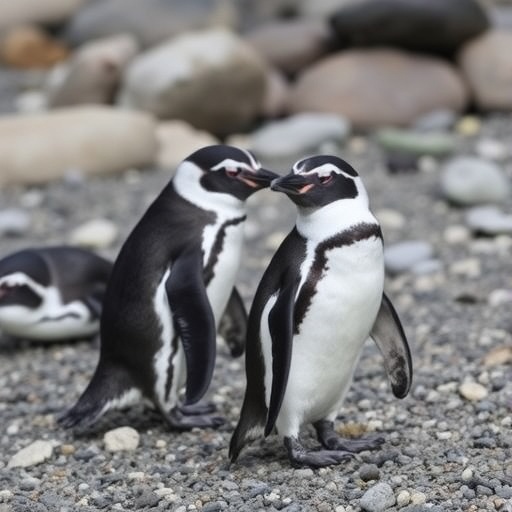
The Magellanic penguin, known scientifically as Spheniscus magellanicus, serves as a vital subject of study regarding marine biodiversity and ecological health. As researchers increasingly focus on the species, the detail provided by recent studies sheds light on their current status and trends in global population, particularly along the Argentine coastline. This coastal region of South America plays a critical role in the life cycle and survival of these remarkable birds, marking a focal point for science and conservation efforts.
The Magellanic penguin is not only a charismatic species but also an indicator of the broader health of marine ecosystems. They inhabit the temperate coastal regions of the South Atlantic and have a distinct breeding and feeding pattern that makes them particularly valuable for ecological research. Understanding the dynamics affecting their populations is essential, as it reflects the conditions of their habitat, including environmental changes and human impacts.
According to recent findings published by Hombre et al., the global population trend of Magellanic penguins has shown alarming signs of decline, prompting urgent calls for conservation measures. The researchers meticulously gathered data over several years to assess both local populations and broader trends across their range. This research not only highlights the drastic changes occurring within the Magellanic penguin populations but also emphasizes the interconnectedness of marine life in the regions they inhabit.
By implementing advanced tracking technologies and comprehensive surveys, the study painted a concerning picture of how environmental factors and human activities have begun to severely impact these penguins. Changes in ocean temperatures, shifts in fish stock dynamics, and increased human activities such as fishing and tourism have all contributed to these alarming trends. The scientists documented that fluctuations in prey availability directly correlate with breeding success rates and overall penguin health, creating a domino effect that jeopardizes their future.
The breeding colonies of Magellanic penguins are largely concentrated along the Argentine coast, in regions that have become increasingly threatened. The research team examined several key breeding sites, noting that many colonies experienced significant reductions in reproductive rates. Factors such as habitat degradation and food scarcity play a crucial role in these declines, leading to lower chick survival rates, which poses long-term implications for the population structure.
Addressing these challenges requires an understanding of the intricate relationship between the Magellanic penguins and their marine environment. The role of ocean currents, temperature fluctuations, and availability of prey is critical to the survival of the species. As a result, researchers advocate for a multi-faceted approach to conservation that incorporates ecological monitoring, local community engagement, and policy change.
Also, the research notably highlighted the resilience of Magellanic penguins when local environments are preserved and protected. Conservation initiatives that focus on habitat restoration, sustainable fishing practices, and controlled tourism can yield remarkable improvements in penguin populations. Several case studies referenced in the article demonstrate that with appropriate interventions, it is possible to reverse population declines and create a thriving environment for these animals.
Moreover, public awareness and education are vital components in preserving the Magellanic penguin. Efforts to engage local communities through education and outreach programs have proven effective in fostering a sense of stewardship for the coastal ecosystems. By encouraging responsible practices and increasing awareness about the penguin’s plight, it is possible to build support for the necessary conservation measures.
Through advocacy for marine protected areas, the study emphasizes the critical importance of spatial management in conserving marine biodiversity. Researchers argue that establishing such areas along the Argentine coast can help protect essential breeding grounds of the Magellanic penguin. This approach allows for more robust fish populations, which provide a stable food source for the penguins, leading to healthier colonies overall.
The findings from Hombre et al. serve as a clarion call for immediate action to protect the Magellanic penguin and their habitat. The urgency of the situation cannot be overstated; as climate change and human activities continue to exert pressure on these vulnerable populations, prompt and effective measures become increasingly crucial.
In conclusion, the work by Hombre et al. lays a foundational understanding of the Magellanic penguin’s declining status and emphasizes the need for concerted conservation efforts. The future of these iconic birds relies not only on scientific research but also on collaborative action that engages local communities and protects vital ecosystems. The ongoing survival of Spheniscus magellanicus is entwined with the health of the marine landscapes they inhabit, reminding us of the essential connection between wildlife and ecological integrity.
As research progresses, ongoing monitoring and evaluation will be necessary to assess the effectiveness of conservation strategies aimed at protecting the Magellanic penguin. This highlights the dynamic nature of conservation science, where adaptive management becomes key in responding to mitigating factors affecting wildlife. Ultimately, the stakes are high, not just for the penguins, but for all of us who share this planet.
By tapping into the collective effort of scientists, conservationists, and local communities alike, there is hope that the Magellanic penguin can continue to thrive along the Argentine coast and beyond, serving as a testament to what can be achieved when we unite for the sake of our environment.
Hombre, J.D., Arias, M., Carrasco, M.F. et al. Status and global population trend of the Magellanic penguin Spheniscus magellanicus along the Argentine coast.
Sci Rep (2026). https://doi.org/10.1038/s41598-025-33756-3
Cite Scienmag News
Margaret Porter. (January 11, 2026). Magellanic Penguin Population Trends Along Argentina’s Coast. Scienmag. https://scienmag.com/magellanic-penguin-population-trends-along-argentinas-coast/
Margaret Porter. "Magellanic Penguin Population Trends Along Argentina’s Coast." Scienmag, 11 January 2026, https://scienmag.com/magellanic-penguin-population-trends-along-argentinas-coast/. Accessed 6 September 2026.
Margaret Porter. "Magellanic Penguin Population Trends Along Argentina’s Coast." Scienmag. January 11, 2026. https://scienmag.com/magellanic-penguin-population-trends-along-argentinas-coast/


