


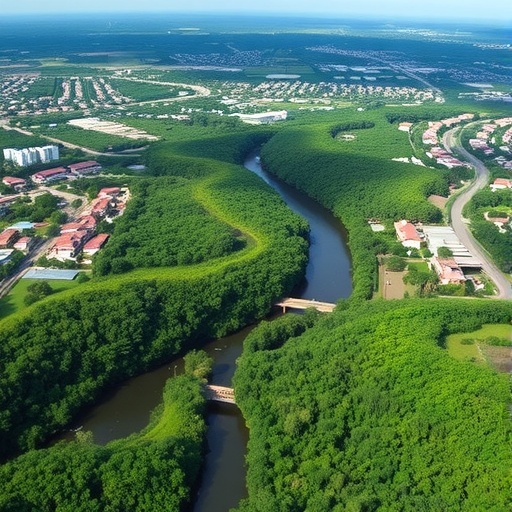
In the heart of the Amazon, where lush greenery converges with the relentless march of urbanization, the riparian forests tell a story of resilience, diversity, and the symbiosis between nature and industry. The recent study conducted by J.I. de Matos Rodrigues, W.B.R. Martins, and M. de Lima Guedes paints a vivid picture of these unique ecosystems embedded within an industrial and urban hub. This research underscores the delicate balance that exists in these areas, highlighting the need for focused conservation efforts to preserve their ecological integrity.
The riparian zones, which serve as buffers between aquatic and terrestrial environments, provide essential services such as water filtration, flood control, and habitat for countless species. In an era of rapid urban expansion, these forests are often among the first casualties, threatening biodiversity and the ecosystem services they offer. The study primarily investigates the structure and diversity of these forests, offering a comprehensive assessment that constitutes a vital component in understanding the ecological ramifications of urban encroachment.
Researchers utilized advanced methodologies, including remote sensing and ground surveys, to gather data on the species composition and structure of these riparian forests. The findings reveal striking biodiversity, with numerous endemic species forming intricate ecological webs. The analysis underscores that despite human pressures, the resilience of these ecosystems persists, pointing to potential avenues for restorative practices. The biophysical environments, characterized by variations in soil type, water availability, and land use practices, contribute significantly to the structural complexity observed in these forests.
Within the industrial and urbanized landscape, the research identified microhabitats fostering unique plant communities. The heterogeneity in species distribution reveals how these urban riparian zones adapt to the dual pressures of industrial activity and urban development. Notably, certain species demonstrate remarkable adaptability, thriving in disturbed environments where others falter. This adaptability might offer insights into future conservation strategies that incorporate urban ecological dynamics.
The authors stress the paramount importance of preserving these ecosystems not only for their biodiversity but also for the services they provide to nearby human populations. The integration of natural spaces within urban planning emerges as a critical component in ensuring sustainable development. Urban policymakers are urged to prioritize the conservation of riparian zones, recognizing their role in mitigating the impacts of urbanization such as increased flooding and water pollution.
Furthermore, the research illustrates how local communities can engage in conservation efforts, bridging the gap between industrial progress and ecological protection. By fostering collaboration and awareness among residents, there is potential for grassroots initiatives that promote sustainable practices while enhancing the health of riparian ecosystems. Community involvement becomes a pivotal strength in safeguarding ecological integrity against the backdrop of industrialization.
As urbanization continues to surge, the need for vigilance grows ever more critical. The preservation of riparian forests must be viewed as not just an environmental issue but as a social imperative. Healthy ecosystems contribute to enhanced quality of life, providing recreational spaces and improving mental well-being while serving as critical habitats for wildlife. The interconnectedness of human and ecological health necessitates a concerted approach to conservation, grounded in the understanding of these systems’ complexities.
In concert with existing policies and initiatives, the study advocates for a re-evaluation of how urban green spaces are integrated within urban landscapes. The findings imply that policy frameworks need realignment to prioritize ecological health, which in turn supports human well-being. Urban planners and environmental scientists are now called to collaborate more closely, ensuring that the inherent value of these natural systems is recognized in decision-making processes.
Importantly, the authors highlight that further research is essential in potentially uncovering unknown species and ecological functions within these riparian forests. The ongoing monitoring and evaluation of these ecosystems will provide invaluable data that can inform future conservation strategies. Lessons learned from this research can serve as a model for other urban regions grappling with similar ecological challenges.
As the discourse around urban ecology evolves, the commitment to preserving riparian forests must underpin broader environmental agendas. The interplay of biodiversity, ecosystem services, and human impact presents both challenges and opportunities that require immediate attention. Lessons gleaned from the Amazon can resonate worldwide, shaping global conversations about urban sustainability.
This research signifies a step forward in recognizing the intricate relationship between urban development and nature. By fostering a dialogue on these issues, society can cultivate a deeper appreciation and understanding of the importance of riparian ecosystems. The transformative potential lies in ascribing value to these natural spaces, celebrating their diversity, and advocating for their conservation against the backdrop of relentless industrialization.
In journeying towards a more sustainable coexistence, the insights gleaned from the study call for urgent action and innovation. Community-led conservation efforts, combined with informed policymaking, could shape a future where urban areas thrive alongside nature. This vision hinges on a collective acknowledgment of the vital role ecosystems play in sustaining life on our planet.
Urban ecosystems, as revealed in this critical research, are vital sanctuaries harboring complex life forms and ecological processes that warrant our protection and appreciation. Understanding their diversity and structure is integral to fostering resilience against the multifaceted challenges posed by urbanization. This narrative serves as a clarion call to safeguard the Amazon and its invaluable riparian forests, ensuring that future generations inherit a world rich in biodiversity and vibrant ecosystems.
In conclusion, the study by de Matos Rodrigues and colleagues constitutes a significant contribution to the understanding of riparian ecosystems within an industrial urban context. By illuminating the importance of these forests in the Amazon, the authors advocate for a broader recognition of their ecological, social, and economic values. Moving forward, discussions surrounding urbanization and ecosystem preservation must coalesce to drive meaningful action, fostering a sustainable equilibrium where nature and urban life harmoniously coexist.
Cite Scienmag News
Violet Maxwell. (January 8, 2026). Riparian Forests Thrive Amid Amazon’s Urban Industrial Challenges. Scienmag. https://scienmag.com/riparian-forests-thrive-amid-amazons-urban-industrial-challenges/
Violet Maxwell. "Riparian Forests Thrive Amid Amazon’s Urban Industrial Challenges." Scienmag, 8 January 2026, https://scienmag.com/riparian-forests-thrive-amid-amazons-urban-industrial-challenges/. Accessed 1 September 2026.
Violet Maxwell. "Riparian Forests Thrive Amid Amazon’s Urban Industrial Challenges." Scienmag. January 8, 2026. https://scienmag.com/riparian-forests-thrive-amid-amazons-urban-industrial-challenges/


