


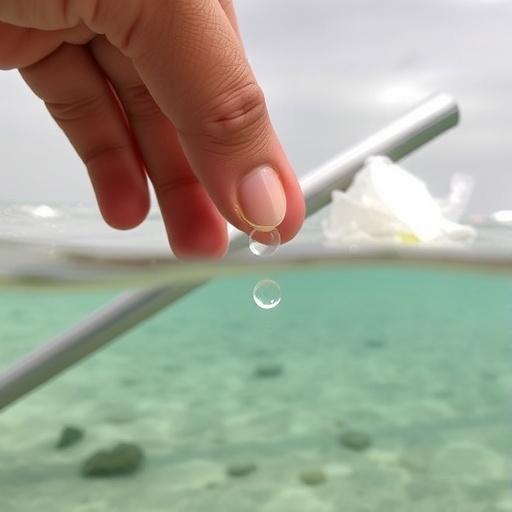
The alarming spread of microplastic pollution has emerged as a significant environmental threat across the globe, dramatically impacting marine ecosystems and human health. A recent comprehensive study conducted in North Goa, India, throws critical light on this burgeoning issue by meticulously assessing microplastic contamination in surface waters from three prominent beaches. This pioneering research, featured in Environmental Earth Sciences, throws into sharp relief the extent and nature of microplastic pollution in coastal regions that are not only ecologically vital but also socioeconomically important.
In this groundbreaking study, the researchers N.G. Kalangutkar, S. Mhapsekar, and A. Salgaokar dive deep into the complexities of microplastic pollution through innovative surface water sampling methods. These methodologies enabled them to capture a detailed snapshot of contamination levels and provide an unprecedented understanding of the problem in a region heavily reliant on marine resources and tourism. They focused on surface water — the very interface where plastic debris interacts dynamically with marine organisms and the atmosphere — offering insights critical for environmental protection strategies.
The research was conducted across three strategically chosen beaches in North Goa, a region renowned for its biodiversity and tourist activity. This geographical selection is crucial, as tourism often correlates with plastic waste generation, posing risks to marine life and coastal livelihoods. By focusing on this triad of coastal zones, the study mirrors microplastic contamination patterns that could be representative of similar tropical and subtropical coastal regions worldwide. Their findings underscore how pervasive these pollutants have become even in relatively less industrialized coastal zones.
Through meticulous sampling and advanced analytical techniques, the research team quantified microplastics by size, shape, and polymer type — essential parameters for understanding how these particles interact with the marine environment. The use of spectroscopic methods such as Fourier-transform infrared spectroscopy (FTIR) enabled precise identification of plastic polymers, a critical step in tracing pollution sources and assessing environmental impact. This level of technical rigor sets the study apart and adds credence to its conclusions and proposed mitigation pathways.
One of the study’s key revelations includes the prevalence of microplastics in surface waters at concentrations that vary significantly between the three surveyed locations. This variability highlights localized sources of pollution, potentially linked to differing levels of human activity, waste management practices, and hydrodynamic conditions along the coast. Such data are invaluable, suggesting that tackling microplastic pollution necessitates an understanding of site-specific factors, rather than broad-brush approaches.
Importantly, the study discusses the types of microplastics found, revealing that fragments and fibers dominate the marine surface waters. These microplastic morphologies are particularly insidious because fibers often originate from synthetic textiles, released during washing, while fragments typically result from the breakdown of larger plastic debris. Both forms have been shown to be ingested by marine organisms, passing up the food chain, and potentially affecting human health through seafood consumption.
The study also illuminates the interplay between microplastics and other environmental factors, such as current velocity, wave action, and seasonal changes. These dynamics influence the distribution, aggregation, and eventual fate of microplastics in coastal waters, further complicating the efforts for remediation. The authors underscore the need for longitudinal studies to better monitor these patterns over time, which is critical for developing sustainable coastal management and pollution reduction policies.
Beyond environmental implications, this assessment shines a light on the socio-economic challenges posed by microplastic contamination to coastal communities. The influx of tourists to North Goa’s serene beaches significantly contributes to plastic pollution, affecting not only ecosystems but also the local economy reliant on sustainable tourism. The research makes a compelling call for integrated policies that combine environmental conservation with community engagement and public awareness campaigns to mitigate plastic waste at the source.
A notable aspect of the study is its emphasis on surface water samples, which are often overlooked in favor of sediment or organism-based assessments. Surface waters act as conduits, transporting plastics and associated toxins across marine landscapes. By focusing on this critical boundary layer, the researchers provide a valuable framework for early detection of microplastic influx and an opportunity to intercept pollution before it settles into sediments or is ingested by wildlife.
Technological advances in sample collection and microplastic analysis have evolved rapidly, and this study exemplifies the incorporation of these state-of-the-art techniques in field research. The authors employed neuston nets with precise mesh sizes to capture microplastics efficiently, coupled with laboratory protocols that minimize contamination — a common challenge in microplastic研究 methodologies. Their approach offers a replicable model for future investigations aiming to produce reliable, comparable data across diverse marine settings.
Crucially, this research expands the global scientific community’s understanding of the scale and complexity of microplastic pollution in South Asia, a region where such comprehensive environmental monitoring is relatively scarce. With India’s coastline spanning thousands of kilometers and supporting millions of people, findings from North Goa could serve as a bellwether for pollution trends elsewhere, informing national strategies for marine conservation and pollution control.
The implications of the findings extend beyond science to policy. The study advocates for enforceable regulations targeting plastic use and disposal, particularly single-use plastics and microbeads, which contribute disproportionately to microplastic pollution. It highlights the urgent need for governmental and non-governmental collaboration to establish best practices for waste management, recycling, and public education, particularly in tourist-heavy coastal areas.
Furthermore, the study touches on the ecological consequences of microplastic pollution, emphasizing bioaccumulation and the potential for toxicity transfer through the marine food web. Microplastics serve as vectors for hazardous pollutants, creating compounded threats to marine biodiversity. These insights demand an interdisciplinary research approach combining marine biology, toxicology, and environmental chemistry to comprehensively evaluate impacts and devise mitigation strategies.
Public awareness and behavioral change are also underscored as vital components in combating microplastic pollution. As plastics persist and accumulate in ocean waters, individual actions such as reducing plastic consumption, participating in beach clean-ups, and supporting sustainable products become integral to broader environmental resilience. The researchers call for expanded educational programs to empower local communities and tourists alike, fostering stewardship of fragile coastal ecosystems.
Looking ahead, the authors propose further monitoring and research initiatives to track microplastic trends in relation to climate change-induced alterations in ocean currents and temperature. These factors could influence microplastic transport and degradation rates, necessitating adaptive management strategies. Integrating these insights into global marine pollution frameworks will be essential for protecting ocean health amid escalating anthropogenic pressures.
This study marks a significant stride in marine pollution research, offering exceptional data from a region critically understudied in the context of microplastics. Its detailed assessment equips scientists, policymakers, and environmentalists with actionable knowledge that bridges science and societal needs. In revealing the microscopic yet pervasive challenge of plastic pollution in North Goa, the researchers spotlight a pressing global environmental dilemma demanding urgent, coordinated action at every level.
By illuminating the intricacies of microplastic contamination in surface waters, this research not only advances academic frontiers but also galvanizes public and political will to forge resilient oceans for future generations. It is a clarion call for immediate intervention, underscoring that safeguarding marine ecosystems begins with understanding the invisible particles quietly infiltrating the world’s coasts.
Cite Scienmag News
Eleanor Cresswell. (January 7, 2026). Microplastic Pollution at North Goa Beaches Revealed. Scienmag. https://scienmag.com/microplastic-pollution-at-north-goa-beaches-revealed/
Eleanor Cresswell. "Microplastic Pollution at North Goa Beaches Revealed." Scienmag, 7 January 2026, https://scienmag.com/microplastic-pollution-at-north-goa-beaches-revealed/. Accessed 28 August 2026.
Eleanor Cresswell. "Microplastic Pollution at North Goa Beaches Revealed." Scienmag. January 7, 2026. https://scienmag.com/microplastic-pollution-at-north-goa-beaches-revealed/


