

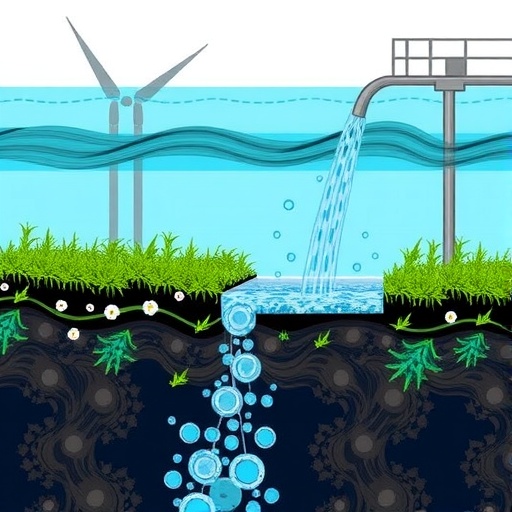
As climate change accelerates and extreme weather events become increasingly frequent and severe, the vital role of groundwater as a strategic resource in natural hazard management is gaining unprecedented attention. Groundwater, which constitutes the largest freshwater reserve on Earth, provides a crucial buffer during crises such as earthquakes, wildfires, floods, and droughts. Recent scientific insights reveal that short-term groundwater use, implemented with a focus on sustainability and equity, could revolutionize how societies mitigate the multifaceted impacts of these disasters while protecting long-term water security.
Groundwater resides beneath the Earth’s surface within aquifers, serving as a stable source of freshwater that replenishes streams, wetlands, and ecosystems. Unlike surface water, groundwater is naturally insulated from many short-term environmental shocks, making it particularly valuable during emergencies. Traditional hazard responses often emphasize immediate surface water use or infrastructure repair, but the emerging paradigm highlights how existing wells and pump systems, if managed judiciously, can offer rapid, low-cost, and distributed solutions shortly after or even during natural disasters.
The connection between groundwater and natural hazard resilience underscores a shift in water governance strategies. Historically, groundwater has been underrecognized in disaster planning, often due to misconceptions about its availability and the complexity of aquifer dynamics. However, recent studies demonstrate that groundwater can significantly decrease community vulnerability by providing emergency drinking water supplies, supporting irrigation when surface supplies are cut off, and maintaining ecological balance during periods of hydrological stress. By tapping into this resource temporarily, affected regions can buy critical time for infrastructure recovery and social adaptation.
Earthquake scenarios exemplify how groundwater’s strategic use can mitigate disaster impacts. Post-earthquake disruptions often sever surface water distribution networks and contaminate drinking sources due to damage to reservoirs and pipelines. In contrast, groundwater extraction through existing well infrastructure can offer an immediate alternative for safe water provision. Moreover, the subterranean nature of aquifers protects them from surface contamination often observed in seismic events, provided that contamination pathways are managed and monitored carefully.
Wildfires, increasingly severe in many parts of the world, create a unique challenge for water resource management. Vegetation loss, soil erosion, and altered runoff dynamics degrade surface water quality and availability post-fire. Groundwater use can mitigate these challenges by supplementing water supplies during recovery phases. Additionally, maintaining groundwater levels through managed extraction can help sustain riparian ecosystems that are vital for both biodiversity and future wildfire mitigation within affected landscapes.
Flood events, paradoxically, can also benefit from strategic groundwater use. While floods are characterized by excessive surface water, groundwater reservoirs often remain underutilized and can act as a complementary resource. Managed aquifer recharge during floods—where excess surface water is intentionally directed underground—provides a dual benefit: reducing flood peaks and storing water for drought periods. Subsequent controlled extraction allows disaster-impacted areas to maintain water access when surface supplies become unreliable or polluted.
Drought contexts bring the clearest and most familiar case for groundwater intervention. Prolonged dry spells translate to groundwater overuse in many regions, threatening sustainability, but short-term and carefully managed extraction allows communities to survive periods of acute scarcity. The challenge lies in balancing emergency use with aquifer recharge rates to avoid depletion. Multi-disciplinary approaches that integrate hydrological modeling, community engagement, and policy frameworks ensure that groundwater contributes equitably to drought resilience without compromising future availability.
However, a vital component of this emerging strategy involves shifting societal mindsets and regulatory frameworks. Despite the potential benefits, groundwater use remains constrained by fragmented policies, lack of comprehensive data, and social inequities in access and control. Stakeholders advocating for groundwater as an emergency resource emphasize the need for interdisciplinary research that bridges hydrology, disaster sociology, and environmental justice. Such approaches illuminate how marginalized communities often bear disproportionate risks of water scarcity during hazards and how equitable groundwater governance can alleviate these vulnerabilities.
Sustainability science plays an essential role by furnishing tools for balancing short-term groundwater use against long-term aquifer health. Sustainability metrics and monitoring of groundwater levels, recharge cycles, and contamination risks need to be integrated into disaster response plans. New technologies such as remote sensing, coupled with ground-based sensors, provide real-time data essential for adaptive management. Decision-support systems that incorporate socio-hydrological feedbacks enable more nuanced risk assessments and resource allocation during hazard events.
Globally, policy innovation is gathering momentum. From Japan’s integrated water resource management practices during seismic events to California’s progressive groundwater sustainability plans in the face of drought and wildfire, diverse case studies illustrate how tailored policies can activate groundwater as a rapid response tool while safeguarding aquifer health. These examples demonstrate that policy convergence, emphasizing interdisciplinary coordination and stakeholder inclusion, is pivotal in embedding groundwater use within national and local disaster strategies.
Furthermore, the adoption of an equity lens in groundwater management reveals the social dimensions that often go unacknowledged. Vulnerable populations—such as low-income, rural, or indigenous communities—frequently face barriers accessing reliable water supplies during hazards. By empowering these groups through improved groundwater infrastructure, participatory governance, and transparent allocation mechanisms, disaster resilience becomes more inclusive. Equity-focused research contributes to uncovering systemic injustices and crafting socially just water policies that resonate with varied community needs.
Despite these promising developments, significant challenges remain. Hydrogeological uncertainties, variable recharge conditions, and competing water demands complicate the operationalization of groundwater-based disaster interventions. Political will and institutional capacity vary widely, impacting implementation feasibility. Therefore, international collaboration, knowledge exchange, and capacity building are critical to scaling this innovative approach and customizing solutions to diverse hydrological and social contexts.
In essence, tapping into groundwater as a strategic resource necessitates a paradigm shift—from viewing it as an inexhaustible or static reserve to a dynamic component of disaster resilience infrastructure. This shift requires concerted efforts across scientific disciplines, policy arenas, and community networks to unlock groundwater’s full potential. As the frequency and intensity of natural hazards increase, communities that adapt by integrating groundwater into their emergency water portfolios will likely experience enhanced recovery and sustainability trajectories.
This emerging framework also invites further scientific exploration. Fundamental questions regarding aquifer resilience under compounded hazard stressors, potential contamination pathways linked to hazard events, and socio-economic dynamics affecting groundwater access warrant dedicated investigation. Collaborative research that couples physical sciences with social science insights will be indispensable in refining groundwater-based hazard response models for the future.
In conclusion, the strategic short-term use of groundwater is poised to become an indispensable tool in the natural hazard management arsenal. By harnessing existing wells, pumps, and aquifers with a lens on sustainability and equity, societies can buffer the immediate shocks of earthquakes, wildfires, floods, and droughts while fostering long-term environmental and social resilience. The path forward demands integrated policies, innovative technologies, and inclusive governance mechanisms to ensure that groundwater’s potential is realized for all communities, especially the most vulnerable.
The research focuses on the strategic use of groundwater during and after natural hazard events such as earthquakes, wildfires, floods, and droughts, highlighting how temporary use can reduce vulnerabilities, promote disaster resilience, and safeguard sustainability and equity through interdisciplinary approaches.
Natural hazard susceptibilities and inequities reduced by short-term groundwater use
Gleeson, T., Endo, T., Taniguchi, M. et al. Natural hazard susceptibilities and inequities reduced by short-term groundwater use. Nat. Geosci. (2026). https://doi.org/10.1038/s41561-025-01884-0
Cite Scienmag News
SCIENMAG. (January 7, 2026). Short-Term Groundwater Use Lowers Hazard Risks, Inequities. https://scienmag.com/short-term-groundwater-use-lowers-hazard-risks-inequities/
SCIENMAG. "Short-Term Groundwater Use Lowers Hazard Risks, Inequities." Scienmag, 7 January 2026, https://scienmag.com/short-term-groundwater-use-lowers-hazard-risks-inequities/. Accessed 28 August 2026.
SCIENMAG. "Short-Term Groundwater Use Lowers Hazard Risks, Inequities." Scienmag. January 7, 2026. https://scienmag.com/short-term-groundwater-use-lowers-hazard-risks-inequities/


