


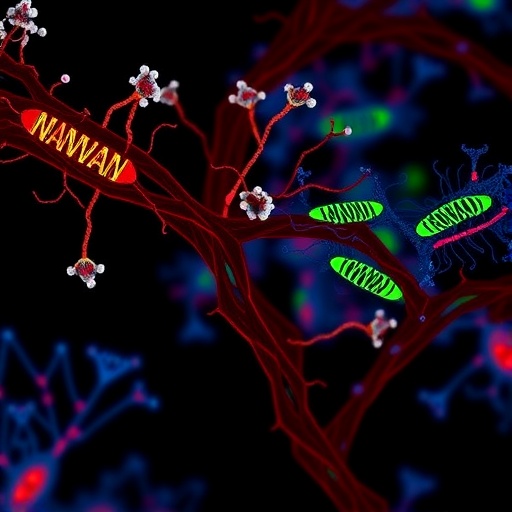
In a groundbreaking new study published in Cell Death Discovery, researchers have uncovered a pivotal mechanism by which vascular smooth muscle cells (VSMCs) undergo phenotypic transition during pressure overload-induced vascular remodeling. This study, led by Qi, Xie, Su, and colleagues, reveals that the deubiquitinating enzyme USP13 plays a critical role by stabilizing Beclin-1, a key autophagy regulator, thereby facilitating pathological changes in vascular structure. These findings provide novel insights that could eventually transform therapeutic strategies for hypertension-related vascular diseases.
Vascular remodeling is an adaptive response often triggered by chronic pressure overload, as seen in hypertension and heart failure. This process involves structural alterations in blood vessel walls, including thickening and stiffening, driven largely by the phenotypic switch of VSMCs from a contractile to a synthetic state. Such phenotypic modulation results in enhanced cellular proliferation, migration, and extracellular matrix secretion, which collectively impair vascular functionality. Despite its clinical significance, the molecular underpinnings governing this phenotypic plasticity have remained elusive until now.
At the heart of this study is USP13, a ubiquitin-specific protease known for its ability to remove ubiquitin molecules from protein substrates, thereby regulating their stability and activity. By employing a sophisticated combination of in vitro and in vivo models, the team demonstrated that USP13 expression is upregulated in VSMCs subjected to mechanical stress mimicking pressure overload. This upregulation correlates with increased vascular remodeling and the transition of VSMCs toward a pathogenic synthetic phenotype.
Crucially, the mechanistic breakthrough of the research lies in the identification of Beclin-1, an autophagy-regulating protein, as a direct substrate of USP13. The researchers showed that USP13 deubiquitinates Beclin-1, shielding it from proteasomal degradation and thereby maintaining elevated autophagy activity within VSMCs under stress. Autophagy, the cellular recycling system, is already known to modulate cell survival and phenotype, but its precise role in vascular remodeling has been controversial. This study convincingly positions autophagic flux, regulated by Beclin-1 stability, as a key driver of VSMC phenotypic transition.
Experimentally, the team utilized pressure overload models in rodents, inducing hypertensive conditions that mimic human disease. They observed that knocking down USP13 expression significantly alleviated the vascular thickening and fibrosis typically seen in these models. Conversely, overexpression of USP13 intensified pathological remodeling, underscoring its direct contribution to disease progression. These results not only validate the pathological role of USP13 but also put forward its potential as a therapeutic target.
At the cellular level, the study delineates how USP13-mediated Beclin-1 stabilization enhances VSMC proliferation and migration. This is significant because these cellular behaviors are central to maladaptive vascular remodeling. The findings that autophagic activity supports these phenotypic changes provide a new perspective on the sometimes dualistic nature of autophagy in vascular biology—highlighting that context is crucial when considering autophagy modulation as a therapeutic approach.
Extending beyond vascular pathology, the identification of USP13 as a crucial modulator of Beclin-1 stability also has broad implications for diseases where autophagy is dysregulated. Given that autophagy plays roles in cancer, neurodegeneration, and cardiovascular disease, the regulatory influence of USP13 could position it as a key molecular hub in diverse pathological processes. This insight opens avenues for cross-disease therapeutic development based on modulating USP13 activity.
From a molecular perspective, the study adds to the growing understanding of the ubiquitin–proteasome system (UPS) in vascular disease. The UPS is fundamental to cellular protein homeostasis, and its dysregulation leads to numerous disorders. USP13’s role as a deubiquitinase indicates that enzymes within this system can specifically govern crucial signaling molecules like Beclin-1, fine-tuning autophagic responses and cell fate decisions. This layer of regulation, often overshadowed by research focused on ubiquitin ligases, demands greater attention moving forward.
Methodologically, the researchers employed an impressive suite of molecular biology techniques. These included co-immunoprecipitation assays demonstrating direct USP13-Beclin-1 interaction, ubiquitination assays confirming deubiquitinating activity, and functional assays assessing VSMC phenotypic markers in response to mechanical stimuli. Complementing these mechanistic experiments, in vivo blood pressure measurements and histological analyses provided physiological relevance. This comprehensive approach strengthens the confidence in the conclusions drawn.
The translational potential of these findings cannot be overstated. Hypertension and its consequences represent one of the leading causes of morbidity and mortality worldwide. Therapeutic strategies targeting USP13-mediated pathways could revolutionize treatment paradigms, moving beyond symptomatic blood pressure control toward arresting or even reversing vascular damage. Furthermore, specific inhibitors or modulators of USP13 function could offer a novel class of therapeutics with potentially fewer side effects than current broad-spectrum interventions.
Interestingly, this study challenges pre-existing notions that simply enhancing autophagy is universally beneficial in cardiovascular contexts. It reveals that when autophagy is dysregulated through USP13-mediated stabilization of Beclin-1, it may exacerbate harmful vascular remodeling. Therefore, future therapies will require nuanced modulation—possibly temporal or tissue-specific targeting of USP13 or Beclin-1—to achieve optimal outcomes without unintended consequences.
Looking ahead, the authors advocate for further investigation into USP13’s regulation and its interplay with other deubiquitinases or ubiquitin ligases in vascular cells. Additionally, exploring how USP13 expression and activity change in human hypertensive patients will be critical for translating these findings clinically. There may also be a need to examine whether USP13 influences other autophagy-related or unrelated pathways contributing to vascular pathology.
In conclusion, Qi, Xie, Su, and their team have illuminated a vital regulatory mechanism in pressure overload-induced vascular remodeling by linking USP13-driven deubiquitination and stabilization of Beclin-1 to phenotypic transitions in VSMCs. Their work not only deepens the molecular understanding of vascular disease but also proposes USP13 as a promising target for innovative therapies that address the underlying pathology rather than just clinical symptoms. As hypertension continues to pose global health challenges, such molecular insights provide hope for more effective, targeted interventions.
Cite Scienmag News
Ophelia Keating. (January 3, 2026). USP13 Drives Vascular Remodeling by Deubiquitinating Beclin-1. Scienmag. https://scienmag.com/usp13-drives-vascular-remodeling-by-deubiquitinating-beclin-1/
Ophelia Keating. "USP13 Drives Vascular Remodeling by Deubiquitinating Beclin-1." Scienmag, 3 January 2026, https://scienmag.com/usp13-drives-vascular-remodeling-by-deubiquitinating-beclin-1/. Accessed 1 September 2026.
Ophelia Keating. "USP13 Drives Vascular Remodeling by Deubiquitinating Beclin-1." Scienmag. January 3, 2026. https://scienmag.com/usp13-drives-vascular-remodeling-by-deubiquitinating-beclin-1/


