


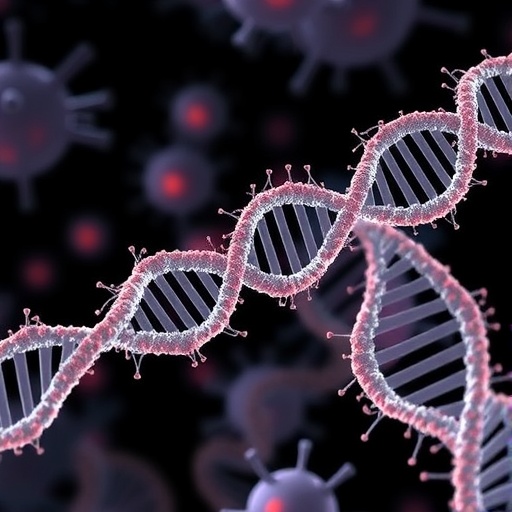
In a groundbreaking discovery that reshapes our understanding of microbial warfare, researchers have uncovered a remarkable interplay between bacteriophages and their bacterial hosts involving the CRISPR-Cas immune system. While the battle between phages and bacteria has long been recognized as an evolutionary arms race—prompting the emergence of bacterial defense mechanisms like CRISPR-Cas pathways and viral countermeasures known as anti-CRISPR proteins—this new study delves deeper into previously uncharted territory. It reveals an unexpected collaboration where a bacteriophage-associated nuclease, Cas12p, co-opts a bacterial protein, thioredoxin A (TrxA), to amplify its DNA-degrading prowess, essentially turning the bacterium’s own molecular machinery against itself.
The CRISPR-Cas system functions like a molecular sentry, providing bacteria with adaptive immunity against invading genetic elements such as phages. Among the diverse classes of CRISPR systems, Type V Cas12 variants are distinguished by their diversity in targeting mechanisms and nucleic acid cleavage behaviors. Cas12p, identified here as a phage-associated member of this family, exhibits a complex biochemistry that challenges traditional categorizations of these nucleases. Unlike canonical Cas12 enzymes, Cas12p requires direct interaction with the bacterial thioredoxin TrxA for its activation, suggesting an intricate evolutionary adaptation to its intracellular environment.
Thioredoxin, well known for its role in redox biology and maintaining cellular homeostasis, is now recognized as more than just a housekeeping protein. In this newly identified phage-bacteria nexus, TrxA acts as an indispensable activator of Cas12p’s nuclease functionality. The research team utilized a bioinformatics pipeline to screen diverse microbial genomes, revealing the frequent co-occurrence of Cas12p and TrxA genes within phage genomes, heralding a potentially widespread mechanism where bacteriophages exploit bacterial proteins to enhance their replication and competitive advantages.
Biochemical assays provided compelling evidence demonstrating that Cas12p alone remains catalytically dormant without TrxA binding. Once TrxA engages with Cas12p, however, a conformational restructuring triggers the nuclease activity capable of direct double-stranded DNA degradation. This finding overturns previous assumptions that phage-associated nucleases function independently, highlighting a sophisticated level of molecular mimicry and cooperation that benefits the infecting phage.
To visualize this complex interaction at atomic resolution, the study employed state-of-the-art cryogenic electron microscopy (cryo-EM). The resultant high-resolution structure of the Cas12p–TrxA–sgRNA–dsDNA complex at 2.67 Å revealed the precise molecular interfaces between TrxA and Cas12p, as well as the conformational dynamics that underpin enzyme activation. Such structural insights pave the way for potential bioengineering applications, where modulating protein-protein interactions could lead to novel gene-editing tools or antibacterial strategies.
Intriguingly, the investigation into bacterial defense assays underscored that the Cas12p-TrxA alliance is not merely a phage strategy but also contributes to CRISPR immunity. It implies that bacteria, through unintentional facilitation of their own proteins, may inadvertently aid phages. Alternatively, this could suggest a nuanced form of molecular parasitism where phages harness bacterial factors for their genome degradation mechanisms, possibly to outcompete rival phages within the same host.
This pivotal study reframes the traditional narrative of phage-bacteria conflicts, revealing a complex multilayered interaction where host factors function as co-factors in phage defense arsenals. It intimates that the microbial battlefield is far more intricate than previously conceived, involving interconnected molecular dialogs that transcend simple antagonism. The co-option of TrxA by Cas12p may represent an evolutionary concession, fine-tuning phage fitness by exploiting host biochemical pathways for targeted DNA destruction.
Furthermore, these findings shed light on the potential ubiquity of such interactions across microbial ecosystems. Given the widespread presence of thioredoxin homologs and diverse Cas12 variants, this mechanism may represent a fundamental aspect of phage biology, influencing how viral predators adapt and thrive within bacterial populations. It raises important questions about how such intricate molecular partnerships evolved and how they influence microbial community dynamics and genetic exchange.
On a broader scale, understanding the mechanistic basis of the Cas12p-TrxA interplay opens new avenues for synthetic biology and biotechnology. The precise, TrxA-dependent activation mechanism could inspire the design of finely tunable nucleases that are controllable by cellular factors. This control layer could be particularly valuable in therapeutic gene editing, where off-target effects and enzyme regulation remain critical concerns.
Moreover, the study offers a fresh perspective on antimicrobial resistance and phage therapy. Exploiting the knowledge of how phages manipulate bacterial proteins to trigger DNA degradation could facilitate engineering of designer phages or CRISPR-enabled antimicrobials tailored to combat drug-resistant bacterial strains. The specificity and efficacy of such systems hinge on insights gleaned from molecular structural biology, such as the revelations presented here.
In conclusion, this seminal work not only expands the frontier of CRISPR-Cas biology but also exemplifies the intricate molecular crosstalk that pervades microbial ecology. The identification of a phage-associated Cas12p nuclease requiring bacterial thioredoxin for its activation exemplifies nature’s incessant innovation in molecular adaptation. It reminds us that in the microscopic worlds of bacteria and viruses, cooperation and conflict are inextricably intertwined, producing molecular mechanisms of unparalleled sophistication that hold immense promise for science and medicine alike.
Cite Scienmag News
Lydia Kingsley. (January 2, 2026). Phage Cas12p Nucleases Need Thioredoxin to Cut DNA. Scienmag. https://scienmag.com/phage-cas12p-nucleases-need-thioredoxin-to-cut-dna/
Lydia Kingsley. "Phage Cas12p Nucleases Need Thioredoxin to Cut DNA." Scienmag, 2 January 2026, https://scienmag.com/phage-cas12p-nucleases-need-thioredoxin-to-cut-dna/. Accessed 28 August 2026.
Lydia Kingsley. "Phage Cas12p Nucleases Need Thioredoxin to Cut DNA." Scienmag. January 2, 2026. https://scienmag.com/phage-cas12p-nucleases-need-thioredoxin-to-cut-dna/


