


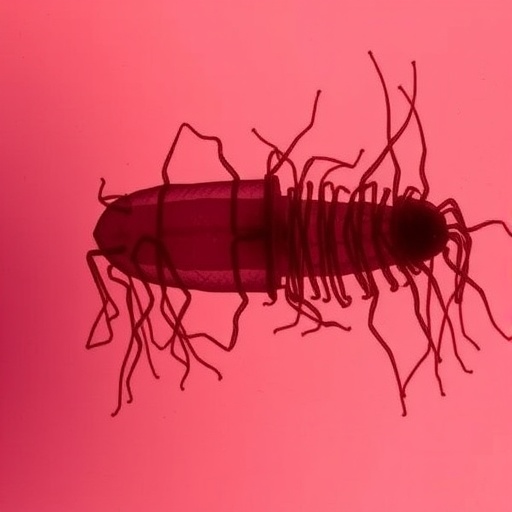
In a groundbreaking study published in BMC Genomics, a team of researchers led by Lu, H. and collaborators has unveiled the chromatin accessibility landscape of a parasitic nematode during a critical phase of its embryogenesis. This research sheds light on the intricacies of gene regulation in one of the most enigmatic groups of organisms, particularly as it relates to their adaptation to parasitism. The findings potentially have far-reaching implications for our understanding of developmental biology, parasitic infections, and targeted drug development.
Chromatin, the material that makes up chromosomes, is a complex of DNA and protein that plays a vital role in regulating gene expression. The accessibility of chromatin is a determining factor in whether specific genes can be expressed at any given time. This study suggests that the organization of chromatin is not static but rather a fluid, dynamic structure that can change in response to various developmental stages. By mapping these changes during embryogenesis, the researchers have provided a new perspective on how parasitic nematodes might modulate their gene expression to adapt to their environment.
The research focused on early embryonic stages when the nematode is most vulnerable and undergoing significant morphological changes. Understanding the chromatin landscape during this period can elucidate how gene expression patterns shift, guiding crucial development processes. By employing advanced genomic techniques, the researchers managed to create a comprehensive profile of chromatin accessibility, providing a detailed picture of which genes are active during this crucial time.
One of the key methodologies utilized in this study was ATAC-seq (Assay for Transposase-Accessible Chromatin using sequencing). This technique allows researchers to identify regions of open chromatin and thus infer which genes are likely to be expressed. The researchers applied this method across different stages of embryonic development in the nematode, revealing staggering insights into the complexity of gene regulation.
In the findings, the researchers noted a significant increase in chromatin accessibility for genes associated with developmental processes at critical time points in the embryo’s life cycle. The data revealed that certain transcription factors, crucial for embryogenesis, were substantially more active during specific intervals, suggesting a tightly coordinated regulation of gene expression. This hints at a sophisticated level of control over developmental processes that is worthy of exploration in future studies.
Intriguingly, the study also uncovered distinct patterns in chromatin accessibility between different developmental stages, signaling that the embryonic nematode is not merely a vessel for genetic material but an active entity that orchestrates its own development. The transitions observed hint at a potential interaction between environmental cues and genetic regulation, a finding that could reshape how we understand nematode biology and its ecological interactions.
The implications of this research extend beyond just the basic biology of nematodes. Parasitic infections caused by nematodes represent a significant global health challenge, impacting millions of people worldwide. By understanding how these organisms develop and regulate their genes, scientists can seek new strategies to combat infections. Potential therapeutic targets can be identified by examining the key transcription factors and regulatory regions that play a role in parasitism.
Additionally, the findings could inform agricultural practices, particularly in crop protection against nematode pests. By identifying their genetic vulnerabilities, researchers could devise novel approaches to controlling these pests, providing an economic benefit and reducing reliance on chemical pesticides.
This research also opens up new avenues for the study of chromatin dynamics in other parasitic organisms. The techniques developed and findings made could inspire similar studies in different species, yielding insights that could help illuminate the broader mechanisms of parasitism across the biological spectrum. Understanding these dynamics may ultimately contribute to the development of broader strategies for managing parasitic diseases.
Moreover, this research highlights the critical nature of interdisciplinary collaboration in modern biology. By combining the expertise of geneticists, molecular biologists, and computational scientists, the research team was able to tackle complex questions about gene regulation and chromatin dynamics in a way that would not have been possible in isolation. This collaborative effort underscores the importance of teamwork in driving scientific discovery and innovation.
As the world increasingly grapples with the impacts of parasitic diseases, the insights gained from this research present a significant step forward. By mapping the chromatin accessibility landscape in parasitic nematodes, scientists now possess a powerful tool to better understand the genetic underpinnings of these organisms’ biology. As we look to the future, continued exploration in this arena could result in novel therapeutic approaches, improved agricultural practices, and a deeper understanding of the resilience exhibited by these remarkable creatures.
Looking ahead, researchers are eager to explore not only the chromatin accessibility landscape of other developmental stages but also the functional implications of these findings. By integrating more sophisticated genomic techniques, including CRISPR-based approaches, the team aims to manipulate specific genes identified in this study to observe the downstream effects on development and behavior. Such experiments could illuminate the causal relationships between chromatin structure, gene expression, and phenotypic outcomes in nematodes.
In conclusion, the study published by Lu, H. and colleagues provides a pivotal glimpse into the chromatin accessibility landscape during nematode embryogenesis. By detailing the dynamic changes occurring at the genetic level, the researchers have laid the groundwork for exciting future studies that promise to deepen our understanding of parasitism, gene regulation, and the potential for novel therapeutic strategies against parasitic diseases. The implications of this work are vast and varied, posing new questions and offering new insights that could help shape the future of both basic and applied biology.
Lu, H., Campos, T., Sumanam, S.B. et al. Chromatin accessibility landscape of a parasitic nematode during embryogenesis.
BMC Genomics (2025). https://doi.org/10.1186/s12864-025-12473-1
Cite Scienmag News
Juliet Wilcox. (December 30, 2025). Unlocking Embryonic Secrets: Nematode Chromatin Accessibility Revealed. Scienmag. https://scienmag.com/unlocking-embryonic-secrets-nematode-chromatin-accessibility-revealed/
Juliet Wilcox. "Unlocking Embryonic Secrets: Nematode Chromatin Accessibility Revealed." Scienmag, 30 December 2025, https://scienmag.com/unlocking-embryonic-secrets-nematode-chromatin-accessibility-revealed/. Accessed 4 September 2026.
Juliet Wilcox. "Unlocking Embryonic Secrets: Nematode Chromatin Accessibility Revealed." Scienmag. December 30, 2025. https://scienmag.com/unlocking-embryonic-secrets-nematode-chromatin-accessibility-revealed/


