


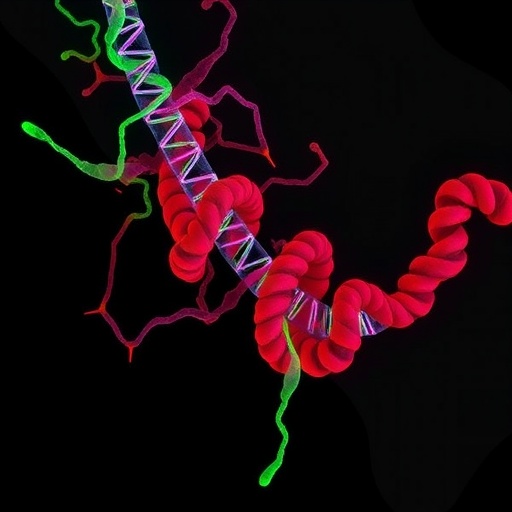
In the intricate realm of cancer research, the understanding of long non-coding RNAs (lncRNAs) has significantly evolved over the past decade. Among these, lncRNA AC040169.1 has emerged as a critical player in the progression of ovarian cancer. Recent studies reveal that this lncRNA is modulated by N6-methyladenosine (m6A) modification, a post-transcriptional regulatory mechanism that has gained considerable attention for its potential roles in various biological processes, including cancer progression.
The role of m6A modification in lncRNA regulation is fascinating. Essentially, m6A serves as a molecular tag, influencing the stability, localization, and translation of RNA molecules. In the case of lncRNA AC040169.1, researchers have identified that its expression is intricately linked to the m6A methylation machinery. This finding opens new avenues for understanding how these modifications can dictate the functional outcomes of lncRNAs within the tumor microenvironment.
Ferroptosis, a unique form of regulated cell death distinct from apoptosis and necrosis, is characterized by the accumulation of lipid peroxides to lethal levels. In ovarian cancer cells, the inhibition of ferroptosis has been associated with enhanced tumor growth and metastasis. The ability of lncRNA AC040169.1 to suppress this form of cell death underscores its oncogenic potential. By exerting control over ferroptosis, this lncRNA influences the survival of cancer cells and contributes to the overall progression of the disease.
The functional connection between lncRNA AC040169.1 and the solute carrier family 7 member 11 (SLC7A11) is pivotal. SLC7A11 encodes a cystine/glutamate antiporter, which plays a vital role in maintaining cellular redox balance. It facilitates the uptake of cystine, subsequently leading to the synthesis of glutathione, a crucial antioxidant. By regulating SLC7A11, lncRNA AC040169.1 effectively modulates intracellular levels of reactive oxygen species (ROS), thereby influencing ferroptosis resistance in ovarian cancer cells.
Exploiting the pathways associated with lncRNA AC040169.1 could provide novel therapeutic strategies against ovarian cancer. Targeting the m6A modification process could enhance the efficacy of existing treatments or lead to the development of new modalities that specifically disrupt the lncRNA’s function. For instance, strategies aimed at demethylating AC040169.1 could restore its expression and, consequently, sensitize cancer cells to ferroptosis-inducing agents.
The significance of this research extends beyond mere mechanistic insight. The identification of lncRNA AC040169.1 as a key modulator of ferroptosis provides a potential biomarker for ovarian cancer aggressiveness. Patients exhibiting high levels of this lncRNA may exhibit more advanced disease, and its expression status could inform prognostic assessments. This shift toward a biomarker-driven approach underscores the growing importance of precision medicine in oncology.
Moreover, the interplay between lncRNAs and m6A modifications may reveal broader implications for understanding tumor biology. As researchers continue to elucidate the networks in which lncRNA AC040169.1 operates, it may become increasingly clear that other lncRNAs exhibit similar regulatory dynamics. The shared mechanisms of m6A modification across various lncRNAs present an exciting landscape for future research.
The study of AC040169.1 also spotlights the complexity of the tumor microenvironment. The interactions between cancer cells, surrounding stroma, and the immune landscape can influence the expression of lncRNAs like AC040169.1. This underscores the need for comprehensive models that reflect the multifaceted nature of tumors, integrating cellular and molecular components that drive cancer progression.
As scientists grapple with the challenges of targeting RNA molecules therapeutically, the work surrounding lncRNA AC040169.1 provides a framework for advancing RNA-based therapies. Leveraging our understanding of RNA modifications could facilitate the development of oligonucleotide-based interventions that directly inhibit or enhance specific lncRNA functions.
Additionally, the implications of lncRNA research may extend beyond ovarian cancer. The principles uncovered through the study of AC040169.1 could resonate with other malignancies where lncRNAs and m6A modifications play pivotal roles. This could lead to a more unified understanding of cancer biology, allowing for the development of cross-cancer therapeutic strategies.
Moreover, public interest in cancer research and treatment continues to rise, accentuated by increased advocacy for patient-centered approaches. The characterization of lncRNA AC040169.1 and its role in ovarian cancer progression will not only serve the scientific community but also foster awareness among patients and their support networks about the potential avenues of research that could yield innovative treatments.
The collaborative nature of contemporary cancer research initiatives cannot be overstated. As multidisciplinary teams work together to unravel the complexities of lncRNA biology, the collective sharing of knowledge will expedite breakthroughs. The widespread dissemination of findings, such as the ones related to lncRNA AC040169.1, is essential to engendering excitement and collaboration in the scientific community.
The nuanced understanding of lncRNA AC040169.1’s regulation by m6A and its functional implications in ovarian cancer paves the way for future studies. Researchers are called to examine the specific m6A methyltransferases and demethylases that impact this lncRNA. Investigating the upstream regulators could lead to novel insights into how these pathways might be manipulated for therapeutic benefit.
Finally, the journey of research on lncRNA AC040169.1 encapsulates the broader narrative of cancer biology. It highlights a paradigm shift towards understanding the subtleties of RNA molecules in oncogenesis. As this field continues to evolve, the integration of molecular biology, genetics, and clinical insights will undoubtedly transform the landscape of cancer treatment and patient outcomes.
Yang, H., Dong, Y., Li, R. et al. LncRNA AC040169.1 is regulated by m6A modification and suppresses ferroptosis via SLC7A11 to promote ovarian cancer progression.
J Ovarian Res (2025). https://doi.org/10.1186/s13048-025-01922-w
Cite Scienmag News
Nathaniel Bowman. (December 28, 2025). LncRNA AC040169.1 Enhances Ovarian Cancer via m6A Regulation. Scienmag. https://scienmag.com/lncrna-ac040169-1-enhances-ovarian-cancer-via-m6a-regulation/
Nathaniel Bowman. "LncRNA AC040169.1 Enhances Ovarian Cancer via m6A Regulation." Scienmag, 28 December 2025, https://scienmag.com/lncrna-ac040169-1-enhances-ovarian-cancer-via-m6a-regulation/. Accessed 4 September 2026.
Nathaniel Bowman. "LncRNA AC040169.1 Enhances Ovarian Cancer via m6A Regulation." Scienmag. December 28, 2025. https://scienmag.com/lncrna-ac040169-1-enhances-ovarian-cancer-via-m6a-regulation/


