


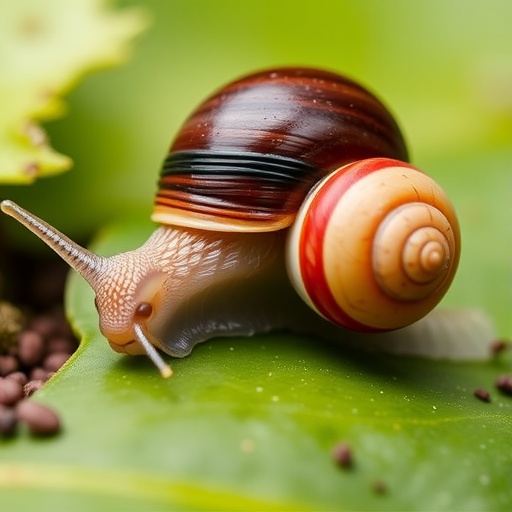
In a groundbreaking study shedding light on molluscan breeding practices, a team of researchers led by C. de Fátima Miranda, E.R. Carrara, and V.S. Junqueira has made remarkable strides in genetic selection focused on the age of first oviposition in the edible snail species, Cornu aspersum maximum. The significance of this research extends beyond simple aquaculture applications; it has profound implications for both the biotechnology and environmental sectors. The article sheds light on innovative methodologies that harness genetic modeling for snail breeding, a practice that has long been subject to traditional techniques that may not fully optimize genetic potential.
As the global demand for sustainable food sources rises, the aquaculture industry faces the challenge of enhancing production efficiency without compromising biodiversity. Snails, a delicacy in many cultures, are often harvested from wild populations, leading to potential overexploitation. The research conducted by Miranda et al. aims to address these concerns by developing a robust genetic selection framework that focuses specifically on the timing of oviposition, which is crucial for maximizing yield in controlled environments.
The research introduces a novel multiple-sire model, which presents a significant advancement over current single-sire breeding practices. This innovative approach allows for a greater diversity of genetic material to be incorporated into breeding programs, which can enhance overall population health, resilience, and productivity. By analyzing the genetic traits that influence the age at which female snails begin to lay eggs, the researchers are paving the way for a more efficient breeding program that can lead to substantial increases in snail production.
Understanding the genetic basis for oviposition timing is paramount for aquaculture practitioners. The age at first oviposition is a key reproductive trait, as it determines how quickly breeders can expect new generations to emerge. By utilizing the multiple-sire model, the research team has demonstrated that it is possible to select for desirable traits in a more effective manner, potentially reducing the time required to produce commercially viable snails. This has implications not only for the profitability of snail farmers but also for sustainability efforts in aquaculture.
A deeper dive into the methodology reveals the advanced statistical techniques employed by the research team. The application of mixed linear models allows for the estimation of genetic parameters, including heritability and genetic correlations, which are essential for informing selection decisions. These models help to untangle the complexity of genetic interactions influencing oviposition age, thus providing a clearer picture of the heritable traits that can be enhanced through selective breeding.
The authors also underscore the importance of environmental factors that may affect oviposition timing. Considering variables such as temperature, food availability, and habitat conditions can enhance the accuracy of genetic predictions. This holistic approach enables breeders to account for environmental variability while selecting for genetic traits that ensure optimal reproductive success. Such multi-faceted strategies highlight the necessity for integrating ecology with genetics in the field of aquaculture.
This breakthrough in snail breeding practices not only stands to benefit commercial aquaculture but also has ecological ramifications. By fostering sustainable farming of Cornu aspersum maximum, the study advocates for a reduction in reliance on wild populations. Ensuring healthy breeding stock through genetic selection can help maintain ecosystem balance and reduce pressure on natural snail habitats.
Moreover, the research findings contribute to global discussions on food security. As the world grapples with challenges posed by climate change, population growth, and resource scarcity, optimally breeding protein sources like snails can support both culinary traditions and nutritional needs. The potential to enhance yields through genetic selection positions snails as a viable contributor to global food systems.
In terms of market implications, the aquaculture industry is likely to take notice of these findings. The ability to produce snails more efficiently may open up new avenues for culinary innovation and product development. As chefs and food artisans explore creative uses for snails, from gourmet dishes to processed foods, the demand could see a spike, benefiting farmers who can keep up with production.
Importantly, this research serves as an invitation for collaboration across disciplines. Geneticists, ecologists, and aquaculture specialists are encouraged to work together to further refine and implement these genetic selection models. By collaboratively engaging in this line of research, stakeholders can forge new paths toward sustainable aquaculture that does not detract from the environment but rather enhances it.
As we look to the future of aquaculture practices, this study offers a glimpse into the potential for innovation rooted in genetic science. The team’s efforts illustrate how intricate genetic modeling can lead to adaptive management strategies that elevate food production while upholding ecological integrity. With further advancements and adaptations, the potential for improving farming practices in mollusks may serve as a model for other livestock and fish species.
In conclusion, this research not only promotes a forward-thinking approach to the breeding of snails but also lays the groundwork for the future of sustainable aquaculture. As the researchers look ahead to continued studies, they underscore the importance of maintaining a balance between production goals and environmental stewardship. The work of Miranda, Carrara, Junqueira, and their colleagues stands at the forefront of a transformative movement aimed at revolutionizing the way we cultivate edible species for generations to come.
de Fátima Miranda, C., Carrara, E.R., Junqueira, V.S. et al. Improving genetic selection for age at first oviposition in Cornu aspersum maximum snails using multiple-sire models.
Discov Anim 2, 100 (2025). https://doi.org/10.1007/s44338-025-00158-8
Cite Scienmag News
Margaret Porter. (December 27, 2025). Enhancing Snail Breeding: Age at First Oviposition. Scienmag. https://scienmag.com/enhancing-snail-breeding-age-at-first-oviposition/
Margaret Porter. "Enhancing Snail Breeding: Age at First Oviposition." Scienmag, 27 December 2025, https://scienmag.com/enhancing-snail-breeding-age-at-first-oviposition/. Accessed 4 September 2026.
Margaret Porter. "Enhancing Snail Breeding: Age at First Oviposition." Scienmag. December 27, 2025. https://scienmag.com/enhancing-snail-breeding-age-at-first-oviposition/


