


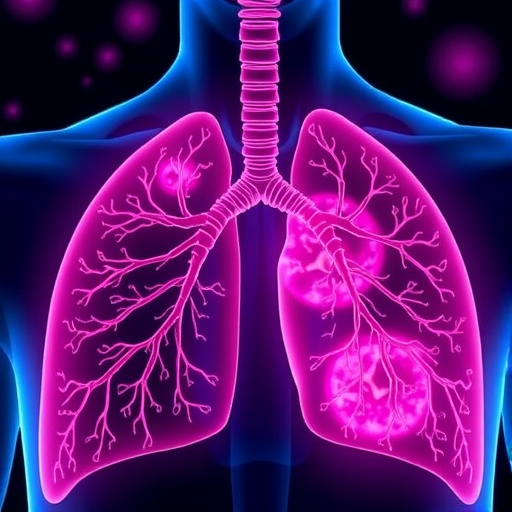
In a groundbreaking study slated for publication in Nature Communications in 2025, researchers led by Zhang et al. have unveiled compelling evidence that interleukin-17C (IL-17C) plays a pivotal role in modulating the pathogenic potential of interleukin-17A (IL-17A), thereby driving asthma endotype switching within the complex pathology of bronchiectasis. This discovery not only deepens our molecular understanding of airway inflammatory diseases but also opens promising avenues for precision medicine strategies aimed at this challenging respiratory condition.
Bronchiectasis, a chronic lung disorder characterized by irreversible dilation and inflammation of the bronchial tree, has long been a clinical enigma due to its overlapping manifestations with other airway diseases, such as asthma and chronic obstructive pulmonary disease (COPD). The heterogeneity of bronchiectasis-related inflammation, often marked by transitioning inflammatory endotypes, complicates treatment regimens and prognosis. Zhang and colleagues approached this puzzle through an immunological lens, investigating how cytokine crosstalk may underlie these pathological shifts.
Central to this investigation is the interleukin-17 family of cytokines, with IL-17A historically recognized as a key driver of neutrophilic inflammation in various airway diseases. The novel insight presented by the team centers on IL-17C, a less explored member of this cytokine family. Unlike IL-17A, which is primarily secreted by adaptive immune cells like Th17 cells, IL-17C is produced predominantly by epithelial cells, positioning it as a crucial mediator at the interface of environmental exposure and immune activation in the airway mucosa.
Employing a combination of in vitro and in vivo models, as well as cutting-edge single-cell transcriptomics, the study elegantly demonstrates that IL-17C not only potentiates IL-17A-mediated inflammatory signaling but also orchestrates a phenotypic switch in asthma endotypes within the bronchiectatic milieu. This switching phenomenon, characterized by transitions between eosinophilic and neutrophilic inflammation, has profound implications for personalized therapeutic interventions, as current treatments often fail to address the dynamic nature of airway inflammation.
The mechanistic underpinnings revealed suggest that IL-17C enhances IL-17A receptor expression and amplifies downstream NF-κB and MAPK signaling pathways in airway epithelial cells. This amplification leads to elevated secretion of pro-inflammatory chemokines such as CXCL1 and CXCL8, which recruit neutrophils and perpetuate chronic inflammation. Intriguingly, the team’s data also indicate that IL-17C influences the expression of airway remodeling factors, contributing to the structural changes hallmark in bronchiectasis.
Notably, the study identified that blocking IL-17C signaling attenuated IL-17A’s pathogenic effects, effectively halting the asthma endotype switch in experimental models. This finding holds transformative potential for the development of targeted biologics that may offer therapeutic benefits beyond current corticosteroid and bronchodilator regimens, which often inadequately control neutrophilic inflammation.
Moreover, Zhang et al. employed patient-derived airway epithelial cells to validate their molecular findings, bridging the translational gap between experimental research and clinical relevance. Their data revealed a correlation between elevated airway IL-17C levels and exacerbated disease severity, reinforcing IL-17C’s role as a conceivable biomarker for disease progression and therapeutic responsiveness.
The study also sheds light on the interplay between the microbiome and cytokine milieu in bronchiectasis. Changes in microbial communities, a known factor influencing disease exacerbations, may modulate epithelial IL-17C production, thereby indirectly impacting IL-17A activity and inflammatory endotype dynamics. This axis presents an attractive target for combined immunomodulatory and microbiome-based therapies.
Furthermore, the research offers critical insights into why certain patients with overlapping asthma and bronchiectasis phenotypes display refractory responses to standard treatments. The discovery of IL-17C’s governance over IL-17A pathogenicity introduces a new paradigm in understanding the molecular drivers of airway disease heterogeneity and treatment resistance.
This study’s implications extend to diagnostic innovation as well, where measurement of IL-17C levels in sputum or bronchoalveolar lavage fluid could inform clinicians about the prevailing inflammatory endotype, enabling more precise treatment tailoring. Such stratification would mitigate the trial-and-error approach currently prevalent in managing chronic airway diseases.
Complementing these findings are novel insights into signaling pathway modulation. The team elucidated that pharmacological inhibition of IL-17C receptors attenuates the aberrant inflammatory cascade without compromising host defense against opportunistic infections, a critical consideration in the immunocompromised bronchiectasis population.
This nuanced understanding of cytokine interplay enriches the broader immunological landscape of lung diseases, highlighting the sophisticated crosstalk between epithelial-derived signals and adaptive immune responses. Zhang et al.’s work underscores the importance of epithelial cells not merely as passive barriers but as active orchestrators of immune responses that shape disease phenotype evolution.
The study’s comprehensive approach, integrating molecular biology, immunology, and clinical correlations, exemplifies the multidisciplinary collaboration necessary to tackle multifaceted diseases like bronchiectasis complicated by asthma overlap. It also emphasizes the utility of advanced omics technologies in unraveling complex cellular interactions within diseased tissues.
Looking ahead, the research opens promising research trajectories, including the exploration of IL-17C-targeted therapies in clinical trials and investigation into its role across other inflammatory airway diseases. Such efforts may redefine treatment algorithms and improve outcomes for patients suffering from notoriously stubborn respiratory conditions.
In summary, Zhang and colleagues have delivered compelling evidence that IL-17C serves as a master regulator of IL-17A’s pathological influence in bronchiectasis, driving a critical switch in asthma endotypes. This discovery not only advances our scientific understanding of airway immunopathology but also propels the clinical field toward more personalized, effective therapeutic strategies that could transform patient care and quality of life for millions globally.
Cite Scienmag News
Ophelia Keating. (December 26, 2025). Interleukin-17C Drives Asthma Changes in Bronchiectasis. Scienmag. https://scienmag.com/interleukin-17c-drives-asthma-changes-in-bronchiectasis/
Ophelia Keating. "Interleukin-17C Drives Asthma Changes in Bronchiectasis." Scienmag, 26 December 2025, https://scienmag.com/interleukin-17c-drives-asthma-changes-in-bronchiectasis/. Accessed 1 September 2026.
Ophelia Keating. "Interleukin-17C Drives Asthma Changes in Bronchiectasis." Scienmag. December 26, 2025. https://scienmag.com/interleukin-17c-drives-asthma-changes-in-bronchiectasis/


