

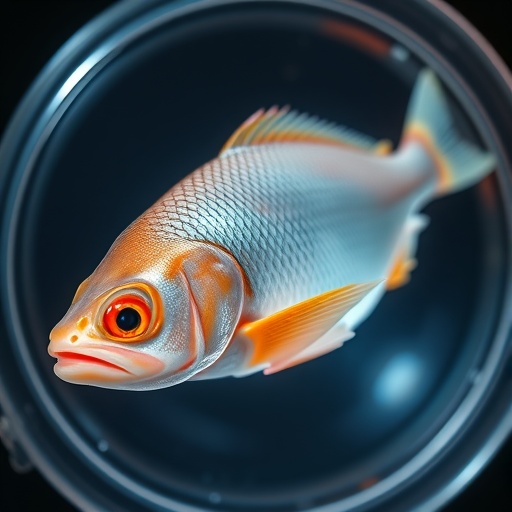
In an innovative leap toward sustainable biotechnology, a recent study has unveiled a method to enhance the recovery of functional collagen from fish processing waste through ultrasound-assisted pretreatment. This groundbreaking research promises not only to reduce waste produced by the booming seafood industry but also to convert these materials into highly valuable bioresources, thus contributing to circular economy principles. By optimizing the recovery process, the researchers strive to unlock the potential of collagen derived from fish waste, which has applications in various domains such as food, pharmaceuticals, and cosmetology.
Collagen, a structural protein prevalent in animals, forms the backbone of several bodily tissues, making it a highly sought-after ingredient in numerous industries. Traditionally, the extraction of collagen from fish skins and bones has been a labor-intensive and inefficient process, often resulting in lower yields. The research team, led by Faralizadeh and colleagues, aimed to address these challenges by employing ultrasound technology to augment the collagen extraction process, ultimately enhancing the efficiency and effectiveness of recovery.
Ultrasound-assisted pretreatment represents a novel approach where high-frequency sound waves disrupt the collagen structure within the fish waste. This disruption not only facilitates the extraction process but also improves the overall yield of functional collagen. The researchers meticulously optimized various parameters such as ultrasound intensity, treatment time, and temperature to achieve maximum recovery rates. Their findings suggest that the implementation of ultrasound pretreatment can significantly increase collagen solubilization, making the process faster and more environmentally friendly.
In their study, the team conducted a series of experiments to evaluate the effectiveness of the ultrasound-assisted approach. By comparing the yield of collagen extracted through traditional methods versus those enhanced by ultrasound, the researchers observed a marked improvement in the recovery rates. The results indicated that utilizing ultrasound not only boosts yield but also retains the structural integrity and functional properties of collagen, which are crucial for any downstream applications.
Moreover, the structural analysis conducted as part of the study revealed that ultrasound treatment helps maintain the triple-helix structure of collagen, which is essential for its biological activity. This preservation of structure enhances collagen’s functional properties, making it suitable for various applications, including its use in tissue engineering, drug delivery systems, and cosmetic products. The study emphasizes the importance of not just recovering collagen but doing so in a way that maintains its functionality, paving the way for more effective and versatile applications in the future.
The cytocompatibility study further solidifies the potential of ultrasound-assisted extracted collagen in the biomedical field. By evaluating the response of cultured cells to the collagen derived from fish waste, the researchers found that the collagen promotes cell adhesion and proliferation, thereby exhibiting excellent biocompatibility. This finding is particularly significant as it suggests that collagen sourced from fish waste could serve as a reliable biomaterial for regenerative medicine and other medical applications, providing an alternative to more expensive and less sustainable sources.
The implications of this research extend beyond the scientific realm, offering practical solutions to the pressing problem of waste management in the fish processing industry. With the growing global demand for aquatic protein, the amount of fish waste generated continues to rise, often resulting in environmental pollution and resource depletion. By transforming this waste into high-value collagen, the study contributes to a more sustainable model of production that aligns with global goals for reducing waste and promoting resource utilization.
In conclusion, the study conducted by Faralizadeh et al. opens up exciting avenues for harnessing fish processing waste. Through ultrasound-assisted pretreatment, the researchers successfully enhanced the recovery of functional collagen while maintaining its desirable properties. The potential applications of this collagen span across numerous fields, underscoring the versatility and value of fish waste as a resource. As research continues to evolve in this area, we may see a shift in how industries approach waste, moving towards more sustainable practices that not only benefit the environment but also create economic opportunities through the valorization of waste.
This pioneering work not only highlights the innovative use of ultrasound technology in bioprocessing but also underscores the critical importance of scientific research in finding sustainable solutions to global challenges. With the ongoing exploration in this field, the prospects for fish-derived collagen appear promising, signaling a significant step forward in biotechnological advancements aimed at promoting sustainability.
As the study gains traction within academic circles and industry stakeholders, it is likely to inspire further research and development efforts. The principles behind ultrasound-assisted pretreatment could find applications beyond fish waste, potentially transforming the recovery of collagen from other by-products in various sectors. The excitement around this research area emphasizes the infinite possibilities that lie in rethinking waste and exploring innovative technologies for resource recovery.
In summary, the progress made by Faralizadeh and colleagues marks a critical turning point in the valorization of fish processing waste. With promising results that enhance collagen recovery and maintain functional integrity, the research sets the stage for future innovations that blend sustainability with advanced biotechnology.
Cite this news
SCIENMAG. (December 26, 2025). Optimizing Ultrasound-Assisted Extraction of Fish Collagen. https://scienmag.com/optimizing-ultrasound-assisted-extraction-of-fish-collagen/
SCIENMAG. "Optimizing Ultrasound-Assisted Extraction of Fish Collagen." Scienmag, 26 December 2025, https://scienmag.com/optimizing-ultrasound-assisted-extraction-of-fish-collagen/. Accessed 28 August 2026.
SCIENMAG. "Optimizing Ultrasound-Assisted Extraction of Fish Collagen." Scienmag. December 26, 2025. https://scienmag.com/optimizing-ultrasound-assisted-extraction-of-fish-collagen/


