

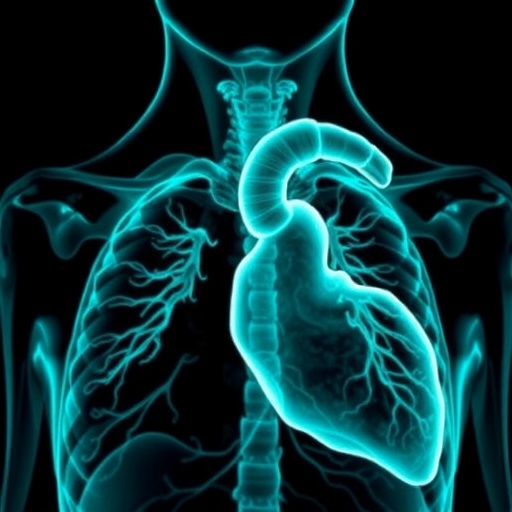
In a groundbreaking study by Huyut, Velichko, Belyaev, and colleagues, researchers have illuminated the complex and critical role of machine learning in identifying right ventricular dysfunction (RVD). This phenomenon, often overlooked in the broader scope of cardiac health, poses significant risks yet remains underdiagnosed due to conventional methods relying heavily on expert analysis and subjective interpretation. Utilizing an innovative LogNNet-based diagnostic model, the team embarked on a comparative study with established supervised machine learning algorithms, marking a significant stride towards more accurate and timely diagnoses in cardiology.
The advent of machine learning has transformed numerous fields, yet its integration into medical diagnostics often lags behind. This study addresses that gap directly by presenting a unique model tailored for RVD identification. The LogNNet model, distinguished by its logarithmic framework, leverages non-linear relationships in complex datasets. This characteristic allows the diagnostic tool to discern subtle patterns in cardiological data that may escape conventional methods, challenging the status quo in cardiovascular diagnostics.
RVD, an often silent yet dangerous condition, can lead to significant morbidity and mortality if left undetected. While classical echocardiography has been the gold standard for diagnosing ventricular issues, its efficacy is limited by the operator’s experience and the variability of interpretations. The new model developed by Huyut and his team promises to alleviate these challenges. By implementing advanced machine learning techniques, the research aims to reduce diagnostic discrepancies and enhance the reliability of RVD assessment.
The study intricately portrays the architecture of the LogNNet model, outlining how its design enables it to adaptively learn from pre-labeled cardiac data. Unlike conventional algorithms, which often rely on rigid structures, LogNNet evolves through its training phases. This adaptability ensures that it not only identifies the present data patterns but can also anticipate emerging trends, a critical factor in the dynamic nature of cardiac conditions.
To validate the efficacy of their model, the researchers conducted extensive comparisons with other well-established supervised machine learning algorithms. These comparisons are essential to gauge the strengths and weaknesses of the LogNNet framework against competitors like support vector machines and random forests. Initial results illustrate that LogNNet significantly outperforms these traditional methods, particularly in environments with complex data distributions that are characteristic of cardiac imaging.
Moreover, the dataset leveraged in this transformative study was not only vast but also richly diverse. Emphasizing the importance of a comprehensive training set, the research team utilized data gathered from multiple clinical sites, providing a robust cross-section of RVD presentations across various demographics. This breadth of data underpins the model’s ability to generalize to a wide array of patient populations, aiming to eliminate biases that often skew diagnostic accuracy in smaller, less diverse datasets.
As the research unfolded, the implications for patient care surfaced as a critical focus. With an enhanced diagnostic tool at their disposal, clinicians may soon deliver quicker and more accurate interventions for patients suffering from RVD. The potential interactive feedback loop described by the authors signifies a monumental shift in patient management strategies. More nuanced understanding of right ventricular function can foster individualized treatment plans, tailored to the unique presentations seen in each patient.
In addition, the authors articulated the potential for further extension into other cardiovascular domains. The methodologies utilized and discoveries made within this study can inspire a new wave of research aimed at other forms of heart dysfunction. The adaptability of the LogNNet model may lead to similar tools for addressing left ventricular dysfunction or even broader ischemic heart diseases, thus offering a multitude of novel insights into cardiology.
With technological advancements often raising ethical questions within the medical community, the authors took a moment to discuss the implications of their work. The advent of machine learning in diagnostics necessitates informed discussions around bias, data integrity, and transparency in algorithmic decision-making. The researchers emphasize the significance of continuous monitoring and evaluation of machine learning tools in healthcare, advocating for rigorous standards that prioritize patient outcomes.
Looking forward, the researchers envision a collaborative landscape where machine learning and traditional cardiology coalesce to optimize patient care. The synergy between these two realms could potentially redefine how healthcare practitioners approach diagnosis and treatment, nudging professionals towards a more data-driven model while preserving the invaluable human aspect of medicine.
The paper concludes with a call to action for further research and cross-disciplinary collaboration. By pooling resources, expertise, and insights from diverse fields, the evolution of medical diagnostics can move expeditiously towards incorporating machine learning advancements. Ultimately, this collective effort could empower clinicians worldwide to better recognize and address right ventricular dysfunction, fundamentally reshaping cardiac care protocols for future generations.
In summary, the study led by Huyut and his colleagues signifies a watershed moment in cardiology. By challenging existing paradigms with innovative machine learning approaches, they have opened doors to a future where diagnostic accuracy and efficiency may no longer be dependent solely on human interpretation. With research efforts like this, the medical community can look ahead with optimism, ready to embrace a transformative era in patient care.
Huyut, M.T., Velichko, A., Belyaev, M. et al. Author Correction: Identification of right ventricular dysfunction with LogNNet based diagnostic model: A comparative study with supervised ML algorithms.
Sci Rep 15, 44430 (2025). https://doi.org/10.1038/s41598-025-33278-y
Cite Scienmag News
SCIENMAG. (December 24, 2025). Revolutionizing Right Ventricular Dysfunction Detection with AI. https://scienmag.com/revolutionizing-right-ventricular-dysfunction-detection-with-ai/
SCIENMAG. "Revolutionizing Right Ventricular Dysfunction Detection with AI." Scienmag, 24 December 2025, https://scienmag.com/revolutionizing-right-ventricular-dysfunction-detection-with-ai/. Accessed 28 August 2026.
SCIENMAG. "Revolutionizing Right Ventricular Dysfunction Detection with AI." Scienmag. December 24, 2025. https://scienmag.com/revolutionizing-right-ventricular-dysfunction-detection-with-ai/


